Showing posts with label food. Show all posts

Tuesday, June 5, 2018

How to spot a food-related addiction

Addiction and Recovery


By Bob Gaydos

The list of substances or behaviors to which adolescents can become unhealthily attached, even addicted, can seem endless to a parent inclined to be caring and protective: alcohol, smoking, drugs, gambling, video games, social media, internet, cell phones, sex, shopping, eating …

Wait, eating you say? Yes, eating. Or food. It depends. There’s a debate over whether the problems are the same thing. Some say that someone who craves the same food, say sweets or salty chips, and consumes it in unhealthy amounts might be considered a food addict, a term not universally accepted, but one that is useful in defining a behavior. The food in question reacts on the brain in the same way that alcohol or another drug would. It rewards the person, who feels good.
Some say that someone for whom eating -- anything and plenty of it -- is a fulltime job with significant negative consequences might be considered to have an eating addiction, rather than a food addiction. Eating may provide the same kind of escape and temporary excitement that gambling, for example, would in someone else. An irresistible reward.
And, of course, these harmful behaviors often co-exist. Addictions may have biological, psychological, or social causes, or, likely, a combination of them.The focus here is not on debating the food/eating addiction question, but rather on recognizing that food addictions and eating disorders -- a different category of self-destructive behavior, including anorexia, bulimia and binge eating -- can often be ignored in teens when there is so much talk in media -- social and otherwise -- about drinking and driving, opioid abuse, the pros and cons of marijuana and the rest of that list.
Teens eat, adults say. Sometimes they eat a lot. Maybe a lot of junk food. They’re growing. So what’s the big deal?
Maybe nothing; maybe something. A primary goal of this column is to provide useful information to help readers identify and get help for addictive behavior and some studies say up to 10 percent of Americans may have a food-related addiction or disorder. One in 10 female teens may have an eating disorder. A smaller percentage of teen boys, perhaps athletes such as wrestlers or runners, also have issues that revolve around body weight and image. What follows are some symptoms and questions to help you decide if you or someone you know, perhaps a teenager, has a health issue involving food.
The following are possible symptoms of a food addiction:
  • Gorging
  • Eating to the point of feeling ill
  • Going out of your way to obtain certain foods
  • Continuing to eat certain foods even if no longer hungry
  • Eating in secret
  • Avoiding social interactions, relationships to spend time eating certain foods.
  • Difficulty functioning in a job or school due to decreased efficiency
  • Spending a significant amount of money on buying certain foods to binge
  • Obesity
  • Fatigue
  • Difficulty concentrating
  • Sleep disorders, such as insomnia or oversleeping
  • Headaches
  • Irritability
  • Digestive disorders
  • Thoughts of suicide
Food Addicts in Recovery Anonymous, a 12-step group that seeks to help people with food addictions or disorders, offers its own quiz to help people determine if they have a problem with food. As always, answer as honestly as possible:

  1. Have you ever wanted to stop eating and found you just couldn't?
  2. Do you think about food or your weight constantly?
  3. Do you find yourself attempting one diet or food plan after another, with no lasting success?
  4. Do you binge and then "get rid of the binge" through vomiting, exercise, laxatives, or other forms of purging?
  5. Do you eat differently in private than you do in front of other people?
  6. Has a doctor or family member ever approached you with concern about your eating habits or weight?
  7. Do you eat large quantities of food at one time (binge)?
  8. Is your weight problem due to your "nibbling" all day long?
  9. Do you eat to escape from your feelings?
  10. Do you eat when you're not hungry?
  11. Have you ever discarded food, only to retrieve and eat it later?
  12. Do you eat in secret?
  13. Do you fast or severely restrict your food intake?
  14. Have you ever stolen other people's food?
  15. Have you ever hidden food to make sure you have "enough"?
  16. Do you feel driven to exercise excessively to control your weight?
  17. Do you obsessively calculate the calories you've burned against the calories you've eaten?
  18. Do you frequently feel guilty or ashamed about what you've eaten?
  19. Are you waiting for your life to begin "when you lose the weight"?
  20. Do you feel hopeless about your relationship with food?

A “yes” answer to any question could indicate a problem with food, the group says.

Obviously, these are complex issues with serious -- even life-threatening -- potential consequences that need to be addressed as early as possible by trained professionals. There are a variety of programs and organizations to turn to If you suspect a food-related problem. Consult your doctor to begin with and check any of the accompanying links for more information.

For help
-- www.foodaddictsanonymous.org
-- www.recoveryfromfoodaddiction.org
-- www.foodaddicts.org
-- www.oa.org
-- www.eatingdisordersanonymous.org
-- www.nationaleatingdisorders.org
-- www.nimh.nih.gov
-- www.mentalhealthamerica.net
bobgaydos.blogspot.com

Wednesday, March 9, 2016

GMOs: Food fight becomes war of words

The Savvy Shopper

By Bob Gaydos
The non-GMO label is showing up
 on more food products.
The most contentious food-fight on the planet has been transformed into a war of words. Actually, letters. Three of them: GMO. They stand for genetically modified organism.
The battle is being waged in Congress, state legislatures and via social media. The question -- whether food producers should be required to put those three letters on labels of products that have been genetically modified.
Boiled down, the argument goes like this:
  • Producers of genetically modified seeds and companies that use GMOs in the foods they produce say extensive scientific research has shown the food to be as nutritious as non-GMO foods and safe for human and non-human consumption, so there is no need to label them.
  • A diverse coalition, which includes organic farmers, scientists, doctors, Consumers Union, community organizations, and a host of internet sites devoted to nutrition, healthful eating, food safety, and the public’s right to know, say GMO science is still too new to be decreed safe in the long term. Besides, they ask, if it’s safe, why not give consumers a conscious choice in what they eat by labeling genetically modified food?
A lot of money has been spent lobbying members of Congress to  
oppose mandatory labeling of GMOS, and even to prohibit farmers from suing Monsanto, the largest producer of GMO seeds, over its requirement that farmers buy new GMO seeds from the company every year. Last year, the House of Representatives passed what labeling proponents dubbed the DARK Act (Deny Americans the Right to Know Act). Local Reps. Sean Maloney, D-18th District, and Chris Gibson, R-19th District, both opposed the bill, which would have preempted a state’s right to require labeling of GMOs. However, under pressure in December to get a budget bill passed to avoid another government shutdown, the House did not include the GMO measure in its final omnibus budget bill. With the Senate also approving the budget bill and President Obama signing it into law, advocates of GMO labeling took this as a victory in the ongoing battle.
In yet another victory for the advocates of mandatory labeling, Campbell Soups, a major food company, recently announced it would no longer oppose such labeling, It said it has withdrawn from the food industry campaign for voluntary labeling and is urging a national standard, to avoid confusion for consumers. CEO Denise Morrison said the company is not “disputing the science of GMOs or their safety.” But, she added, GMOS have become a major issue with consumers and, “We have always believed that consumers have the right to know what’s in their food.” She said if a federal standard isn’t established “in a reasonable amount of time,” Campbell’s would begin labeling its own products, which include Pepperidge Farm, Prego, Swanson and SpaghettiOs.
Meanwhile, the legal status quo remains and states are free to pass laws requiring labeling of GMO foods. Vermont is the only state to have enacted such a law. Maine and Connecticut have passed similar laws that go into effect when enough neighboring states do likewise. Vermont’s law is scheduled to go into effect in July. Labeling laws are currently being considered in many other states and the issue is also far from dead in Congress.
So, what’s a health-conscious, label-reading shopper to do in the meantime when the label may be no help on GMOs? For one thing, get enough information about the subject. That can help make for more-informed choices at the supermarket or farmer’s market, no matter what the politicians do. The following may help.
  • What are GMOS? GMOs are seeds whose genes have been altered in a laboratory to change certain properties. Generally, proponents of GMOs say they are more resistant to extreme weather and pesticides, are able to produce a higher yield in smaller acreage and have a longer shelf life. The Food and Drug Administration has approved a GMO apple that supposedly won’t turn brown when sliced and a potato that resists bruising. These are not in wide use. (The FDA also recently approved a GMO salmon. See sidebar.) Opponents say they are concerned about GMOs contaminating nearby conventional crops or posing serious health problems since they contain the chemical pesticide to which they have been made resistant. They also say GMOs allow for wider use of pesticide spraying of crops.
  • How much of our food is genetically modified? Lots. Maybe 90 percent of the corn and soybeans grown in the United States are genetically modified. Other major GMO crops are cotton, squash, canola, papaya and sugar beets. Since several of these crops are common ingredients in packaged foods, it’s estimated that 75 percent or more of processed food products in the U.S. contain GMOs. More food companies have begun to voluntarily include “Non-GMO” or other similar information on their labels.
  • Do other countries require labeling of GMO foods? Yes. Australia, Russia, most of Europe, Iceland, Saudi Arabia and Turkey have stringent labeling laws, according to the Center for Food Safety. Others that have labeling requirements include  Brazil, China, Japan, South Africa and South Korea.
  • How do I tell what’s true about GMOs and what’s not if I check on the Internet? Good luck. This debate changes every day, with major corporations spending millions of dollars in advertising, lobbying and research grants to scientists to bolster their arguments and organic food organizations and consumer groups spending considerably less money, but no less energy, in an effort to counter them. This is why labeling has become the focal point of the controversy.  
Maire Ullrich is the go-to GMO person at Cornell Cooperative Extension in Middletown, N.Y. As agriculture program leader, she offers interested groups a 40-60 minute talk on GMOs. She says the agency takes no position on GMOs. “There’s no good data that says it’s not safe,” she says, “but you still have a choice to be an educated consumer. People need to be really wise to the back of the package, not just read the labels on the front” if they want to know what they’re eating,
For example, she cited a product label boasting of non-GMO oil. But that oil was only 5 percent of the oil in the can. The other 95 percent was canola, which was modified.
Ullrich says most of the produce at local stores and farmers markets is non-GMO (“there are no GMO onions”) because of “the pushback from consumers.” She says farmers are more reluctant to grow GM crops. “Of course, if it’s labeled organic, you know it’s not GMO.”
“Part of what I teach is that if you want to use labels, you have to be scientific in your argument,” she says. “Is it your right to know growing practices and ingredients? Argue for consumer knowledge and transparency. If you don’t like the economics behind GMOs, it’s OK to say so.”
As for that GMO potato, “It’s been an abject failure,” she says. “McDonald’s wouldn’t buy it.” The non-bruising GMO apple? Ullrich says, “If McDonald’s won’t buy a GMO potato, do you think they’ll buy a GMO apple for a kiddie meal?” Both will wind up being processed for other, less obvious, uses.
Meanwhile, the food fight continues.

Bob Gaydos is a freelance writer. He can be reached at rjgaydos@gmail.com

Is it really a salmon?
The $1.1 trillion budget bill passed by Congress in December also contained another significant victory for proponents of GMO labeling. In it, Congress instructed the Food and Drug Administration to prohibit the sale of GMO salmon until the agency creates labeling guidelines and a program to disclose to consumers whether a fish has been genetically altered. The FDA in November approved salmon as the first genetically modified animal safe for human consumption. It required no labeling of the Atlantic salmon produced by AquAdvantage.
The salmon contains a growth hormone from a Chinook salmon and a gene from the ocean pout. The modification reduces the time required for the fish to grow large enough for consumption to 18 months instead of the usual three years. The fish is also considerably larger than the average salmon.
Critics of the product and commercial fisherman raise the same questions posed about GMO vegetables and fruits: Is the fish safe to eat and what might happen if the fish escapes from its breeding tanks into the environment and mates with wild salmon?
AquAdvantage says the fish are safe to eat, are all sterile females and its land-based breeding areas are secure.
While it is unclear when the fish might be ready for sale, some food chains, including Whole Foods, Target, Trader Joe’s and Aldi, have said they will not sell it. Sen. Lisa Murkowski, R-Alaska, who fought for the labeling language, said, "There's a question as to whether this fish should even be called a salmon. The FDA made no mandatory labeling requirement. Instead, they said it could be labeled voluntarily. But no manufacturer of a 'Frankenfish' is going to label it as such. ... At least now people will have the opportunity, the chance, to know what it is that they are purchasing."

More info
To schedule a talk on GMOs, Maire Ullrich, agriculture program leader at Cornell Cooperative Extension, Orange County, can be reached at:

-- (845) 344-1234

Wednesday, August 12, 2015

So, what does it mean to be labeled 'organic'?

The Healthy Shopper

By Bob Gaydos
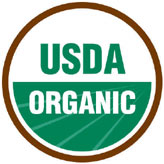
Illustration of the USDA organic sealThe most important information on food product labels is in the fine print of the ingredients rather than in the big, splashy words used to sell the product. That has always been the case and today it’s truer than ever.  With major food companies trying to capitalize on the growing interest in eating healthfully, it is increasingly important for consumers to know what the words on the product really mean.
This series has discussed food labeled “gluten-free” and “natural” and the confusion built into such labeling by companies taking advantage of what many describe as nebulous FDA regulations.
Confusion also exists about the term “organic,” even though it has been around for a long time. In fact, until around the 1920s, all farming was organic, with farmers using strictly natural methods to treat the soil and to fight pests. With the introduction of industrialized farming -- notably the development of DDT after World War II as a means to control pests -- the widespread use of chemicals became the rule and organic farming the exception.
But today, DDT is banned and more than 40 million Americans say they buy organic food. Sales last year topped $40 billion, according to the Organic Food Industry, and the organic movement is growing steadily. Still, millions of shoppers remain unclear about why those products in specially designated sections of the supermarket are different from the rest. What makes them “organic” and why does it matter?
In this case, there is at least no official confusion. The U.S. Department of Agriculture has set specific standards for food to be certified “organic.”  Producers who sell less than $5,000 a year in organic foods are exempt from certification, but are still required to follow the USDA's standards for organic foods.
The standards:
  • Prohibit the use of chemical fertilizers, synthetic substances, irradiation, sewage sludge, or genetically modified organisms (GMOs) in production.
  • Prohibit the use of antibiotics and synthetic hormones in organic meat and poultry.
  • Require 100 percent organic feed for organic livestock.

The USDA currently allows foods that are “100 percent certified organic” (fruits, vegetables, eggs) to display the green USDA Organic seal. Use of the seal is voluntary, but its presence is key. It means the producing farm has passed muster from a trained inspector.
Food products that contain more than one ingredient (cereal, for example) may also use the seal if 95 percent of the ingredients are organic. Then the product may be labeled “organic.”
Products made with 70 to 94 percent organic ingredients may not use the USDA seal, but may say “made with organic ingredients.”
Whatever the percentage of organic food ingredients -- whether the product is labeled “100% organic,” “organic,” or “made with organic ingredients” -- none of the ingredients may be produced from genetically modified organisms. That means products “made with organic ingredients,” while only requiring 70 percent of the ingredients to be organic, must nonetheless be 100 percent non-GMO.
This is a key regulation today, with a major debate under way in Congress and many state legislatures on whether to require food producers to list genetically modified organisms on the label. That’s the subject of a future article.
It should also be noted that it’s not just a desire to avoid food that has been produced with the aid of chemicals that motivates many consumers today. Increasingly, more Americans are buying locally produced foods. The fruits, vegetables, eggs, beef, etc. go directly from local farm to local supermarket or kitchen table. This offers fresher foods while also using less fossil fuel for transportation. And the money spent at a local farmers market is more likely to stay in the community. A win/win/win situation.
But again, the key is to check for the green label. Not all food sold at farm stands or farmers’ markets is organically grown. If no label is shown and the vendor is advertising “organic” produce, ask to see the certification. It should be no problem.
Some people question whether eating organic is worth the added difference in price (largely a result of the government’s heavy subsidization of the conventional food system). That’s a personal decision. The goal of this series is to provide information to help shoppers make more-informed decisions on what they buy and what they eat.
In that regard, the facts are that: 1) food certified as organic must meet strict, transparent government standards (no chemicals, no hormones, no antibiotics, etc.); 2) more consumers are choosing to buy organic food every year; and 3) price is becoming less of a factor in making that decision.
Next: The debate over GMOs.

IMG_0461.jpg
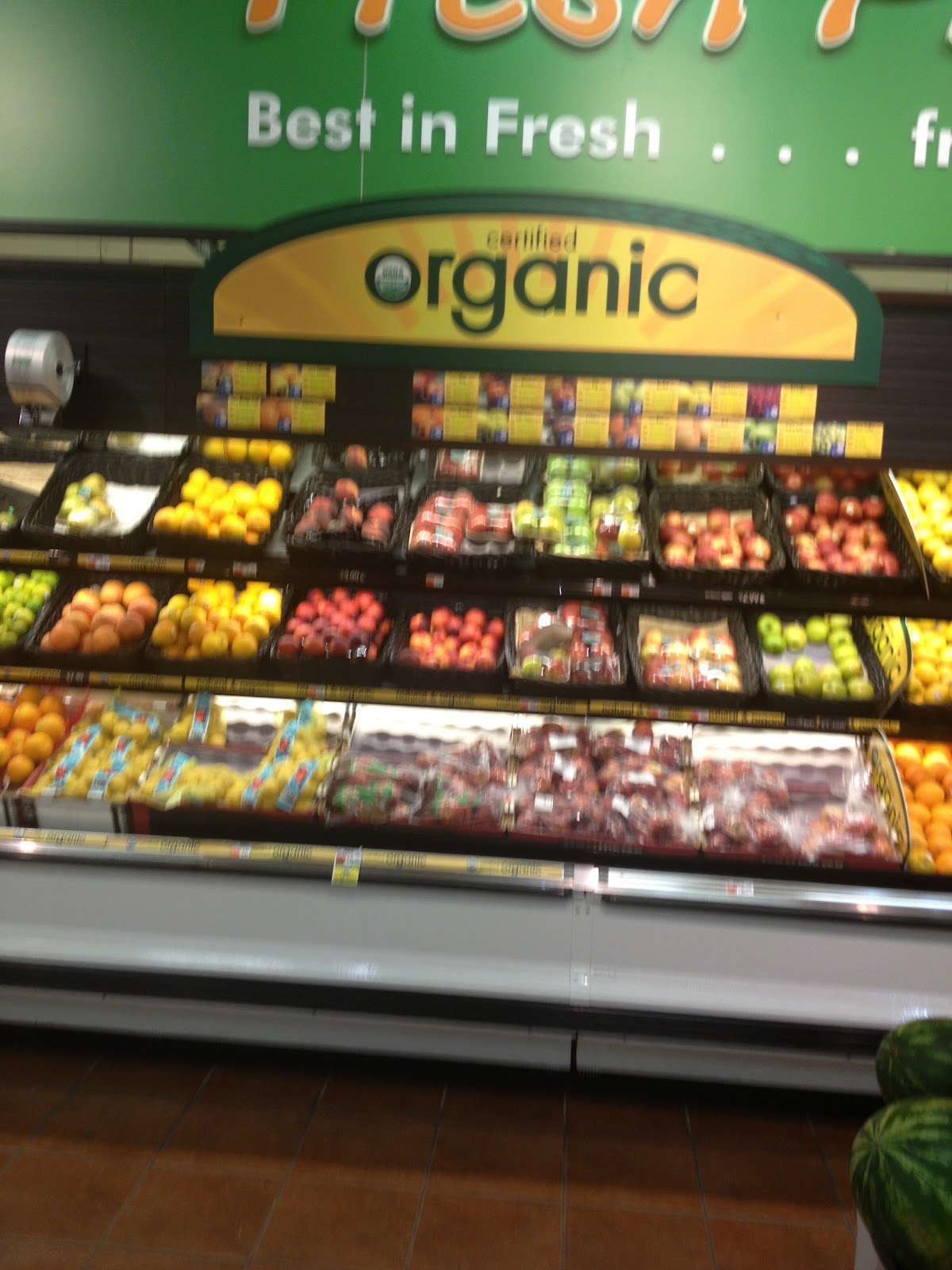
Organic produce sections are growing steadily in supermarkets.
Photo by Bob Gaydos

Getting certified
A common perception among consumers is that organic farming is old school. Basic stuff. No artificial ingredients. Period.
Not really, says Liana Hoodes. “Organic farming today is definitely not your grandfather’s organic farming," says Hoodes. She says organic farmers today are using computers, new technology and new techniques to improve the quantity and quality of their products. She only wishes the USDA would provide more than 2 percent of its funds for research to speed the development of 21st Century organic farming.
Hoodes, of Pine Bush, is policy adviser to the Northeast Organic Farming Association and to the National Organic Coalition, an organization she helped found and which she served for years as executive director. The NOC is both an advocate for and a watchdog to protect the integrity of organic farming. NOFA certifies organic farmers.
Certification does not come easily. A farmer must lay out a plan, with maps of every field, every year. Crops must be rotated. Changes must be noted. Materials used must be USDA-approved. A yearly inspection by an independent inspector must be passed.
Hoodes says there’s not a lot of cheating going on among farmers looking to get the green USDA seal and the inspectors are good at spotting those few who do try. For example, an inspector might see some blue barrels tucked behind a barn, the kind of barrels chemicals come in. Or, the cows at a dairy farm may not look so healthy. A request to use the bathroom in the house provides an opportunity to discover antibiotics prescribed by a veterinarian, obviously not intended for humans and prohibited for organic cattle.
Even on non-scheduled inspection days, the farms are under scrutiny. One inspector wondered how a field full of weeds could produce so many organic tomatoes. A surprise check of the property revealed the “farmer” was buying boxes of tomatoes at the supermarket and selling them as organic.
While such behavior may be uncommon among organic farmers, a food industry that promotes itself as imposing strict, transparent standards needs to live by those standards. That’s why the USDA seal is stressed by organic producers.

Wednesday, April 22, 2015

'Natural' food -- a meaningless label

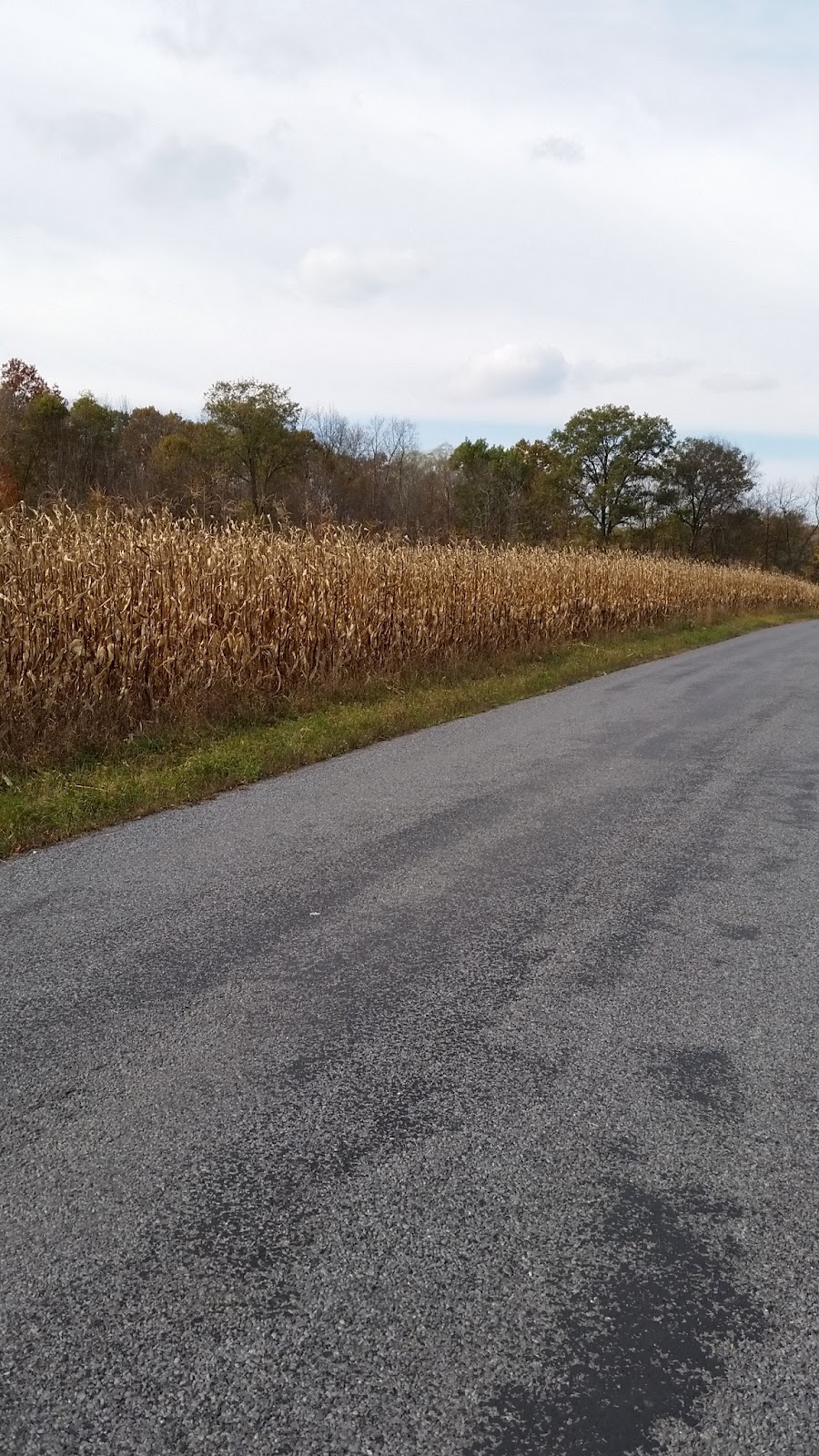
20141025_125029.jpg
IR Photography
America’s countryside is accentuated by
millions of acres of corn, like this field in
Orange County. But much of it has been 
grown from genetically modified seeds. 
Advocates for clarity in labeling demand 
removal of the word “natural” on such
corn products.

The Healthy Shopper


By Bob Gaydos
Nothing says “natural’ more immediately than a well-tended farm nestled into the countryside. Food grows here, it announces proudly.
Food companies like to tap into that food-farm-nature connection in R their marketing, splashing the word “natural” liberally on packages. The problem is that a lot of the ingredients in the packages come from farms that are more like factories -- a far cry from what nature created. Some of the ingredients may be natural, but are not what consumers ordinarily think of as food.
A few years ago, a story about “natural” ingredients made the rounds of food sites on the Internet. The story focused on a substance that is added to such favorite treats as ice cream, candy, yogurt, iced tea and gelatin to enhance their flavor. Mostly vanilla, strawberry and raspberry-flavored treats.
The ingredient is castoreum. Yes, it’s “natural.” No, it has nothing to do with the castor bean, as one might think. Castoreum is a yellowish secretion from the castor sac of adult male and female beavers. The castor sac is located between the anus and genitals in beavers and, along with its urine, is used to scent mark the beaver’s territory. It has also been used for years to enhance perfumes.
The Food and Drug Administration lists castoreum in the “Generally Regarded As Safe” category, which is good to know. But today, more consumers are insisting that it’s also good for them to know what the ingredients listed on food labels really are. In this case, what qualifies as “natural” ingredients.
Unfortunately, the word “natural” being plastered on packaged food labels today may have a variety of meanings. (Do not confuse it with “organic;” it’s not necessarily the same.) An “all natural” food product may sound healthful, but the real benefits may be to the company’s economic health, rather than the consumer’s physical well-being.
The fact is, the FDA has no specific, enforceable standards for what “natural” means when it comes to food. The agency says it accepts the term on processed food labels so long as the product contains no synthetic additives, artificial coloring or artificial flavoring.
Castoreum, as noted, comes from nature and so, is regarded as natural flavoring. (Some companies have stopped using it in response to the story and negative reaction to it.) As for the castor bean (actually a seed), in addition to being a source for the healthful castor oil and the deadly poison ricin, it is also the source of a “natural” food additive identified as PGPR -- polyglycerol polyricinoleate.
PGPR is a yellowish liquid that acts as an emulsifier. Candy companies use it to hold chocolate together because it’s cheaper to produce than cocoa butter and adds to the shelf life of chocolate bars. Less chocolate for you, more profits for the company. The FDA says PGPR is natural and safe for human consumption. Now at least you know what it is.
Unlike PGPR, thousands of other substances that are derived from some plant source are not listed on processed food labels, but still are considered “natural” additives.  Substances derived from animal sources must be listed, according to FDA rules, but as the beaver tale illustrates, that listing may not be especially informative.
Shoppers who want to know what they are eating can pressure food companies to offer more transparent labels. Many vegetarian and vegan-oriented companies are offering clearer labeling today and some larger food companies, responding to growing truth-in-labeling campaigns on social media, are starting to follow suit.

Consumer Reports recently weighed in on “natural” labels on food products. The non-profit, independent, product-testing organization called for a ban on use of the word “natural” on labels, describing it as meaningless. The call came in connection with a the organization’s report which found that genetically modified organisms (GMOs) -- foods altered in laboratories -- are present in many food products. Their presence, however, is not acknowledged on the label, even though many of those products are billed as “natural.” Grist for a future article.

bobgaydos.blogspot.com

Wednesday, September 17, 2014

Required reading: New food labels

The healthy shopper - 1


By Bob Gaydos

In a bow to reality, the Food and Drug Administration has proposed new requirements for nutrition labels on prepared foods and beverages. The changes are the first since the FDA began requiring the labels more than two decades ago. The proposals would give more prominence to total calorie content, rather than how many calories come from what kind of fat, and require companies to list how much sugar has been added to the product. The FDA also would require listing how much Vitamin D, dietary fiber, potassium, calcium and iron the product contains.

The agency is also proposing lowering the recommended daily sodium intake to 2300 milligrams from 2400, but is asking for comment on lowering it to 1500 milligrams, a level encouraged by many medical and health groups.

Finally, the proposed new labels would also have revised serving sizes for some products in the hope of more accurately reflecting the way people consume it. For example, a 12 -or-20 ounce bottle of soda would be considered one serving, not two, since most people typically consume the whole bottle. A pint of ice cream would be two servings, not four. This should make it easier to calculate how many calories people are actually consuming.

Some look at this action by the FDA as a recognition -- somewhat belatedly -- of Americans’ changing eating habits and a desire to provide more useful information for an increasingly label-reading population. Others see it as ignoring more important labeling issues, for example, clearly labeling what ingredients are good for consumers and which ones they should try to avoid.

Health advocates say that emphasizing specific ingredients on the label, as the FDA proposes, allows food companies to make front-of-the-product claims that suggest the product is healthful -- low in fat, high in fiber, rich in Vitamin C, for example -- when other ingredients -- salt and sugar for example -- may be present in less than healthful percentages.
Advocates for more healthful foods also suggest that instead of listing every different type of sugar on the label -- a practice that effectively hides the overall sugar content of many products -- it would be better to just list the total sugar content and for the FDA to issue a recommended daily amount for sugar intake. Clear front-of-the-package labels have also been urged as a way to help pressed-for-time shoppers make quicker, healthier choices.   
Some health advocates go so far as to suggest that the FDA require labels that classify the nutrients in a product in two easy-to- understand categories -- “get enough” and “avoid too much.” The FDA has actually offered that option in its proposed labeling changes.
In any case, whatever changes eventually come about on food labels, the challenging issue right now for many shoppers is the seemingly endless array of new information and products greeting them as they graze supermarket aisles. Never mind figuring out which brand gives you more for your money, today it can be tough trying to figure out exactly what you’re getting for your money and whether it’s as good for you as the label says.
In a series of occasional articles, I will try to take some of the mystery and confusion out of the new food shopping by answering such questions as: What’s gluten and do I need to be free of it? What’s a GMO? Is ‘’natural’’ always natural? What makes it “organic”? And what’s the controversy about palm oil?
*  *  *
For starters, since the FDA is recommending listing how much “added sugar” is in any product, but there’s no way to know when or if it will actually do so, it would be useful to be able to recognize the different names under which sugar travels on labels. Anyone concerned about how much sugar he or she consumes (which should be everyone), should know these aliases: sucrose, dextrose, maltose, lactose, high fructose corn syrup, corn syrup, maple syrup, brown rice syrup, in fact, most words ending in “ose” or “syrup,” cane sugar, cane juice, honey, caramel, palm sugar, molasses, brown sugar, invert sugar, fruit juice concentrates, dextrin, malt, agave and other nectars, sorghum and treacle.
These are the most common aliases, but there are dozens of variations of sugar listed on labels. Any of these near the top of the list, means there’s a lot of sugar in the product. Several of these listed on the labels suggests the same thing. Be aware.
Next: What is gluten and should I be free of it?
bobgaydos.blogspot.com