Showing posts with label gaydos. Show all posts

Tuesday, February 23, 2021

For the record: I am not an old coot


B
This is an old coot, according to society.

By Bob Gaydos

    My chiropractor called me an old coot recently. At the time, I was lying on his table on my stomach while he used a snappy tool to somewhat painfully but successfully loosen my upper back, so I didn’t say anything. Out loud.

    To myself, I said something along the lines of, “Who the hell is he talking about?“ Only it was a bit more vulgar.

     For the record, I am not an old coot. Nor am I an old codger. At 79, yes, I guess I am chronologically old. And I have in the past been called a curmudgeon. You can’t be a young curmudgeon.

      You can, however, be a young whippersnapper, Doc.

      Some definitions are in order before I talk about ageism.

      An old coot, according to Oxford Languages, is “a foolish or eccentric person, typically an old man.”

      The Longman Dictionary of Contemporary English goes further: “An old man who you think is strange or unpleasant.”

       Not exactly complimentary.

       The term, “old codger,” which some think is the same as old coot, is not. According to the Free Dictionary, “old codger” is “used affectionately to refer to an eccentric but amusing old man. codger. graybeard, greybeard, old man, Methuselah — a man who is very old.”  It sounds a bit less insulting. But it’s not.

       Curmudgeon, according to Merriam-Webster, is “a crusty, ill-tempered, and usually old man.” Dictionary.com defines it this way: “A bad-tempered, difficult, cantankerous person.” No age is mentioned. However, other dictionaries pretty much define it as a stubborn, cranky old man. Your pain-in-the-butt, “Get off my lawn!” neighbor.

         I plead not guilty to all three.

         Back to the chiropractor. The label was applied to me with a slight chuckle in his voice, suggestive of the foolish or eccentric person category. The conversation that prompted it revolved around me not doing something or other which others felt would be in my best interests. The term is presumably meant to be affectionate, but it’s dismissive. It suggests that the older person in question is incapable of making rational decisions for himself and for his own benefit, or that he simply cannot occasionally make an unwise decision on his own. That sometimes he’s just a.dumb ass. No, the term suggests that he does what he does because he’s a foolish or eccentric old man. An old coot.

          This assumption was further borne out when the chiropractor asked my partner to make sure I filled out my Medicare form before the next visit even though I was seated a mere 8 feet away from him and within hearing distance. Again, dismissive. By the way, I have excellent hearing.

          Now, it’s possible that I am being overly defensive about this incident. It has been suggested that I sometimes take things personally. And I know the chiro meant no harm and he’s helping this old body to be more flexible. But I feel that at a time when the guy I already voted for for president is 78 years old, the guy I never want to be president is 74 years old and the guy I would’ve preferred become president is 79 years old, someone has to stand up for people who have lived three-quarters of a century and are still contributing to society. And I don’t necessarily think that those with maybe half a century of experience are the best judges of the capabilities of septuagenarians.

         Call it personal. That’s the curmudgeon in me. I’m not suggesting that there aren’t foolish, cantankerous, eccentric, cranky, stubborn old men out there. I know some and I think most of them were probably that way when they were young, too. I don’t know what you’d call them. Sir, maybe.

         And yes, I have my moments. But so do we all. It’s the old coot label I object to and the assumption that comes with it that this is a person not to be taken seriously because he’s old. He’ll be fine. Help him find his slippers. 

          I picked on the chiropractor because actually he’s the only one who’s ever called me an old coot (so far), but his remark was, I think, simply reflective of a lot of people's attitude towards older men. This is especially true about older men who still have opinions about things and are not hesitant to express them. Yes, that would be me and that’s where the curmudgeon label comes from.

          The closest I can come to for a similar term for women is “old biddy.” You don’t hear that used a lot because women today won’t stand for it, for good reason. It’s dismissive and insulting and most likely used by people who have no clue about what the woman who just annoyed them is really like. She’s just an old biddy. Labels are risky business.

       

This is not an old coot.

   One more thing about old coots. If you have any doubts about whether the term is really insulting, just Google “old coot” and click on images. It’s not a pretty picture. The drawings and photos are remarkably similar in their unpleasantness. Not one distinguished or even normal-looking older man among them. This is how society sees old coots — weird-looking, gnarly, even threatening old men. Someone you might run from rather than go to for mature counsel. So yes, it’s personal.

           I speak here for all men of a certain age and mindset. I may occasionally say or do something that annoys you. If so, I apologize in advance. I’m human. But there’s still a well-functioning brain behind this (hopefully) non-threatening facade. So save your labels for your jelly jars. I am not an old coot.

rjgaydos@gmail,com

Bob Gaydos is writer-in-residence at zestoforange.com.


Tuesday, August 15, 2017

Lining up for the smell of death in D.C.

By Bob Gaydos
People viewing -- and smelling -- the corpse flower (titan arum) in Washington, D.C.
  There was a distinct stench of decay in the nation’s capital last week and thousands of visitors showed up to get a whiff -- heck, a full, deep inhalation -- of it. What’s that? No, no, this had nothing to do with the White House or Congress … stick with me. The odor emanated from, of all things, a flower.
  The corpse flower. These large malodorous plants are not for sale at your local garden store. For one thing, they’re huge -- this one is 8 feet tall -- and bloom rarely. Unpredictably, really. And then for only two days at most.  This makes such occasions an excuse for people to line up around the block, as they did at the U.S. Botanic Garden Conservatory, to look and smell.
  A plant scientist who is public programs manager at the U.S. Botanic Garden, told the website LiveScience “... once you get into that room, it really hits you pretty hard. It reminded me of a dead deer on the side of the road in the Florida Everglades with a big pile of really soggy, moldy laundry next to it. It was really, really unpleasant.”
  I think I know what the man is talking about. In my neck of the woods in upstate New York, about 75 miles from New York City, some farmers have taken to spreading what they say is fertilizer on their land, but which, to noses familiar and comfortable with normal fertilizer, smells like dead deer times ten. Death smell, we call it. Really unpleasant. The farmers never said it was the corpse flower, though. Duck eggs is the story they’re going with.
  Unlike the corpse flower, no one around here lined up to take a good, deep whiff. You really only had to drive by to get it. A lot of people did complain to public officials, however, and that may have stopped the practice. Lately, it’s just been good, old-fashioned cow manure.
  In Washington, though, Amorphophallus titanum was holding forth last week to no apparent purpose. While it rarely blooms and no one can say when one will bloom, the plant can be long-lived and botanists say the blooming has a specific purpose. Get this: The corpse plant uses its death smell to attract flesh-eating bugs such as beetles and flies that will carry its pollen to cross pollinate other corpse flowers.
  So its purpose is simply to perpetuate itself apparently. Thank you, Mother Nature. One bloomed in the Bronx last August, but the plant is native to the rain forests of Sumatra and I suppose it makes sense in the ecological framework of western Indonesia. As for the D.C. transplant, I’m not certain.
  This particular plant, which blossomed for the first time, is said to have grown from 4 feet tall to 8 feet tall just in the time it was put on display in the greenhouse -- less than a week-and-a-half. It reeked of death for a couple of days then withered.
  The folks at the Botanic Garden said this particular plant was the first corpse flower to bloom in Washington, D.C., since 2007. So for eight years -- from 2008 to 2016 -- there was no call to line up for the smell of death in the nation’s capital. This year -- bloom!
  Hmmm. Maybe I was wrong about the plant’s purpose. Maybe it’s trying to tell us something. Let’s see … what blooms big and garish without warning for no purpose other than to promote itself, attracts a crowd, appeals to flesh-eating bugs, stinks to hell for a brief period and then withers and goes away for a long time?
  Maybe they’ll have a clue at the White House.

bobgaydos.blogspot.com

Tuesday, January 19, 2016

The 'worst thing' can actually happen -- talk to your kids about alcohol

Addiction and Recovery

By Bob Gaydos
Talk to your kids about alcohol before
they start drinking.
What's the worst thing that could possibly happen?
It's a question all parents should ask themselves when considering any event involving teenagers and alcohol. In fact, it's a question teenagers should ask themselves about any event involving them and drinking.
Unfortunately, even on the rare occasion when the question is asked, the “worst thing” seldom comes to mind. Until it happens. It happened New Year's Day in the Town of Crawford in upstate New York and a young man is dead and several people’s lives have been dramatically impacted.
A fight broke out at a party in a private home in which, police say, about 100 young people, most believed to be underage, were drinking. A 20-year-old male who tried to break up the fight was stabbed to death. Police are still looking for his killer. There were no adults present at the party, according to police.
According to New York state law, the parents whose teenaged children hosted the party could be liable for fines. Lawsuits are possible. It's called the social host law and its intent is to discourage underage drinking at parties in private homes by imposing penalties on persons responsible for overseeing the home when minors other than their children consume alcohol. Some New York counties have their own social host laws, which are tougher than the state’s. Orange County, where the killing occurred, is considering adopting one.
Such punitive laws -- essentially designed to protect us from ourselves -- are necessary in our society because the preventive approach is too often ignored. That approach consists of parents educating their young children -- preteens or young teens -- on the risks of drinking alcohol before they are physically, mentally and emotionally able to handle it and, yes, letting them know they do not approve of them drinking if they are not of legal age.
A common response to this suggestion is that kids don't listen to their parents and teens are going to rebel and drink anyway, because all
their friends do. If we don’t let them drink, the thinking goes, they’ll be ostracized. So let's teach them to drink responsibly when they’re young. That way they won’t have problems with alcohol when they are older.
Well, the National Institutes of Health, Mothers Against Drunk Driving, Partnership for Drug-Free Kids, the Treatment Research Institute, the World Health Organization, the U.S. Department of Justice and pretty much any organization that has studied the impact of alcohol consumption on young people, disagree with that view. The research all says that, despite a widespread assumption to the contrary:
  • Parents still have the most influence on their children, especially when they are young;
  • Having conversations, not lectures, with children about your feelings on alcohol before they begin drinking (eighth grade is not too soon) will have more influence than if they have already started;
  • Even in later teen years, parents can still exert major influence on their children’s behavior.
The reasons for focusing on teenagers and alcohol have been discussed in this column before, but, briefly, teens who drink are more likely:
  • to be victims of violent crime,
  • to be involved in alcohol-related traffic crashes
  • to have serious school-related problems
  • to develop alcohol dependence than persons who wait until adulthood to start drinking
The earlier the child starts drinking, the greater the odds of some of those problems developing. This comes from the National Institute on Alcohol Abuse and Alcoholism, which also says, “The bottom line is that most young teens don’t yet drink. And parents’ disapproval of youthful alcohol use is the key reason children choose not to drink.”
The NIAAA has an excellent pamphlet for parents who are unsure about whether to or how to talk to their children about alcohol. It’s not unusual to be uncomfortable with the subject and each situation is different, but dealing honestly with uncomfortable issues and modeling responsible behavior are proven ways to help children make responsible decisions when they’re on their own. The pamphlet is called “Make a Difference. Talk to Your Children About Alcohol.” http://pubs.niaaa.nih.gov/publications/MakeADiff_HTML/makediff.htm
When the worst possible thing happens, it gets people’s attention. Unfortunately, that’s the way it is. At the very least, the New Year’s Day tragedy presents an opportunity to remind ourselves that there are positive ways to deal with difficult issues and help available in doing so. Now that we’ve got your attention, talk to your kids about alcohol.

bobgaydos.blogspot.com

For more information
-- Partnership for Drug-Free Kids
(212) 922–1560
-- National Council on Alcoholism and Drug Dependence (NCADD)
(212) 269–7797; Fax: (212) 269–7510
-- National Institute on Alcohol Abuse and Alcoholism
(301) 443–3860
-- Substance Abuse and Mental Health Services Administration
National Drug Information Treatment and Referral Hotline
(800) 662–HELP (4357) (toll free)
-- MADD
24-hour Victim Help Line
(877) MADD--HELP
-- Partnership for Drug-Free KIds
1-855-DRUGFREE

Tuesday, October 13, 2015

A $15/hr livable wage, not a minimum wage

By Bob Gaydos
New York Gov. Andrew Cuomo
... wants a $15/hr minimum wage
When New York’s Gov. Andrew Cuomo raised the ante on the state's minimum wage a couple of weeks ago, saying that $15 an hour sounded good to him, he also changed the nature of the political debate about what people get paid.    
For those who decide such things -- well-paid politicians, usually -- no longer is it a question of how little can we get away with paying people to do boring, tiresome jobs we wouldn't do ourselves, but rather, what constitutes a minimum amount people can actually support themselves on? What’s a minimum livable wage?
With echoes of his late father’s call to take heed that all are included in the fruits of a prospering society, Cuomo did an about-face on the $15-an-hour wage shortly after signing on to that rate as a minimum for fast-food workers in the state. A panel appointed by Cuomo had recommended the $15 minimum and the state labor board agreed. Cuomo made it official. That rate will be phased in over six years.
But that left the state with the somewhat awkward circumstance of largely part-time, fast-food workers earning more than some people working at other, full time jobs in offices, schools, etc. Challenged on this contradiction, Cuomo was quick to recognize it. If $15 an hour is the minimum that fast-food workers need to live in New York without depending on other assistance, it certainly is a fair minimum wage for all workers in the state, he agreed. He said he would urge the state Legislature to approve the increase.
On cue, Republicans went into mock shock at the thought that every New Yorker should be able to earn, not just a wage, but a livable wage. Alluding to the governor’s own comment of a few months ago that a $15-an-hour minimum wage being sought by fast-food workers was “too high” and that $10.50 an hour was more realistic, State Sen. Jack M. Martins, chairman of the Senate Labor Committee, said, “I really don’t know what happened between $10.50 six months ago and $15 now. What’s the significance of $15? In my mind it’s a political number. The governor has not established $15 as a fair number.”
Well, I can’t read the governor’s mind, but let me answer Martins’ question anyway. What happened between $10.50 an hour and $15 is that the Republican-controlled state Senate flatly rejected Cuomo’s request for $10.50 and agreed instead to phase in a raise in the state minimum wage from $8.75 an hour to $9 an hour next year. Apparently, Republicans senators -- who are paid a base salary of $79,500 a year and receive a $172 per diem allowance -- consider a quarter-an-hour raise to be a major beneficence.
So maybe Cuomo did some calculations, mathematical and, yes, political, and decided it made no sense any more piddling around with proposals for small, incremental increases when the math added up otherwise. At $15 an hour, for a 40-hour week, someone would earn about $31,200 a year. That’s a barely livable wage for someone with a small family, but it’s a lot better than the $21,840 that a $10.50-an-hour salary adds up to.
In fact, that $21,840 is barely above the $20,090 federal poverty level for a family of three, according to government figures used to qualify people for a variety of assistance programs, including Medicaid. The $9-an-hour rate New York legislators generously approved comes to $18,720 for a full time, 40-hour work week. Of course, fast-food franchises typically don’t hire anyone for a 40-hour-week, thereby saving on overtime, insurance, sick pay, vacation and other benefits. The $15-an-hour rate would at least help workers make up for some of those exclusions.
The idea didn’t originate in New York. The cities of Los Angeles, Seattle, San Francisco, Oakland and Berkeley have plans in motion to raise their minimum wage to $15 an hour. New York would be the first state to do so.
But is it, as Martins questioned, a fair number? Apparently New Yorkers think so.Two recent surveys showed a solid majority of residents in favor of the $15 minimum wage. A Quinnipiac University poll found that 62 percent approved of $15 an hour, with Democrats and Independents favoring it and Republicans opposing. A more recent survey conducted by Siena College found that 59 percent of respondents support an across-the-board $15 minimum wage, while 38 percent oppose it. Again, Republicans were against the rate, Democrats in favor. That speaks volumes about what the two parties stand for.
The business community in New York has, not surprisingly, joined with the restaurant industry in arguing against the $15-an-hour wage. Senator Martins even said many fast-food franchise owners were “scared” of the proposal and worried about their ability to stay open. Cuomo couldn’t say anything about that prospect for political reasons, but I can’t help but think that a few less fast-food establishments would be a major boon for the entire country, reducing obesity and other health problems and lowering health costs along the way, including Medicaid and Medicare expenses.
Business associations have also raised the usual argument that raising the state’s minimum wage would force some employers to cut payrolls. That’s just an argument to keep wages stagnant while profits rise. It also never seems to come up when top executives get huge raises.
In reality, when the wages of the lowest-paid workers are increased, they spend more money on goods and services and depend less on taxpayer-funded government subsidies. The money doesn’t go into offshore accounts. As opposed to the Reaganesque trickle-down GOP fantasy of giving the wealthy tax cuts so that they will invest more in the economy and thereby raise workers’ salaries -- never happened, never will -- a higher minimum wage actually trickles up through the economy, benefitting everyone.
And for all the doom-and-gloomers accusing Cuomo of playing to the populist mood of the country, there’s also the political reality that Cuomo is not about to casually alienate the state’s business owners. He says the new wage would be phased in over a period of years, allowing businesses to plan. He also says he’d propose tax cuts for businesses (they love that) and look to reduce other burdens (regulations), so that the increase would be affordable.
It sounds fair to me. In fact, it sounds like something I could live with.
bobgaydos.blogspot.com

For alcoholics, no time like the present to get help

Addiction and Recovery


By Bob Gaydos
Yankees pitcher C.C. Sabathia entered
rehab on the eve of the playoffs.
“I need help.”
The ability to utter that simple phrase can sometimes be the difference between life and death. It most certainly is the most important first step on the road to recovery for someone struggling with a problem with alcohol or drugs.
According to New York Yankees manager Joe Girardi, those are the first words Yankee pitcher C.C. Sabathia said when he walked into Girardi’s office on Oct. 6 during the team’s lost weekend in Baltimore.
“I was shocked,” Girardi said.
Maybe he was; maybe he wasn’t. It certainly wasn’t the kind of news Girardi needed to hear after watching his team play listlessly in losing three games to the Baltimore Orioles. The Yankees were supposed to be getting ready for the playoffs, but looked more like they were getting ready to take the rest of the year off. Now, here was one of the pitchers who Girardi was counting on to pitch in the playoffs telling him he was entering an alcohol rehab immediately and would not be available to the team for the rest of the year.
The timing could not have been worse ... for the Yankees. For Sabathia, it was apparently perfect. Indeed, for an alcoholic looking for help, timing is everything.
Girardi’s response -- the entire Yankee organization’s response -- to the news was also, from all appearances, perfect. Do what you have to do, C.C. Take care of yourself. Get help. We’ll soldier on without you and see you next year.
That didn’t stop some fans and commentators on sports radio shows from wondering, even complaining, about the timing of Sabathia’s decision. In essence, the complaints boiled down to: How could he do this on the eve of a playoff game? Doesn’t he have any loyalty to the team? How about that big paycheck he’s getting? If he’s had a drinking problem for a while, why couldn’t he wait a little longer and go to rehab when the Yankees weren’t playing baseball any more?
Except that Sabathia couldn’t wait and the Yankees knew it. With addiction, there is no “if.” There is only “now.”  “If I could just hang on until the playoffs are over and then go to rehab” could easily dissolve into “if only we had insisted he go to rehab when he asked for help.” The nature of the disease is to deny and to rationalize. It’s not so bad. I’ll cut down. No one will notice. The team needs me. I can handle it.
Until he can’t. The hope might be that no serious damage occurs to the alcoholic or anyone else during any period of waiting until it’s “more convenient” to get help. Unfortunately, that’s not always the case. Too often, in fact, that cry for help turns into a sigh of futility. What the heck, the alcoholic says; this is who I am. Why fight it? Who needs rehab? My life’s a mess anyway. I’ll just drink until I die.
That’s why, when that moment of clarity comes, via some painful self-realization of the alcoholic or with the perhaps not-so-gentle prodding of loved ones, the time to act is at hand.    
Brian Cashman, the Yankees general manager who signed Sabathia to a $161 million, seven-year contract in 2009, heard the news in a conference call that included Sabathia, Girardi and, significantly, Sabathia’s wife, Amber. “What CC is dealing with is a life issue,” Cashman said later at a press conference. “It is bigger than the game. … “All that matters now is what’s happening now, which is obviously he’s going to get the help necessary in a structured environment.”
Sabathia, who has had problems this year on and off the playing field, seemed to grasp the significance of his decision. He released a statement saying, “I love baseball and I love my teammates like brothers, and I am also fully aware that I am leaving at a time when we should all be coming together for one last push toward the World Series. It hurts me deeply to do this now, but I owe it to myself and to my family to get myself right. I want to take control of my disease, and I want to be a better man, father and player.”
At 300 pounds, Sabathia has been a bigger-than-life man, a proud man, a team leader, an all-star pitcher and World Series champion. He is also a husband and father. In humbling himself and publicly admitting he needs help to deal with alcoholism, he has at least suggested that he sees life in a different way today, that he has had a moment of clarity. If it is genuine, as his family, friends, fans and teammates hope, he will have taken the first step towards a life of recovery. For an alcoholic, there’s no time like the present for that.

bobgaydos.blogspot.com

Wednesday, September 2, 2015

The GOP turns back the clock on women

By Bob Gaydos
Donald Trump, "debating."

     North Korea announced recently that it was moving its clocks back 30 minutes, thereby creating its own time zone a half hour behind Japan and South Korea, for whom North Korea has no love. 
    Not to be outdone, the Republican Party in the UnIted States revealed that it was turning its clocks back 60 or 70 years, creating a world in which women’s lives, health -- indeed their very dignity as human beings -- does not matter if it means losing votes in the party’s presidential primaries.
     Since North Korea has never really left the Cold War era, the world will survive its time change with little inconvenience. It is not so easy, however, to dismiss what is happening with the Republican Party. Never mind Lincoln, this is no longer even the party of Eisenhower, Reagan or Bush the senior.
     What was billed as a presidential debate, turned out to be an all-out misogynistic effort to cast women as second-class citizens, or less. Donald Trump, who has made himself the mouth and face of today’s Republican Party, has received much of the post-debate criticism for his crude remarks about women in general and debate moderator Megyn Kelly in particular.
     Kelly dared to question Trump about his at various times calling women “fat pigs, dogs, slobs and disgusting animals” and wondering what a women contestant on his TV show, “The Apprentice,” would “look like on her knees.” Kelly asked him if this was the kind of person who should be sitting in the Oval Office. He replied that he had no time for “political correctness.’’
      After the debate, Trump called Kelly a “bimbo” on Twitter, saying she “behaved very badly” and some of her questions “were not nice.” He also said in a post-debate interview, “You could see there was blood coming out of her eyes, blood coming out her wherever.” 
     This, of course, is Trump and, predictably, he does not apologize for anything he said. He mistakes common decency for political correctness. He is a bully and an embarrassment as a presidential candidate for a major party, but an embarrassment created by the very Fox News network for whom Kelly works. And he gets applause and laughs from Republican audiences who come to hear him say what many of them apparently believe.
       But not one of the other nine men on stage with Trump on Thursday saw fit to call him out for being a sexist pig. In fact, most of them had their own fuel to add to the anti-female furor. There was Sen. Marco Rubio insisting that women who were rape or incest victims should carry their pregnancies to term and Gov. Scott Walker refusing to make an exception on abortion if the woman’s life were at risk. Even after the debate, not one of the 16 other Republican candidates for president could simply say straight out that Trump’s remarks were crude, offensive, or, at the very least, inappropriate.
      Even the lone female candidate, Carly Fiorina, relegated to the junior varsity debate of seven candidates that preceded the main event, couldn’t call Trump out by name. She only managed to say, “It’s not helpful to call people names” or “engage in personal insult.” Fiorina is a graduate of Stanford, Maryland and MIT and ran Hewlett Packard for six years. If Trump were one of her executives at HP and said the things he has said about women, you can believe he would have heard, “You’re fired!” loud and clear. But she’s running for president as a Republican and so she apparently feels she can’t afford to insult the people who show up to listen to Trump say whatever comes into his mind. By the way, she also opposes paid maternity leave.
       There’s more. There’s Jeb Bush insisting that the federal government spends too much money on women’s health care and the willingness of several GOP candidates to shut down the federal government to avoid funding for Planned Parenthood, which is a vital source of health care for millions of women and, although attacked routinely by Republicans as a source of abortions, is, in fact, a major force for reducing the number of abortions.
       Some Republican “strategists” say the media focus on Trump and his penchant for insulting large groups of people (Mexican immigrants are “rapists and murderers,” Sen. John McCain is “no war hero” because he was captured), will not do any lasting harm to the party because Trump will not win the nomination. That is absurd.
       Whether he is the eventual candidate or not, Trump has already shown the GOP for what it is -- a party driven by fear. There is a pathological fear of offending the ultra-conservative, white, mostly male, “Christian” moralists who threaten to reject any Republican candidate who does not share their fears of people who are different from them, be they non-white, gay, non-Christian, young, immigrant, or even a president of the United States who happens to be black.
        Now, it’s women. More than half the population of the country. Without strong support from women, no candidate can be elected president. In every presidential election since 1988, women have supported the Democratic candidate. Yet not one Republican candidate for president this year has something to offer females as a reason for deserving their votes. It is a cavalcade of clowns (Trump, Rick Perry, Ted Cruz, Ben Carson, Bobby Jindal), con men (Mike Huckabee, Rand Paul), bullies (Chris Christie), religious zealots (Rick Santorum), phonies in the pocket of PACS (Bush, Walker, Rubio) and fear-mongers (too many to list).
        North Korea changed its time zone because it hates Japan. However impractical the move, it won’t do serious harm and North Korea actually has some history to help justify it (World War II). Why Republicans are behaving as if they hate women is incomprehensible and possibly suicidal. And they can’t blame it all on Donald Trump.

bobgaydos.blogspot.com


Wednesday, August 12, 2015

So, what does it mean to be labeled 'organic'?

The Healthy Shopper

By Bob Gaydos
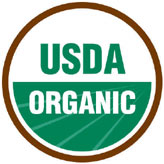
Illustration of the USDA organic sealThe most important information on food product labels is in the fine print of the ingredients rather than in the big, splashy words used to sell the product. That has always been the case and today it’s truer than ever.  With major food companies trying to capitalize on the growing interest in eating healthfully, it is increasingly important for consumers to know what the words on the product really mean.
This series has discussed food labeled “gluten-free” and “natural” and the confusion built into such labeling by companies taking advantage of what many describe as nebulous FDA regulations.
Confusion also exists about the term “organic,” even though it has been around for a long time. In fact, until around the 1920s, all farming was organic, with farmers using strictly natural methods to treat the soil and to fight pests. With the introduction of industrialized farming -- notably the development of DDT after World War II as a means to control pests -- the widespread use of chemicals became the rule and organic farming the exception.
But today, DDT is banned and more than 40 million Americans say they buy organic food. Sales last year topped $40 billion, according to the Organic Food Industry, and the organic movement is growing steadily. Still, millions of shoppers remain unclear about why those products in specially designated sections of the supermarket are different from the rest. What makes them “organic” and why does it matter?
In this case, there is at least no official confusion. The U.S. Department of Agriculture has set specific standards for food to be certified “organic.”  Producers who sell less than $5,000 a year in organic foods are exempt from certification, but are still required to follow the USDA's standards for organic foods.
The standards:
  • Prohibit the use of chemical fertilizers, synthetic substances, irradiation, sewage sludge, or genetically modified organisms (GMOs) in production.
  • Prohibit the use of antibiotics and synthetic hormones in organic meat and poultry.
  • Require 100 percent organic feed for organic livestock.

The USDA currently allows foods that are “100 percent certified organic” (fruits, vegetables, eggs) to display the green USDA Organic seal. Use of the seal is voluntary, but its presence is key. It means the producing farm has passed muster from a trained inspector.
Food products that contain more than one ingredient (cereal, for example) may also use the seal if 95 percent of the ingredients are organic. Then the product may be labeled “organic.”
Products made with 70 to 94 percent organic ingredients may not use the USDA seal, but may say “made with organic ingredients.”
Whatever the percentage of organic food ingredients -- whether the product is labeled “100% organic,” “organic,” or “made with organic ingredients” -- none of the ingredients may be produced from genetically modified organisms. That means products “made with organic ingredients,” while only requiring 70 percent of the ingredients to be organic, must nonetheless be 100 percent non-GMO.
This is a key regulation today, with a major debate under way in Congress and many state legislatures on whether to require food producers to list genetically modified organisms on the label. That’s the subject of a future article.
It should also be noted that it’s not just a desire to avoid food that has been produced with the aid of chemicals that motivates many consumers today. Increasingly, more Americans are buying locally produced foods. The fruits, vegetables, eggs, beef, etc. go directly from local farm to local supermarket or kitchen table. This offers fresher foods while also using less fossil fuel for transportation. And the money spent at a local farmers market is more likely to stay in the community. A win/win/win situation.
But again, the key is to check for the green label. Not all food sold at farm stands or farmers’ markets is organically grown. If no label is shown and the vendor is advertising “organic” produce, ask to see the certification. It should be no problem.
Some people question whether eating organic is worth the added difference in price (largely a result of the government’s heavy subsidization of the conventional food system). That’s a personal decision. The goal of this series is to provide information to help shoppers make more-informed decisions on what they buy and what they eat.
In that regard, the facts are that: 1) food certified as organic must meet strict, transparent government standards (no chemicals, no hormones, no antibiotics, etc.); 2) more consumers are choosing to buy organic food every year; and 3) price is becoming less of a factor in making that decision.
Next: The debate over GMOs.

IMG_0461.jpg
Organic produce sections are growing steadily in supermarkets.
Photo by Bob Gaydos

Getting certified
A common perception among consumers is that organic farming is old school. Basic stuff. No artificial ingredients. Period.
Not really, says Liana Hoodes. “Organic farming today is definitely not your grandfather’s organic farming," says Hoodes. She says organic farmers today are using computers, new technology and new techniques to improve the quantity and quality of their products. She only wishes the USDA would provide more than 2 percent of its funds for research to speed the development of 21st Century organic farming.
Hoodes, of Pine Bush, is policy adviser to the Northeast Organic Farming Association and to the National Organic Coalition, an organization she helped found and which she served for years as executive director. The NOC is both an advocate for and a watchdog to protect the integrity of organic farming. NOFA certifies organic farmers.
Certification does not come easily. A farmer must lay out a plan, with maps of every field, every year. Crops must be rotated. Changes must be noted. Materials used must be USDA-approved. A yearly inspection by an independent inspector must be passed.
Hoodes says there’s not a lot of cheating going on among farmers looking to get the green USDA seal and the inspectors are good at spotting those few who do try. For example, an inspector might see some blue barrels tucked behind a barn, the kind of barrels chemicals come in. Or, the cows at a dairy farm may not look so healthy. A request to use the bathroom in the house provides an opportunity to discover antibiotics prescribed by a veterinarian, obviously not intended for humans and prohibited for organic cattle.
Even on non-scheduled inspection days, the farms are under scrutiny. One inspector wondered how a field full of weeds could produce so many organic tomatoes. A surprise check of the property revealed the “farmer” was buying boxes of tomatoes at the supermarket and selling them as organic.
While such behavior may be uncommon among organic farmers, a food industry that promotes itself as imposing strict, transparent standards needs to live by those standards. That’s why the USDA seal is stressed by organic producers.