Tuesday, October 29, 2013

Everyone should be safe from violence

(My latest Addiction and Recovery column)
By Bob Gaydos

This column regularly stresses the fact that, while things may seem desperate, there can also be hope in the midst of an addictive situation. That does not mean that people in the middle of an alcohol- or drug-fueled crisis ought to deny the reality of what is happening or place themselves or others in danger because of some wishful hope that the danger will magically -- hopefully -- go away.
There’s a time to have hope and a time to protect oneself from the threat of an alcoholic or addict in the throes of the disease. Members of the Al-Anon Family Programs learn at their first meeting that they cannot control the behavior of the alcoholics in their lives, or their disease. What they can do is take care of themselves, including, if need be, protecting themselves from the violence that can sometimes accompany the drinking.
October is Domestic Violence Awareness Month. You won’t find Al-Anon publicly supporting any of the worthwhile programs devoted to educating the public about the problem or to protecting victims or potential victims. That is not because Al-Anon members don’t know or care about the issue. Quite the contrary. But Al-Anon, like Alcoholics Anonymous and other anonymous, 12-step programs, has traditions that guide members’ and groups’ interactions with the public.
In sum, there are no interactions. Not officially. As the group’s literature explains, Al-Anon’s long-standing tradition is not to engage in any public causes and to avoid controversy. The reasons are simple:
 1. Doing so would distract members from the group’s primary purpose, which is to help the families of alcoholics.
 2. Becoming involved in some public cause opens the group to outside influence. It puts the integrity and credibility of Al-Anon at risk from those who may not share its goals, but rather, might want to exploit its name. Members are free to voice their opinions and support any causes they choose, without attaching Al-Anon’s name to it.
However, just because Al-Anon will not publicly support some effort to combat domestic violence does not mean it doesn’t recognize the problem. Honesty is the touchstone of recovery. One of Al-Anon’s approved books that deals specifically with domestic violence is “From Survival to Recovery. Growing Up in an Alcoholic Home.” The title speaks for itself, but the authors go out of the way to include a special message on page 9, before getting into the body of the book. The message is clear and concise in addressing the issue:
 “A SPECIAL WORD TO ANYONE CONFRONTED WITH VIOLENCE
“Al-Anon’s gentle process unfolds gradually, over time. But those of us facing violent, potentially life-threatening situations, may have to make immediate choices to ensure safety for ourselves and our children. This may mean arranging for a safe house with a neighbor or friend, calling for police protection, or leaving money and an extra set of keys where they can be collected at any time of emergency. It is not necessary to decide how to resolve the situation once and for all --  only how to get out of harm’s way until this process of awareness, acceptance and action can free us to make choices for ourselves that we can live with.
“Anyone who has been physically or sexually abused or even threatened may be terrified of taking any action at all. It can require every ounce of courage and faith to act decisively. But no one has to accept violence. No matter what seems to trigger the attack, we all deserve to be safe.”
The passage actually comes from another Al-Anon publication, “In All Our Affairs: Making Crises Work for You.” It is as straightforward a bit of advice as one can get anywhere on the issue of violence, alcohol-related or not. This, from a program that makes a point of not generally giving advice.
A bit of advice here: Anyone living with problems related to someone else’s drinking or drug abuse -- including violence or the threat of violence -- can find welcoming ears,  understanding and help in Al-Anon.
To find an Al-Anon meeting in New York state, call (800) 344-2666.
The national meeting information number is (888) 425-2666.
On the web: http://www.al-anon.alateen.org. or http://www.alanonny.org.

bobgaydos.blogspot.com

Friday, October 11, 2013

Can we just not call it food?

By Bob Gaydos
What do beavers have in common with raspberries?


Sometimes, a little bit of curiosity can ruin your appetite.

I love raspberry-flavored, frozen Greek yogurt. I defy you to find a more soul-satisfying treat, especially with some dark chocolate shavings sprinkled on top.

Recently, having become a more conscientious food label-reader, I
noticed a story on the Internet about ingredients that don’t have to be listed, but come under the heading of “natural flavoring.” Among the “natural flavoring” ingredients listed was “castoreum.”

“Hmm, something from the castor bean?” I wondered.

Off to Google I went and soon found myself in a state of shock, disbelief and a little bit of, well, disgust.

It turns out that castoreum is a yellowish secretion from the castor sac of adult male and female beavers. The castor sac is located between the anus and genitals in beavers and, along with its urine, is used to scent mark the beaver’s territory. Sweet.

While I had to admit the source made it a “natural” ingredient, I also wondered why the natural flavor of raspberries wasn’t sufficient. And more to the point, I wondered who the genius was who decided that the exudate from a sac located next to a beaver’s anus would be a good thing to add to yogurt to improve its flavor. What was the “Eureka!” moment? Who did the first taste test?

It turns out castoreum has been used for years in perfumes. So I imagine it wasn’t such a leap to go from putting a dab on the wrist to wondering if a shot of beaver sac juice would enhance the flavor of ice cream, candy, yogurt, iced tea and gelatin, especially, apparently, strawberry- and raspberry-flavored foods.

In case you’re wondering, the Food and Drug Administration puts castoreum in the “Generally Regarded As Safe” category. Maybe so, but I am generally going to think twice before I buy raspberry yogurt again.

As it happens, the search for information on castoreum also led me to data on what I at first thought was the source of castoreum -- the castor bean. More bad news.

The castor bean (actually a seed) is regarded as the deadliest plant on the planet. It is the source, yes, of castor oil. But it is also the source of ricin, a powerful poison with no known antidote. The bean is also the source of a food additive identified usually as PGPR. I have learned that when I see a bunch of letters like that on a food label, it’s wise to find out what they mean.

So, remember the added ingredient to my favorite dessert -- the chocolate shavings on top? Guess what’s listed on the label of Hershey’s dark chocolate bars? Yup. PGPR. Polyglycerol polyricinoleate.

  PGPR is a sticky yellowish liquid that acts as an emulsifier -- it holds the chocolate together. It is also much cheaper to produce than cocoa butter, meaning Hershey’s can give you less chocolate in its chocolate, at lower cost to itself, thus making more profits. PGPR also lets the candy sit on the shelves much longer and still be considered safe to consume. Apparently, we’re supposed to ignore that word ricin in the middle of the PGPR as well as the lack of cocoa in the chocolate bar. The FDA says PGPR is safe for human consumption, although lab tests on chickens showed what was described as reversible liver damage.

Finally, while still looking at the Hershey’s label, the word vanillin caught my eye. Again, not necessarily what it seems to be. Yes, vanillin is an extract of the vanilla bean and is used as an additive in lots of foods. But, because of the rarity of the bean and the cost associated with producing it, much vanillin today is of the synthetic variety, coming from lignin, which is a byproduct of, ahem, wood pulp.

So there you have it, my favorite dessert: ricin and wood pulp sprinkled on top of beaver scent-marking sac juice. Some days it just doesn’t pay to read the labels.

bobgaydos.blogspt.com


Friday, October 4, 2013

What's it all about, Faust?

By Bob Gaydos


I was privileged recently to enjoy a local opera company’s production of “Faust,” by Charles Gounod. Based on Goethe’s legendary German tale, this is no easy opera to tackle and the Hudson Opera Theatre in Middletown, N.Y., more than did it justice.

I also came away from the production with a renewed awareness of what a cad Faust was. Or was he a rake? A rapscallion perhaps? Good words all, and yet each with a slightly different take on what kind of scoundrel the opera’s title character was. They are also words that, unfortunately, have pretty much disappeared from use in American conversation.

What would Faust be called today, in everyday American English? I wondered. Hmm, a disillusioned old man, a scholar no less, who makes a deal with the Devil to provide Faust with youth and the unquestioning love, adoration and physical pleasures of young women. In return, Faust agrees to give his soul to the Devil forever, in Hell. Faust even identifies the object of his desires -- a young, teenaged virgin, Marguerite, who is impressed with his seeming sophistication and his attention to her -- and the Devil helps him woo and win her with a dazzling array of jewels. In the process of his “conquest,” Faust gives the girl a sleeping potion (provided by the Devil) to give to her mother so that she will not disturb their night of, let’s call it love-making. The potion kills the mother, leaving Marguerite guilt-racked and further vulnerable to the attentions of Faust, who promptly abandons her.

Long story short: Marguerite gets pregnant, is ostracized by a society that doesn’t look kindly on young, unmarried mothers and is brutally condemned by her brother, a soldier returned from the wars. In utter depression, with nowhere seemingly to turn, she kills her baby, is arrested, thrown in prison and condemned to death. At this point, Faust, the lout, returns with an offer to help her escape (again, courtesy of the Devil).

Clearly, the man is an a--hole.

At least, that’s what he’d be called today, I concluded. That’s it. One overused obscenity providing not the slightest clue as to the true nature of the man’s churlish behavior. It seems to me that when words lose their precision they eventually lose their meaning. Communication gets fuzzy. And so, Congress is a bunch of a___s. The president is an a____. The guy who cut me off in traffic is an a____. My boss is an a______.  My brother-in-law is a flaming  a______.  Rush Limbaugh is an a______. (Well, sometimes it works.)

In the spirit of the late Bill Safire, I have compiled a list of words that could be used -- once upon a time were used -- to describe men of questionable, if not dubious, character. You may have noticed a few sprinkled throughout this piece. In the process, I have become impressed with the diversity of choices the English language once offered to describe insensitive blaggards like Faust.

There’s a good one. Blaggard, or blackguard. It’s derived from
Old English usage, meaning a “black-hearted” person. Like Faust. It can mean a villain, a rogue (another rarely used good word), an evil person or someone with dubious morals. Faust personified.

Let’s go back to “cad.” It is defined in one dictionary as “an ill-bred man, especially one who behaves in a dishonorable or irresponsible way toward women.” Perfect.

For the record, my list thus far includes: scoundrel; wastrel; ne’er-do-well; rogue; cad; lout; laggard; reprobate; scalawag; rapscallion; rascal; bounder; oaf; blackguard; boor; and dolt

The French, of course, always have a word for anything. In this case, considering it’s a French opera, the perfect word for Faust is roue. A roue is defined as a dissolute person. That is, someone devoid of most moral value, especially one who places values on sensual pleasures. Think Michael Caine in “Alfie” and Warren Beatty in “Shampoo.” Matthew Mcconaughey in most anything today. The word roue comes from rouer, meaning to break on the wheel, the feeling being that such a person deserves to be punished in this manner.

A roue is the French version of a favorite of mine, a rake, which leads to the exquisite lothario and libertine and, eventually, to perhaps the one commonly used modern word that accurately fits the young-teenager-loving Faust: lech.

I’m open to further suggestions for my list. Indeed, if we weren’t such a nation of language lay-abouts and if we weren’t in such apparent denial about the variety of villains in society today, we could revive some of these perfectly usable and descriptive words. And we could give the A-word a much-needed rest.

bobgaydos.blogspot.com  

Tuesday, September 24, 2013

Stepping down, slowly, from suboxone

(MyAddiction and Recovery column.)

By Bob Gaydos

Five years ago, hooked on heroin and pain pills, Mary (not her real name) says, “I was depressed, malnourished, angry and I had just gotten out of jail. That was my turning point. I could continue downhill or change my life.”
Mary decided to change her life. Today, she is clean and sober, married, has a son and is attending classes at SUNY Orange. She says she owes much of this change to another drug -- suboxone -- which allowed her to kick the pain pills and heroin. Taking suboxone, which cost $200 a week and was not covered by her health insurance, was still cheaper than the drugs she was using, she says.
Now, she’s at another turning point. She’s weaning herself off suboxone. “I’m scared,” she admits. I feel when I’m on it, I’m safe. I don’t know if it’s the A.A. meetings or suboxone or both.”
Dr. Rodolfo Nazario, who calls suboxone “a miracle drug,” would say both. Nazario says some kind of outpatient program is also necessary to “deal with the psychological part of the disease.” Even then, it’s no easy transition. Despite his decade of treating patients with suboxone, Nazario says he has been able to wean “very few” off it. And, as he and Mary both emphasized, withdrawal from suboxone can be “horrible.” Which may explain Mary’s fear.
She has first-hand experience of using it in other than the prescribed manner. Two years after starting the suboxone treatment, Mary had a craving for heroin. She stopped taking suboxone for three days, then got heroin. She used it for two months, then one night decided to go back on suboxone before being in withdrawal from the heroin. That is not the prescribed method of treatment. “I felt the heroin on one side of my head, suboxone on the other,” she says. “I had seizures, sweating, vomiting, shaking. I was speaking a different language.”
She hasn’t tried that approach again. From 2 1/2 pills a day five years ago, when she first saw Nazario, Mary is down to half a pill (4 milligrams) a day. She’s following doctor’s orders. Thus far, she says, everything has been fine. “I’ve never gotten high from it,” she says. “I’ve heard you can. I don’t know how.”
In fact, the secret of suboxone, according to those who recommend and prescribe it, is that, while it is a morphine-like substance that provides an addict with a feeling of “normalcy,” it’s impossible to get high on it. Now widely prescribed to treat opiod dependence, suboxone is actually two drugs in one delivery system. Buprenorphine does the same thing for the brain that opiates do, thus the feeling of “normalcy.” The second drug, naloxone, prevents the high that comes from the opiods reaching brain receptors. For safety reasons, the delivery system itself has changed from tablets to a film that is placed on the tongue.
While a strong proponent of it, Nazario has no illusions about taking patients off suboxone. He says some patients do not have the willingness to try weaning off the drug. “I try to step them down slowly,” he says. “Some can take more withdrawal than others. We aren’t here to be martyrs anymore. If they don’t have the medicine, they suffer. They need the drug just to get by. I encourage them to try to get off. If they can’t, they can’t. The important thing is, the patient isn’t doing  anything illegal and is performing well.”
“My goal,” says Mary, “is to get off the suboxone, maintain my sobriety, keep going to AA meetings. I consider myself an addict. I don’t drink. I feel fine. No cravings, no side effects. I’ve been doing it very slowly.” Her doctor and people in recovery would say that’s the way to do it. I’ll keep you posted.
*  *  *
Doctors in New York state must take a special course to be licensed to treat patients with suboxone. When they are accredited, they are limited to 30 suboxone patients in the first year, 100 thereafter.
Dr. Rodolfo Nazario, of Middletown, who has been prescribing suboxone for 10 years,  says, because of the growing abuse of opiod pain killers, especially among young people, “We should be able to treat more.” He says he’s never had 100 patients.
He also is a strong proponent of the new state law that closely monitors prescription of pain medications by doctors. Some of the growing abuse has been attributed to doctors being too willing to prescribe addictive pain medications. “I hate to say it, Nazario offers, “but there are some physicians … I call them licensed drug dealers.”
Nazario also has some harsh words for insurance companies that won’t pay for suboxone treatment, but paid for the Oxycontin and Vicodin: “You make them addicts, but then won’t treat them.”

bobgaydos.blogspot.com

The fruits of Obama's Syria 'failure'

By Bob Gaydos
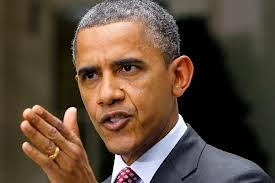
President Obama ... more to his Syria police than might appear

In the category of Things Are Never Quite the Way They Appear  (especially in international diplomacy), I give you what many “pundits” regard as President Barack Obama’s humiliating defeat in getting Syrian President Bashar Assad to: 1. Admit that his country, contrary to all his previous claims, has a stockpile of outlawed chemical weapons; 2. Agree to promptly provide an inventory of those weapons and 3. Turn the weapons over to a United Nations delegation for the purpose of destroying them all by next year..
This humanitarian feat, which will save countless thousands of lives, was accomplished without firing one missile in righteous anger or placing one set of American GI boots on the ground in the midst of Syria’s brutal civil war. Stay out of Syria is what a solid majority of Americans said they wanted ever since Obama broached the subject of a punishing strike against Syria for using chemical weapons against its own people. It is also what most Republicans in Congress insisted they wanted, contrary to their usual position on military intervention, but consistent with their policy of opposing anything Obama proposes. In this case, to the president, Republican motives didn’t matter; end results did.
This is strictly my opinion. I have no special insight into White House strategy, no one leaking me information on the president’s intentions. Rather, I have my own version of common sense and what I believe is a willingness to judge events by outcomes rather than political bias.
One of the things I believe may not necessarily be as it appears -- or as many critics would have it be -- is the president’s intent. I do not believe Barack Obama is so dumb as to submit a proposal to Congress that he wants passed if he knows it will be defeated. He is a biracial man living in a racist country who earned degrees from two Ivy League schools -- Columbia and Harvard Law, where he was editor of the Law Review. He got elected president. Twice. Having made history, he also has guided the country slowly out of a devastating, largely Republican-created recession and got a health care plan for all Americans through a Congress that can barely agree to meet. This is one smart man (although I think his “red line“ on chemical weapons was a tactical mistake).
So, I have serious doubts that the president ever intended to launch a military strike against Syria, precisely because of the opposition he knew existed among average, war-weary Americans, as well as entrenched anti-Obama, rank-and-file Republicans. He signaled that when, after days of threatening a strike, he agreed to ask Congress to debate and vote on the issue, without even asking members to cut short their vacation to do so. That made the proposal DOA, with even many Democrats opposed to U.S. involvement in Syria because of their constituents’ opposition to it.
Ironically, with the disarmament agreement now being finalized with Syria and Russia, Obama’s continued threat to use military force if Syria fails to comply with the agreement gains much more validity and support among Americans than his original threat. Assad has admitted he’s got the weapons. French, British and American experts, as well as Human Rights Watch, say, based on a United Nations report, that there is no doubt it was Assad’s troops, not rebel forces, that used them. The U.S. Navy’s continued presence in the Mediterranean Sea now takes on even greater import to Assad.
Then, of course, there is the disarmament agreement itself. Americans are strongly of two minds on this:
1. One group, that didn’t necessarily want to attack Syria, nonetheless thinks it is embarrassing that Russian President Vladimir Putin is getting credit for the plan and that he lectured Americans (in the New York Times no less) about thinking they had to act as morality policeman of the world.
2. Another group feels it is high time America stopped acting as morality policeman of the world, focused on domestic issues instead and enlisted other countries’ help in finding diplomatic, rather than military, solutions to international crises.
I don’t think Obama cares that Putin is getting most of the credit for the chemical weapons agreement. I also don’t think the agreement just sprang into Putin’s head in a dream one night. In fact, Russian officials have acknowledged such a plan was discussed months ago with American officials. Just as Obama is no clueless patsy in this, Putin is no hero. He is no champion of human rights and Americans shouldn’t really pay serious attention to what he has to say about life in the U.S.
In fact, Russia has been the main supplier of arms for the Syrian Army, enabling the civil war to drag on and produce more than 100,000 deaths and a flood of millions fleeing their country. But it is precisely for the link with Syria that Putin had to appear to be the primary force behind the non-military plan.
Of course, this helps Putin gain even more political stature at home. As mentioned previously, Obama has been elected president twice. He cannot run again. His place in history is forged and his future as a statesman guaranteed. But Putin has an Olympics coming to his country next year and has stirred worldwide condemnation for Russia’s anti-gay laws. I wouldn’t be surprised if Russian authorities were tolerant of demonstrations supporting gay rights next winter or if Barack Obama were among the world leaders being most vocal about demanding such behavior. And, while he won’t show it, I don’t think Putin will regard his apparent backing down on gay rights as a “humiliating defeat” on the international stage.
Meanwhile, a major store of chemical weapons will be destroyed, a potential threat to Middle Eastern neighbors of Syria will have been removed, rebel forces in Syria will know they don’t have to fear facing such weapons, not one American soldier will have set foot in Syria, not one Syrian citizen will have been listed as collateral damage in a strike by American “smart” missiles, the United States will have shown cynical countries that it really can use diplomacy, rather than military might, to resolve a crisis, Assad will have been shown to be a murderous liar, Putin will have had some of his Lone Ranger image stripped away in international diplomacy, President Obama, counter to his image in some corners as a reluctant warrior, will have appeared to be willing and eager to use U.S. military power, and Republicans will have emerged as a party opposed to war. By the way, the overwhelming majority of Americans support the non-military resolution of the Syrian crisis.
Humiliating defeat my ass..

bob@blogspot.com

Friday, September 6, 2013

Putin on gays: A Russian fable

By Bob Gaydos
Russian President Vladimir Putin


There’s an old Russian proverb that goes something like this: “How do you know when the president (prime minister, czar, party chief) is lying? His lips are moving.”

OK, so it’s not an old Russian proverb, but you get the gist. Today, it means if Russian President Vladimir Putin is speaking, the words emanating from his mouth are subject to change at any moment according to whatever he thinks will best suit his ultimate goal. That goal seems to be to consolidate his grip on power through whatever repressive measures he can get away with while pretending to support democratic principles of government.

So when Putin says, for example, that there is no discrimination against gays and lesbians in Russia -- despite recent passage by the Duma of a law banning any public mention of homosexuality that could be construed as propaganda supporting it -- one can assume it’s a lie. One can further assume that he thinks he has a good reason for making what common sense declares to be a bunch of bull.

That reason, of course, is the looming presence of the 2014 Winter Olympics in the Russian resort city of Sochi and Putin‘s desire to avoid a boycott of the games and/or worldwide condemnation of the Russian law and measures that might be taken to register protest against it. There are hundreds of millions of rubles at stake and Russia can ill afford to lose any of them. So don’t worry, folks, in keeping with the Olympic spirit that forbids discrimination of any kind, there will be no discrimination against gays and lesbians in Russia during the Olympics, Putin says,

Afterwards? Well, that’s another matter.

And that’s what needs to be remembered. In Russia, Putin faces no serious challenge to his words from a free, vigorous press (he’s worked hard at squelching that) and, in this case, most likely has the support of a majority of Russians. In a country with a poor history of tolerance for minorities, few are going to point out any inconsistencies between his words and actions regarding homosexuality in Russia, during and after the Olympics.

President Obama, angry that Putin granted temporary asylum in Russia to Edwin Snowden, who made public voluminous files on the U.S. government’s efforts to spy on ordinary Americans and also upset that Putin has resisted taking military action against Syria for use of chemical weapons against its own people, canceled a meeting with Putin in Russia during this week’s G20 summit. Instead, Obama met with gay activists in Russia, a double insult.

No sweat for Putin. He softened his stance on Syria and said some of his favorite Russians --Tchaikovsky, for example -- were homosexuals and yet are still loved by Russians. Whatever suits his need at the time, the former KGB chief will say, usually with a smile.

The anti-gay law has led to calls to boycott the Sochi Games, but such actions always hurt far more than their intended target. In this case, thousands of athletes -- including countless gay athletes -- who have worked for four years for this honor would be denied what for many is a once-in-a-lifetime opportunity.

Gary Kasparov, former world chess champion and an outspoken Russian critic of Putin, says there are other ways to protest. In an interview with Huffington Post, he says the protest are not about the athletes, but rather “about Putin and his repressive regime.” He says world leaders (presidents, diplomats, royalty, etc.) should boycott the games, denying Putin their implied support for his policies and perhaps weakening his resolve to pursue similar ones.

Kasparov also thinks Olympic sponsors such as Coke, McDonald’s, Visa and other major companies should recognize the views of their main customers and express opposition to the Russian law by adorning their products with rainbow flags or other symbols of support for gays. And he says NBC and other broadcasters of the Games should use their freedom and their platform to do stories about, not only the anti-gay law, but other repressive measures taken by Putin. A little press freedom in Russia would not be such a bad idea.

Admittedly, a boycott of the games would be dramatic, but would likely only stiffen Putin’s us-against-the-world resolve and not sway Russian citizens, a difficult task under any circumstances. Moving the games from Sochi (now under martial law) is impractical given time constraints. That leaves broad public condemnation of Putin and education of the Russian public -- by previously mentioned means and the use of social media -- as the most effective way to make Putin eat his words. It may also wake up the Russians and make him less likely to pursue future oppressive measures.

There’s another old Russian proverb. Something about sleeping dogs and lying. OK, it’s not Russian, but you get the gist.

bobgaydos.blogspot.com

Monday, August 19, 2013

We've become a nation of us vs. them

By Bob Gaydos
A scene from the movie, "Fruitvale Station."
I saw the movie “Fruitvale Station” the other day. I wept at the end. Real tears, not just some glistening in the eyes. This, even though I knew what was going to happen because we’re told at the beginning of the movie.
This tells me a couple of things:
-- The director did a terrific job of story-telling.
-- I felt strongly about something going on in the movie.
As for the movie itself, I am apparently not alone in my opinion. The independent film by first-time director Ryan Coogler is receiving rave reviews and awards even though it has only been recently released. Still, I was surprised at my strong, personal reaction to the film.
I probably shouldn’t have been. The reason I saw the movie in the first place is that my oldest son, Max, recommended I go. He doesn’t do that a lot. I “should” see it, he texted me. Not the usual Hollywood movie, he said. Yes and yes.
But there was also a personal connection for Max and me with the movie. It is based on a true event -- the arrest and fatal shooting of an unarmed young man by police in Oakland on New Year’s Day, 2009. Max had been arrested by police in Oakland during the Occupy demonstrations in 2011. Police response to the Occupy demonstrators -- unarmed save for cell phones and cameras -- was also violent. Their civil disobedience was met with tear gas grenades, flash bang grenades, rubber bullets -- fired at the demonstrators, not in the air. Civilians were hurt, thrown in jail, treated like criminals because someone decided they represented a threat. A threat just like the young black males apparently represented to the white police officers who hauled them off a BART train for fighting, ignoring the white males who started the fight.
In Oakland, the shooting victim, Oscar Grant, and his friends fit a profile -- young, black males, argumentative and not meekly complying with police orders to lie down with their hands behind their backs. Trouble. The same with Occupy demonstrators. Trouble. Even though they were demonstrating against injustices in society that affect police as much as the rest of us.
There has been a disturbing trend in cities across the country in recent years to respond to peaceful civil disobedience, such as the Occupy movement, with military style tactics, as if the demonstrators were an invading army rather than neighbors, friends and family members of the police themselves. I don’t know where this profiling of Occupy demonstrators came from, but it seems unlikely to have happened simultaneously in so many places at the same time. Some federal agency had to have decreed the demonstrators fit a profile of trouble makers -- potential domestic terrorists even -- who had to be quashed, rather than Americans citizens exercising their constitutional rights to assemble and voice their opinions. What’s really disturbing to me is how everyone down the line from that profiling decision seemed to accept it rather than to judge the demonstrators on their own.
I am not anti-police. Far from it. I believe a well-trained, appropriately armed police force is essential to maintain order. I do not believe most local police forces need big, armored vehicles to handle peaceful demonstrations. I do believe much more training on dealing with people in emotionally charged situations, rather than with weapons, would be a major benefit to all police departments.
Mostly, I believe that when there is no threat of force from the subjects involved, police should be trained to resist the tendency to make it a situation of us versus them. We are you. You are us. Oscar Grant was someone’s son, someone’s father, someone’s partner. He was a human being. He had done jail time for selling marijuana. He had been fired from his job. And he was apparently struggling to overcome the profiles that said this was his lot in life.
Yes, the profile said he had to project a certain arrogance in order to survive, but he was only out to celebrate New Year’s Eve with friends and wound up shot dead by a white transit cop who said he mistook his gun for his Taser. The cop was convicted of unintentional manslaughter, served 11 months of a two-year sentence. In Oakland, with its long history of out-of-control police response. Grant’s death sparked demonstrations, including one every New Year’s Day at Fruitvale Station.
There are stories similar to Oscar Grant’s in cities across the country. The film was released during the Trayvon Martin trial in Florida. The day I saw the film, a federal judge in New York City ruled the police force’s program of stop-and-frisk was unconstitutional because of obvious racial profiling -- a welcome wakeup call only if city officials hear it.
This being a movie, there are things that were added, or left out, that might affect someone’s opinion of it. I get that. For many there will be a strong message of injustice still to be rectified. Yet others may see it as a shameless effort to manipulate anti-police sentiment. I’ll keep it simple. In Oakland, in 2009, a cop shot an unarmed, handcuffed, 22-year-old black male to death. Shouldn’t have happened. In Oakland in 2011, cops fired tear gas, flash bang grenades and rubber bullets at, among others, my son Max, then 19. He was armed with only a camera. They handcuffed and arrested him. Max is not black. He’s alive and well. But if one cop can mistake his gun for his Taser, why can’t another one mistake real bullets for rubber?
I wept for Oscar and Max and because we have become a nation of us versus them. Go see the movie.