Showing posts with label yankees. Show all posts

Sunday, August 28, 2016

A sports fan in desperate need of a back page

By Bob Gaydos
Usain Bolt ... having fun
I started reading newspapers from back to front pretty much when I started reading newspapers regularly. Eleven. Twelve. Little League age. I should back up a bit here and explain that in our house having a half dozen or so daily papers stacked on a chair at the end of the kitchen table was routine. My mother was an avid reader of newspapers, a fact which baffles me to this day because she virtually never discussed current events. She had to be the best-informed, least-opinionated person I’ve ever known. Kind of the opposite of what we have today.
At any rate, among those daily papers were two New York City tabloids, The New York Daily News and The New York Daily Mirror. For a boy whose life revolved around sports, they were required reading and sports, of course, was the back of the paper, starting with the back page. The papers had great reporters, columnists, photos, everything necessary to keep a blossoming Yankee fan from noticing that other Yankees -- American GIs -- were fighting in a war in Korea. An uncle among them.
As I grew older, my interests broadened, as did my appreciation of good writing. The pile of papers at the end of the table grew taller proportionally. What once consisted of The Bayonne Times, The Jersey Journal, The Newark Star-Ledger, The News and The MIrror, gradually expanded to at varying times include The Herald Tribune (my favorite), the Journal-American, The New York Post and occasionally even the World Telegram & Sun. If there was a sports section, I found it. If it wasn’t the back page, it was still the back of the paper. Fun and games. Batting averages and touchdown passes.
No war. No politics. No crime. No scandal. Plenty of time to read about that other stuff later in the day. It helped me ease into my day even as I began to realize there were other supposedly more important topics to read about. Sports was always an escape valve from the petty annoyances and major disappointments of the rest of life.
Maybe that’s why sports reporters always seemed to be so content, regardless of what was happening in the world. They got to go to a sporting event free, write a story about and do it over again the next day. And get paid for it. Sweet. I had a brief taste of this in my journalism career as a sports editor in upstate New York for a year or so. The heaviest weight the world put on my shoulders was how to play Mark Spitz’s record haul of seven gold medals at the 1972 Olympics. As fate would have it, I worked for a tabloid, so I splashed a big picture of Spitz, his medals and the headline’ “The Magnificent Seven.” I thought it was as good as any of the New York City tabs could do.
Later, as editorial page editor at a different upstate paper for 23 years, I wound up writing about all the other stuff. Stuff I still write about today when I feel the inspiration, which of late has been difficult to come by. All of which is a long way of saying that, while I still turn to sports to start my day today, it’s not nearly the same. First of all, on the Internet there is no back page. More to the point, the sports pages are no longer a sanctuary from the social problems of the day.
One of the biggest sports stories recently was the “retirement” of Alex Rodriguez from the New York Yankees. A-Rod got $27 million to go away. You don’t have to honor your contract for next year, Alex; take the money with our blessings. Rodriguez, of course, was a central figure in baseball’s steroids scandal. He was suspended for a year for cheating. Why he felt the need to cheat is beyond me since he was regarded as one of the best players in baseball without enhancing his performance with drugs. Instead of marveling at his skills, which is, after all, what sports is all about, fans are left to wonder how much his statistics were inflated by steroids.
I watched a movie recently, “The Program,” which details the lengths to which Lance Armstrong (If ever there was a name for a sports hero, that was it) went to win the Tour de France -- seven times. Armstrong, who survived testicular cancer, apparently knew he was good, but not good enough, to win the legendary cycling race, so he signed on for a regimented doping program from the outset, recruiting teammates for the lying and cheating that brought him fame and fortune and ultimate disgrace. He made the front page.
It’s not just drugs. Last week, a kicker for the New York Giants was suspended for one game because of an old domestic violence complaint by his ex-wife. One game. The National Football League has been plagued with domestic violence complaints for several years and has yet to figure out a consistent policy on dealing with them. Then again, the NFL also had trouble figuring out how to penalize teams that deflate the footballs.
Of course, the biggest sporting event of the year has been the Olympics in beautiful Brazil, with its polluted waters, corrupt government, and economic problems. The event began with the Russian track team being banned because of a government-sponsored doping program. It featured a medal-winning American swimmer, Ryan Lochte, claiming he and some teammates were robbed at gunpoint in Rio, when they actually had gotten drunk and trashed a service station bathroom.
This was all back page stuff, but hardly a diversion from the travails of the day. Hardly uplifting of the human spirit, as the Olympics likes to present itself.
But then … there was also Michael Phelps, still swimming despite two DUI arrests, and his record haul of medals. Also, the other USA swimmers, male and female, the women gymnasts, the basketball team, the Syrian refugee swimmer winning the gold, the female runners who collided, fell down, helped each other up and finished the race. Literally uplifting.
Finally, there is the face of this Olympics, at least for me: Jamaican sprinter Usain Bolt blurring to victory for the third time in the 100-meter dash, permanently retiring the title of “Fastest Human Alive.” Bolt actually took the time in a qualifying race for the 100-meters to glance back to see if anyone was gaining on him. No one was. He smiled. Wow! Now that’s a back page.
Bolt won three golds. Of course, the Twitterverse could not avoid the question of the day: What drugs do you think he’s on?


Dedicated to: Jimmy Breslin, Jimmy Cannon and Jim Murray.


bobgaydos.blogspot.com


Wednesday, July 13, 2016

Dealing with the stigma of alcoholism

Addiction and Recovery


By Bob Gaydos
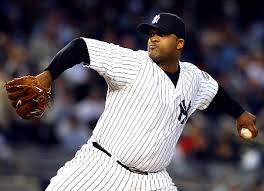
C.C. Sabathia

“Stigma” and “disease”: Two crucial words in any discussion of alcoholism. One defines the alcoholic as a sick person who needs help getting healthy. The other sees him as a weakling whose bad behavior needs fixing.
The irony is that, even today, when the disease is given at least lip-service recognition by society, those who try to get healthy still have to deal with the stigma. He’s in recovery. Shhh, don’t talk about it.
This may not be so obvious when it’s your next-door neighbor. After all, no one’s publicizing his or her recovery from the disease. Plus, it’s nobody else’s business. But when it’s someone in the public eye, it’s amazing how people still avoid saying the obvious.
Last October, C.C. Sabathia walked into the office of New York Yankees manager Joe Girardi and said, “I need help.” The pitcher, a one-time all-star, said he had a drinking problem. He needed to go to rehab.
Sabathia said, “It hurts me deeply to do this now, but I owe it to myself and to my family to get myself right. I want to take control of my disease, and I want to be a better man, father and player.”
Eight months later, on a baseball team that features young pitchers who throw the ball well over 90 miles an hour, Sabathia, 35, is the “surprise” story of the year. Even with a shaky performance in a recent game, he has been one of the team’s most reliable pitchers.
What brought about the return to form? The experts on talk radio had the answers: He’s older and smarter. He learned how to pitch. He finally realized he couldn’t throw the ball by every batter. That knee brace is helping him.
Girardi said C.C. has “inner strength.”
C.C. said, “Health is important.”
No one stated the obvious: C.C. is in recovery from the disease of alcoholism. He is focused on being “a better man, father and player,” not where his next drink is coming from. Those theories about getting “smarter” about pitching may be true, but to an active alcoholic they are irrelevant. That’s the nature of addiction.
Enter Johnny Manziel.
He had everything coming out of Texas A&M in 2014 to be a quarterback in the National Football League -- lots of awards, even the perfect nickname: “Johnny Football.”
Today, Manziel, 23, can’t find a job in the NFL. His life before, during and after college has been a series of drinking and trouble: disorderly conduct charges, college rules violations, confrontations with fans, car wrecks, bar fights, an abuse claim by an ex-girlfriend. His agent dropped him. The team that drafted him, the Cleveland Browns, cut him.
He did have one trip to a rehab. When he came back to Cleveland, one story said, his teammates said he looked and acted healthier, more focused. He paid attention to the playbook. But that story also said his teammates noticed he “didn’t drink as much.”
As much as who? A non-alcoholic? There is no “close enough” for alcoholics. The nature of addiction is that one is too many and ten are never enough. Manziel, was surely told this at the rehab and by friends who also surely pointed out all he had to lose if he did not acknowledge his disease. He had all the information. Still does. Manziel reported his car was involved in a hit-and-run accident a few days ago.
He’s stuck in the stigma. The stigma says you’re weak if you can’t handle your booze.
Sabathia acknowledged his disease last October. Today, he is the feel-good story for the Yankees. His on-field and off-field behavior suggest that he is putting the lie to the stigma. But he lives and works in a world full of alcohol. If he’s as smart as people say -- and honest about his intentions -- he also knows he could be just one drink away from Manziel territory.

Tuesday, October 13, 2015

For alcoholics, no time like the present to get help

Addiction and Recovery


By Bob Gaydos
Yankees pitcher C.C. Sabathia entered
rehab on the eve of the playoffs.
“I need help.”
The ability to utter that simple phrase can sometimes be the difference between life and death. It most certainly is the most important first step on the road to recovery for someone struggling with a problem with alcohol or drugs.
According to New York Yankees manager Joe Girardi, those are the first words Yankee pitcher C.C. Sabathia said when he walked into Girardi’s office on Oct. 6 during the team’s lost weekend in Baltimore.
“I was shocked,” Girardi said.
Maybe he was; maybe he wasn’t. It certainly wasn’t the kind of news Girardi needed to hear after watching his team play listlessly in losing three games to the Baltimore Orioles. The Yankees were supposed to be getting ready for the playoffs, but looked more like they were getting ready to take the rest of the year off. Now, here was one of the pitchers who Girardi was counting on to pitch in the playoffs telling him he was entering an alcohol rehab immediately and would not be available to the team for the rest of the year.
The timing could not have been worse ... for the Yankees. For Sabathia, it was apparently perfect. Indeed, for an alcoholic looking for help, timing is everything.
Girardi’s response -- the entire Yankee organization’s response -- to the news was also, from all appearances, perfect. Do what you have to do, C.C. Take care of yourself. Get help. We’ll soldier on without you and see you next year.
That didn’t stop some fans and commentators on sports radio shows from wondering, even complaining, about the timing of Sabathia’s decision. In essence, the complaints boiled down to: How could he do this on the eve of a playoff game? Doesn’t he have any loyalty to the team? How about that big paycheck he’s getting? If he’s had a drinking problem for a while, why couldn’t he wait a little longer and go to rehab when the Yankees weren’t playing baseball any more?
Except that Sabathia couldn’t wait and the Yankees knew it. With addiction, there is no “if.” There is only “now.”  “If I could just hang on until the playoffs are over and then go to rehab” could easily dissolve into “if only we had insisted he go to rehab when he asked for help.” The nature of the disease is to deny and to rationalize. It’s not so bad. I’ll cut down. No one will notice. The team needs me. I can handle it.
Until he can’t. The hope might be that no serious damage occurs to the alcoholic or anyone else during any period of waiting until it’s “more convenient” to get help. Unfortunately, that’s not always the case. Too often, in fact, that cry for help turns into a sigh of futility. What the heck, the alcoholic says; this is who I am. Why fight it? Who needs rehab? My life’s a mess anyway. I’ll just drink until I die.
That’s why, when that moment of clarity comes, via some painful self-realization of the alcoholic or with the perhaps not-so-gentle prodding of loved ones, the time to act is at hand.    
Brian Cashman, the Yankees general manager who signed Sabathia to a $161 million, seven-year contract in 2009, heard the news in a conference call that included Sabathia, Girardi and, significantly, Sabathia’s wife, Amber. “What CC is dealing with is a life issue,” Cashman said later at a press conference. “It is bigger than the game. … “All that matters now is what’s happening now, which is obviously he’s going to get the help necessary in a structured environment.”
Sabathia, who has had problems this year on and off the playing field, seemed to grasp the significance of his decision. He released a statement saying, “I love baseball and I love my teammates like brothers, and I am also fully aware that I am leaving at a time when we should all be coming together for one last push toward the World Series. It hurts me deeply to do this now, but I owe it to myself and to my family to get myself right. I want to take control of my disease, and I want to be a better man, father and player.”
At 300 pounds, Sabathia has been a bigger-than-life man, a proud man, a team leader, an all-star pitcher and World Series champion. He is also a husband and father. In humbling himself and publicly admitting he needs help to deal with alcoholism, he has at least suggested that he sees life in a different way today, that he has had a moment of clarity. If it is genuine, as his family, friends, fans and teammates hope, he will have taken the first step towards a life of recovery. For an alcoholic, there’s no time like the present for that.

bobgaydos.blogspot.com

Saturday, February 14, 2015

Surviving February with warm sports memories

By Bob Gaydos
Frank Shorter, left, and Bill Rodgers.
The Super Bowl has been lost, baseball has yet to begin. The basketball and hockey professionals are passing the time until June, when their championships will be decided. lt has snowed three Mondays in a row. It must be February, the time of year when a lot of sports fans turn their attention to another favorite pastime -- talking about sports.
Forget the dropped passes and ground balls that rolled through an infielder’s legs; this is the time of year I like to remember the good stuff, the memorable stuff, the stuff that makes someone a sports fan in the first place.
I found myself wandering into such a conversation the other day. What was the best single athletic feat ever? The greatest athletic accomplishment? Too arbitrary and prone to record-book chasing, I decided. For my February reminiscence, I’m going with the moments in sports that left an indelible mark on me -- the tImes when I experienced something in person or on TV and went, “Wow!,” if just to myself.
The hope here is that you readers will share your own special moments in sports so that we can have an old-fashioned Hot Stove League discussion. Mantle-Mays-Snider? Montana-Unitas-Brady? The “Immaculate Reception?” Willis Reed’s entrance? What special moments in sports are still with you?
  • I’m starting my list of most memorable moments with an effort I have often called the best single performance by any athlete -- Secretariat’s 31-length victory in the Belmont Stakes in 1973. In winning the Triple Crown and dominating the best of the rest of the three-year-olds, he set a world record time for the 1 1/2 miles distance – 2 minutes 24 seconds. Check it out on YouTube.
  • Also in the category of “can you believe it?” was a more recent display of excellence in the moment -- Derek Jeter’s 3,000th hit on July 9, 2011. With all the baseball world waiting for the hit that would guarantee the Yankee captain a plaque in Cooperstown, Jeter just wanted it to not be an infield grounder that he beat out. No worry. He laced a home run into the left field seats at Yankee Stadium, trotted around the bases with a big smile on his face and proceeded to go five-for-five, including hitting the game-winning single in the eighth inning. Then there were the dives and the flips, the final hit, etc. A memorable career in toto.
  • Willie Mays, another New Yorker of earlier vintage, was also a player who rose to the moment. I have plenty of special memories of WIllie, including a day at the Polo Grounds in the 1950s when the Giants’ centerfielder hit three triples in a double-header (they used to play them for the price of one game). I can’t find anything on Google to confirm this, but that’s how I remember it and I’m sticking to my memory.
  • Since this is just my personal recounting of memorable sports moments, I have never seen anyone better than Mickey Mantle at dragging a bunt past the pitcher and getting to first base before the second baseman got to the ball.
  • When it comes to pure excellence, for me the performance by 14-year-old Nadia Comaneci at the 1976 Olympics in Montreal is in a class of its own. The tiny Romanian gymnast scored the first perfect 10 for a gymnastic event at the Montreal Olympics and added four more perfect scores that year while winning three gold medals and dazzling the world TV audience. Since the scoreboard makers didn’t think a 10 was possible, they only allowed for a 9.9. Four years later, there were updated scoreboards in Moscow.
  • The fastest I ever ran was in 1956, sprinting home six blocks from Bayonne High School, where we had been listening to the game on transistor radios, to see the final outs of the Yankees' Don Larsen's perfect game against the Brooklyn Dodgers in the World Series. On our black and white TV. It's the highest Yogi ever leapt, too, I think.
  • In 1981, the Times Herald-Record newspaper sponsored the first Orange Classic, a 10K race around the City of Middletown. It invited local hero Frank Shorter, 1972 Olympic gold medal winner and 1976 silver medal winner, and his chief rival, Bill Rodgers, Boston and New York CIty marathon champion, to headline the event. They did not fail to deliver. The two turned the corner on the final stretch of the race well ahead of the field, running neck and neck for more than a quarter mile as the crowd cheered. Shorter edged Rodgers out at the end. It was as perfect a finish as the crowd could hope for and, no, I’ve never thought Rodgers held back because it was Shorter’s hometown. A truly classic moment.
  • The Miracle on Ice. I admit it. I was swept up with the rest of the crowd chanting “USA! USA!” when a team of American college all-stars defeated a team of Russian professionals, 3-2, in ice hockey at the 1980 Winter Olympics in Lake Placid. WInning the gold medal that year was almost an after-thought for the American team following that emotional upset. An unforgettable moment.
  • Finally, a purely personal moment that came far from any athletic venue. In 1973, while covering a sports-related conference in Binghamton, N.Y., I shook hands with Jackie Robinson and told him what a pleasure it was to meet him. It was more than that. It was memorable.

***
That’s it. Just a few moments that have nourished my love of sports over the years. I’d really like to hear some of yours. C’mon, it’s February. The Knicks are dismal, it’s snowing and the Stanley Cup final is months away. Reminisce with me.

bobgaydos.blogspot.com

Saturday, October 4, 2014

For Little Leaguers, No. 2 was No. 1

By Bob Gaydos

Derek Jeter
Confession: As coach of my son’s Little League team, I used my responsibility as uniform distributor to make sure that Zack got the number he wanted. Number 2.

Yeah, it’s the number probably 90 percent of the kids wanted, but I never felt guilty about it because: (a) the smaller kids got the lower numbers and Zack had a delayed growth spurt and (b) c’mon, what dad wouldn’t do what he could to help his son got Derek Jeter’s uniform number?

For those who may have been on another planet, Jeter is retiring after 20 years as a New York Yankee. This is his last week as a major league baseball player. The season has been a continuous homage to his career and, more significantly, to the professional, dignified manner in which he has lived it. Number 2 has been Number 1 when it comes to athletes as role models.

Some people (not Yankee fans) have complained that the Jeter Love Train has been a bit much this year, with tributes paid to him in every ballpark the Yankees visited. I can understand that, but when the commissioner of the league says he’s proud that Jeter has been the face of baseball for a decade or more, I think it’s important. There has been no hint of scandal attached to Jeter for his 20 years with the Yankees. No steroids. No arrests. No trash-talking or posturing.

And, by the way, only five players (Pete Rose, Ty Cobb, Hank Aaron, Stan Musial, Tris Speaker) have compiled more hits (3,460 and counting) than Jeter. He happens to have been a hell of a ballplayer. Clutch hits. Clutch plays in the field. Mr. November. The Captain. Five World Series rings. Mr. Consistency. More games at shortstop than anyone else. Never played another position. He is a guaranteed first-ballot Hall of Famer and any baseball writer who doesn’t vote for him should have his voting privileges rescinded.

Jeter managed all this in the toughest market and media center in baseball -- New York City. Funny thing though, while he qualifies as an all-time great and conceding that playing with the Yankees has helped burnish his image, Jeter doesn’t even make the list of top five Yankees of all time in my opinion. That would be Babe Ruth, Lou Gehrig, Joe DiMaggio, Mickey Mantle and Yogi Berra. Still, being number six to that group is no small thing and it’s hard to imagine anyone breaking in to that Top Six club.

Mostly, when I look at Jeter’s career, I’m impressed with how quietly he went about his job, how almost routine he made the anything-but-routine appear. I don’t know how humble one can be when millions of fans shower you with praise every day for a year, when TV commercials extol your nice-guyness. Of course, Jeter has made hundreds of millions of dollars from baseball and those product endorsements. But that’s the world we live in and he has managed to carry it off with a sense of grace and dignity. You don’t hear those words used much around athletes these days.

Not to belabor what is really only repetitive, I felt an obligation to publicly thank Derek Jeter for showing youngsters how to go about whatever they do in life with a sense of purpose, responsibility, dedication, modesty, focus and respect for others. For showing them how to be grateful for the gifts they may have. That he also played baseball much better than most others was icing on the cake.

So here’s to Number 2. That number will be retired by the Yankees this year, which means a new generation of young ballplayers will have to find another number to demand. And a new group of dads will try to make it happen.

bobgaydos.blogspot.com

Tuesday, May 24, 2011

How can anyone be a Mets fan?


By Bob Gaydos
OK, I have avoided writing about this topic for years because I didn’t want to have to deal with the whining, delusional comments that pass for rational argument among Mets fans. But honestly, I don’t get it. I don’t get how anyone can be a Mets fan.
As far as I can tell, being a Mets fan these days consists of being willing to root for a boring team made up of mediocre major leaguers, rookies who never ripen, and established major league stars who are always hurt. But more than that, it’s fans caring about some of these mediocre players and talking about them as if they are ever going to be good major league players that baffles me. You know, like Joe Beningo and his kid sidekick, Evan, on WFAN or that noontime kid on ESPN Radio.
They go on and on about a team that has tanked at the end of the year for a decade, whose legitimate star pitcher may not pitch this year, whose star outfielder and shortstop have been hurt more than they’ve been healthy for two years and whose star third baseman, who literally broke his back playing for them, has spells where he literally couldn’t hit the ball if it was the size of a grapefruit.
All the rest is gruel. Plus, the owner of the team, Fred Wilpon, lost hundreds of millions of dollars in the Bernie Madoff Ponzi scheme and can’t spend money to get better players, so he’s going to have to trade his few blue chips for some young, potential stars. And we know how well that’s worked out recently. Wilpon has stayed quietly in the background most of the time, letting his general managers and managers talk about the team to the working press, which in the Mets’ case also contains a disproportionate quota of wanna-believers whose memories don’t go back past the 1990s.
But Wilpon sat down last month with a talented reporter from the New Yorker, a publication with no rooting interest save selling more magazines. The story that resulted told about Wilpon’s rags-to-riches story in real estate and his being snookered by Madoff. He and Madoff says that’s what happened; a trustee for other big losers say Wilpon knew what was going on. But that’s another story. Wilpon also made some comments in the New Yorker about his team and star players that has Mets nation in a tizzy. Here’s how it was reported in the Sporting News (also a non-rooting publication):
“The comments were made on April 20 while Wilpon watched a 4-3 loss to the Astros with the reporter, so don't blame him for coming across more as fan than executive. Jose Reyes, whose contract is up after the season, had led off with a single and stolen second when Wilpon told the New Yorker, ‘He's a racehorse. He thinks he's going to get Carl Crawford money (a seven-year $142 million contract). He won't get it.’
“When David Wright hit, Wilpon said: ‘A really good kid. A very good player. Not a superstar.’
“About Carlos Beltran, given a seven-year, $119 million deal by the Mets, Wilpon took a shot at himself as well as his player: ‘We had some schmuck in New York who paid him based on that one (2004 playoff) series. He's 65 to 70 per cent of what he was.’
“Finally, the magazine sums up what Wilpon thought about the Mets at the time when Ike Davis stepped in. ‘Good hitter,’ Wilpon said. ‘(Cruddy) team-good hitter.’ ”
Only he didn’t say cruddy.
Now, any Mets fan who can utter the words Armando Benitez with a proper sneer, knows that Wilpon’s assessments are right on. But the whining is that he didn’t have to say it publicly. Oh, please. He’s owned the team for 30 years. He remembers when they were a star-studded, scrappy bunch of all-stars, even if many of the fans don’t. He also knows he hasn’t delivered that kind of team nearly as often as he should have, what with playing in the biggest market in the country and making tons of money because of it.
Wilpon and his baseball staff have let Mets fans down year after year by failing to draft or trade for good, never mind star, players, by running a wreck of a medical staff that has seen star after star go down year after year, passing it off as being “snake-bitten,” and by being unbelievably inept in public relations. (They made manager Willie Randolph fly to the West Coast so they could fire him in the middle of the night.)
Mets fan know that they have to trade Beltran for some young player(s). Ditto Reyes. Wilpon is trying to sell a huge hunk of the team just to keep operating, for Pete’s sake. And he was absolutely right about Wright. Nice kid. Trouble throwing to first base. The thing is, Mets fans know all this and jabber about it on talk radio for hours (or at least when Joe and Evan are on), but for some reason the guy who pays the players’ salaries is not supposed to talk about it.
His saying it publicly doesn’t change anything. They will play for their next big contracts, wherever they may be and fans will talk about Ike Davis as if he’s the second coming of Keith Hernandez. Keith’s in the TV booth now with Ron Darling, who may still be better than anyone in the Mets’ starting five.
I have digressed all over the place because, as I said, I don’t get it. Yes, of course, I’m a Yankee fan, and have been for about 60 years. Mets fans, I am told, hate the Yankees and Yankee fans. Yankee fans don’t care. We have enough trouble wondering why Brett Gardner is still in the major leagues and when Derek Jeter (who was supposedly washed up two weeks go) will get his 3,000th hit.
Yankee fans are used to a team owner talking publicly about star players. No, it was not always useful, but George Steinbrenner also poured tens of millions of dollars back into his team every year to try to keep it a winner, or at the very least, fun to watch. Many Mets fans I know are still hung up on the Brooklyn Dodgers, who also lost to the Yankees a lot, but who at least were always fun to watch and had lots of star players. I think these older Mets fans think Yankee fans are condescending. I don’t think so. I think Yankee fans just really don’t care about the Mets because lately it’s the same old story -- they can’t seem to get out of their own way. (Personally, I loved the ‘69 World Series and bringing Willie Mays back for a curtain call. In the ‘86 World Series, I rooted for the Mets. Of course, they did beat the Boston Red Sox.)
I also think Mets fans think that the true test of a fan is whether he or she is willing to suffer stoically and endlessly through lean times with the team. Again, just listen to the radio shows. But the Yankees didn’t win much in the ‘60s or ‘80s. The thing is, they never stopped trying and they were hardly ever boring. They set the bar high and, yes, they paid well to reach it. They still do. That’s why Yankee fans get upset when the team doesn’t play up to expectations (like losing Friday to a Mets knuckleballer). It may be easier to be a Yankee fan than a Met fan, but it’s much harder to be a Yankee player than a Mets player. Because it’s what they’ve done, their fans expect the Yankees to win. Not always, but usually. There is nothing wrong with winning. It’s why they keep score.
* * *
OK, Mets fans, you get your say in the comment box below, or e-mail me. Why do you do what you do? Of course, any Yankee fan who wants to chime in is welcome as well.


Thursday, May 19, 2011

Posada didn't play? Didn't notice


By Bob Gaydos
I had the a) privilege; b) opportunity; c) misfortune of attending the Yankees/Red Sox game last Saturday night with my 16-year-old son Zack and his 22-year-old cousin, Andy. It was the Jorge Posada Game. Or rather, the “Where the heck is Jorge Posada?” Game. We sat in the right field seats, near the foul pole. Second deck. Actually, decent seats to watch a wholly indecent game, at least as far as the Yankees are concerned. They could not hit; C.C. could not pitch. It was so boring, all the Red Sox fans in our section didn’t even get excited over winning, 6-0.
In fact, the game was so boring I spent more time observing the “fans” around us and left wondering who the heck these people were because they definitely were not baseball fans.
We were surrounded by what I guess would be considered upwardly mobile young people -- males and females between 25 and 35 years old with an apparently unlimited supply of disposable income. I surmise this because of all the couples surrounding us (and they were all boy/girl couples) not one ever had even a fleeting conversation about the game we were supposedly watching. I know this because, as I said, the game was so boring you could hear everyone’s conversation.
The two couples behind us talked non-stop the entire game. No one ever mentioned a player’s name or a game situation. They did drink a lot of beer and eat and laugh a lot and the guys wore Yankees jerseys, but I had to wonder why they couldn’t find a cheaper place to double date on a Saturday night.
The same went for two couples two rows in front us. The girls spent most of the game going somewhere or other with each other, coming back with a new bottle of beer ($9) each time. The words, “Let’s go, Yankees!” never passed their lips and they didn’t even notice that Jorge wasn’t in the lineup.
They all did, however, enjoy the stadium cuisine, which is priced to make movie theater food seem cheap. (I sent Zack up with $10 for two more hot dogs and he had to kick in a couple bucks of his own.) Another young guy in front of us sat down with a $25 bucket of chicken wings and a couple of beers. There were probably fries involved, too. He and his date disappeared somewhere in the middle of the game. I don’t know which team they were rooting for.
The highlight of the game (I know because Zack posted it on his Facebook page) came when the very quiet young man sitting directly in front of us got hit, first by a hot dog, then by a beer shower, from the third deck directly above us. Since he was wearing a Lester shirt, we assumed he was a Boston fan and so we got some not-so-secret (we smiled at each other) enjoyment out of his misfortune. But he never even got angry. His date did, looking skyward with a “Who are those cretins?” gaze. But “Lester” sat there calmly. He didn’t even cheer when Adrian Gonzalez buried the Yankees with a three-run home run.
Who are these people?
When I was their age (yeah, I know, here goes the old guy talking about the good old days), if you were fool enough to take a non-baseball-savvy date to a baseball game, you planned on explaining some of the nuances of the game. (“He’s bunting to put the runner on second base so he can score on a hit. You can hit foul balls ’til the cows come home.”) You didn’t mind that because she was at least feigning interest in the game and it made you feel competent. Who cared what the hot dogs cost?
I once took a date to a Yankee game and sagely informed her that Yogi Berra (stop adding up the years) was a very good bad-ball hitter. It didn’t matter if it was a strike, Yogi could hit it out. Which, God bless his pinstriped soul, he promptly did. Right down the right field line, near the foul pole in the old Yankee Stadium, where the seats didn’t cost anywhere near as much as the similar ones we had in the new stadium.
Of course, our seats Saturday were wider and definitely more comfortable. They cost a hundred bucks each, which is why I was wondering who these young men were who were taking young women on a date to a baseball game which they clearly didn’t care about and which would cost them close to $500 anyway by time they got through parking, paying tolls, eating and drinking. Even in Manhattan, dinner and a movie is cheaper.
I did notice that there were empty seats Saturday night, which is not something the Yankees saw in the last few years at the old stadium. Ticket prices and the cost of food and drink and souvenirs have risen beyond all reason at the ballpark. I think this has led to a new kind of “fan,” a social fan, if you will. These are young people -- apparently with healthy incomes -- who go to the Yankee game because it’s seen as the place to be. Whatever “cool” is today, this is it. (“Yeah, Cindy and I went to the Yankee game Saturday night with Mitch and Amy. Awesome. Posada what? Didn’t play? Didn’t notice.”)
Because they have not been winning lately, a Mets game does not carry the same cache as a Yankee game, but I am willing to bet there are many more actual conversations about baseball at Citi Field than at the new Yankee Stadium. Not that it’s any cheaper.
It was, in sum, disappointing, insofar as the game went. But Zack, Andy and I enjoyed the day and taking the train to the game made it real easy. We’ll do it again and hope for a better performance by the “Bombers.”
As for the fans, that may be another matter: In the bottom of the ninth inning, the game all but over and half the people gone, the Yankee ball boy along the right field foul line tossed a warmup ball to a young kid standing at the railing. Some 35-ish guy wearing a suit (A suit! At a baseball game!) and a glove reached over the kid’s head and grabbed the ball. He rejoiced in his theft, holding both arms to the sky to a chorus of boos from the remaining fans. He smiled and held the ball aloft as he returned to his seat along the fence (we’re talking four figures here) and adamantly refused to “Give the kid the ball!” as the chants demanded. Security came and talked to him. He clutched the ball more defiantly, perhaps anticipating his Monday morning spotlight. (“Yeah, went to the Yankee game Saturday night. Great seats. Got the ball Swisher was warming up with in right field. … What about Posada?”)
Just as I was saying to myself for the twentieth time, “Who are these people?” a gray-haired gentleman wearing khakis and a green windbreaker, walked slowly from his seat further up the right field line to where the kid and the suit were sitting. The guy in the windbreaker held out his hand and gave the kid a ball he had snared earlier in the game. Then he turned and walked back to his seat to watch the Yankees go down without a threat.
By this time, all those twenty-somethings had long been gone, probably looking for a bar to refresh their game memories. But Zack (an avid, true Yankee fan) saw the whole scene play out. He gave the guy in the windbreaker a nod of approval. Now that’s cool, however they say it today.

bobgaydos.blogspot.com