Tuesday, July 28, 2015

Is alcohol a problem? A test for teens

Addiction and Recovery

By Bob Gaydos

Summertime can be fun for teenagers. For starters, there's no school for most of them. And, even if they’ve got a job, there’s plenty of time to hang out with friends. Go to the beach. Movies. Parties.
But lots of free time and limited responsibilities can also come with risks, especially if the fun often revolves around drinking. The legal drinking age may be 21 in this country, but underage drinking is defined by the Centers for Disease Control and Prevention as “a major public health problem.”
According to the CDC: “Alcohol is the most commonly used and abused drug among youth in the United States ... and is responsible for more than 4,300 annual deaths among underage youth. Although drinking by persons under the age of 21 is illegal, people aged 12 to 20 years drink 11 percent of all alcohol consumed in the United States.” Much of that is binge drinking.
Along with those deaths, there are tens of thousands of alcohol-related emergency room visits by teenagers each year. Parental indifference to their children's behavior and the friends they choose or ignorance of the harm alcohol can do to young minds and bodies are key factors in the way many teenagers spend their free time. But teens aren't wholly clueless about their behavior. In fact, it's not unthinkable that a teenager whose social life revolves around alcohol has asked himself or herself if, just maybe, drinking is becoming a problem.
What follows may help answer that question. For teens wondering about their use of alcohol or other drugs, the National Council on Alcoholism and Drug Dependence has prepared a self-assessment test to help determine if they -- or someone they know -- is at risk and in need of help.
Remember, this test is for teens. Read each question carefully and be honest. Consider your actions over the past 12 months. Answer yes or no and be sure to answer every question.


NCADD Self-Test for Teenagers:
1. Do you use alcohol or other drugs to build self-confidence?
Yes   No
2. Do you ever drink or get high immediately after you have a problem at home or at school?
Yes   No
3. Have you ever missed school due to alcohol or other drugs?     
Yes   No
4. Does it bother you if someone says that you use too much alcohol or other drugs?
Yes   No
5. Have you started hanging out with a heavy drinking or drug using crowd?
Yes   No
6. Are alcohol and/or other drugs affecting your reputation?
Yes   No
7. Do you feel guilty or bummed out after using alcohol or other drugs?  
Yes   No
8. Do you feel more at ease on a date when drinking or using other drugs?
Yes   No
9. Have you gotten into trouble at home for using alcohol or other drugs?
Yes   No
10. Do you borrow money or "do without" other things to buy alcohol and other drugs?
Yes   No
11. Do you feel a sense of power when you use alcohol or other drugs?      
Yes   No
12. Have you lost friends since you started using alcohol or other drugs?   
Yes   No
13. Do your friends use “less” alcohol and/or other drugs than you do?       
Yes   No
14. Do you drink or use other drugs until your supply is all gone?   
Yes   No
15. Do you ever wake up and wonder what happened the night before?     
Yes   No
16. Have you ever been busted or hospitalized due to alcohol or use of illicit drugs?
Yes   No
17. Do you "turn off" any studies or lectures about alcohol or illicit drug use?          

Yes   No
18. Do you think you have a problem with alcohol or other drugs?  
                                                                                                      Yes   No

19. Has there ever been someone in your family with a drinking
 or other drug problem?                                                                 Yes   No
                  
 20. Could you have a problem with alcohol or other drugs?           Yes  No


The results
Number of Yes answers
Zero-2: May not be an immediate problem. Continue to monitor.

3-5: You may be at risk for developing alcoholism and/or drug dependence.  You should consider arranging a personal meeting with a professional who has experience in the evaluation of alcohol and drug problems.  

More than 5: You should seek professional help. You may have a serious level of alcohol and/or drug related problems requiring immediate attention and possible treatment.

There are, of course, ongoing efforts to reduce underage drinking, including stricter enforcement of the law, advertising campaigns on the dangers of alcohol abuse by teens and school and community-based educational classes. These are all potentially helpful, but while the effectiveness of these efforts is being evaluated, a bit of old-fashioned, honest, self-assessment may be a teenager’s best defense.

More information:


A double dose of danger
Energy drinks, beverages that are loaded with caffeine, other plant-based stimulants, simple sugars, and other additives are popular among young people. The CDC says they are regularly consumed by 31 percent of 12- to 17-year-olds and 34 percent of 18- to 24-year-olds. When not abused, they may seem comparatively harmless, but they are also often combined with alcohol, resulting in a cocktail with potentially serious consequences.
According to the CDC:
  • When alcoholic beverages are mixed with energy drinks, the caffeine in these drinks can mask the depressant effects of alcohol. At the same time, caffeine has no effect on the metabolism of alcohol by the liver and thus does not reduce breath alcohol concentrations or reduce the risk of alcohol-attributable harms.
  • Drinkers who consume alcohol mixed with energy drinks are three times more likely to binge drink (based on breath alcohol levels) than drinkers who do not report mixing alcohol with energy drinks.
  • Drinkers who consume alcohol with energy drinks are about twice as likely as drinkers who do not report mixing alcohol with energy drinks to report being taken advantage of sexually, to report taking advantage of someone else sexually, and to report riding with a driver who was under the influence of alcohol.
bobgaydos.blogspot.com
b

Tuesday, June 23, 2015

The alcoholic may be gone, but problems can persist

Addiction and Recovery

By Bob Gaydos

I recently closed a column on the effects of living with an alcoholic by noting, “It’s not just about the drinking.” In other words, contrary to what many people believe, removing active alcoholism from one’s life does not automatically remove all the effects of that alcoholism. Far from it.
In fact, many of those effects may become deep-seated, behavioral and psychological problems that follow the non-alcoholics into adulthood, They may be unaware of how the exposure to someone’s alcoholism in the past -- especially that of a parent or close relative -- is affecting their lives on a daily basis. Unaware of the root of the problems and unaware that they may be treatable, untold numbers of adults struggle with issues throughout their lives, figuring, in essence, that’s just who they are.
That’s true, but it’s not necessarily a life sentence. Change is possible. Awareness is the key.
That earlier column included a 20-question quiz offered by Al-Anon, outlining certain traits to help non-drinkers decide if they are carrying the effects of someone else’s alcoholism into adult life. These effects have been well-documented by researchers.
Common symptoms of children of alcoholics -- even as adults -- are low self-esteem, guilt, feelings of helplessness, loneliness and fears of abandonment, chronic depression, high levels of anxiety and stress and a feeling that they created whatever the problem is, so they have to fix it.
Perfectionism may become an issue. Some develop phobias. Trust can be a major problem. Intimacy can be threatening.
Adult Children of Alcoholics, which is not affiliated with Al-Anon, has what it calls The Laundry List, which contains 14 traits of the adult child of an alcoholic. The list is similar to Al-Anon’s 20 questions.
A couple of Items:
  • Alcoholism is a family disease; and we became para-alcoholics and took on the characteristics of that disease even though we did not pick up the drink.
  • Para-alcoholics are reactors rather than actors.
Again, many people struggle with these feelings and behaviors for much of their lives, blaming themselves for not being able to handle things in a more “grown-up” manner. They’re married, they have families, good jobs. They’re respected members of the community, serve on boards, volunteer for good causes.
Yet, inside, unseen, waiting to appear at the most unexpected moment, are behaviors learned many years ago as the result of living with active addiction. If healthy behaviors have not replaced the unhealthy ones learned in living with an active alcoholic, they can become deep-seated.
The good news is that people are capable of change. They can learn, adapt, grow, no matter what age and how long the effects of living with alcoholism have been ingrained in them. The process begins with honestly looking at one’s past and deciding whether or not someone else’s active addiction was a major part of it. Then comes looking at oneself honestly and seeing if any of the common traits associated with growing up with alcoholism are present.
Finally, comes the big decision -- whether or not one is willing to do what is necessary to change, to begin to escape the grips of being exposed to alcoholism. That can be done in a variety of ways.
Groups like Al-Anon and Adult Children of Alcoholics offer opportunities to learn that other people have struggled with and are still struggling with similar problems. You’re not the only one. Being anonymous, they offer a safe place to talk about one’s feelings and they offer ways to begin healing. They offer hope.
Private therapy with a professional trained in the effects of alcoholism is another way to begin the process of self-awareness. A combination of approaches may be useful. There’s no one correct way. The important thing is to begin.
*  *  *


More information

-- http://www.adultchildren.org

bobgaydos.blogspot.com


Wednesday, June 17, 2015

Hillary, beware the cloak of inevitability

By Bob Gaydos
Hillary Clinton
Having been dragged into the 2016 presidential debate a year early by the unexpected candidacy of George Pataki, I feel obliged to acknowledge the presidential ambitions of another "New Yorker," Hillary Clinton.
Unlike Pataki, a Republican who carries the baggage of a man looking for a political party to support his aspirations, Clinton has long worn the cloak of inevitability as the Democrats’ likely candidate in 2016.
She may not want to get too comfortable with this bit of political apparel.
History suggests why. In 2008, the so-called conventional wisdom made Clinton a heavy favorite to capture her party’s nomination. All she had to do, it was suggested, was relax and let nature takes its course. After all, she had a well-respected Bill by her side in a reversal of roles, all the money they had amassed since he left the White House, a long list of wealthy Democratic donors and she had even won an election to become New York’s junior senator.
What more did she need?
As it turned out, a few things: 1.) a populist message with which voters could identify; 2.) a campaign persona that projected sincerity, clarity, energy and the possibility of real change; 3.) a little warmth; and 4.) a way to defeat Barack Obama, who, it turns out, had plenty of the first three.
In 2008, the inevitable was overcome by the unexpected.
Enter Bernie Sanders, 2015. The conventional wisdom -- and even major news media, who should know better -- are writing him off as an eccentric, under-funded, liberal -- socialist even -- senator from a small, New England state.
All of which is true, except for the eccentric part.
Sanders, an independent senator from Vermont, is running for the Democratic nomination for president. Unlike most of the Republican presidential candidates, he is no crackpot. He has a dedicated -- and rapidly growing -- constituency, fueled by the most synergistic form of communication yet created by man -- social media.
In 2008, Barack Obama had it. In 2015, Bernie Sanders has it in spades. Facebook, Twitter and other social media sites offer a non-stop, 24/7 recitation of Sanders’ positions on issues that resonate with so-called average Americans:
Protect Social Security and Medicare. Don’t raise the retirement age. Raise the minimum wage. Decrease the wealth gap by taxing the rich more. Overturn the Citizens United Supreme Court ruling that allows the super-rich to control elections. Fight global warming. Make college affordable, not a road to lifelong debt. Rebuild the nation's infrastructure.
Furthermore, Sanders recently introduced legislation that strikes at the heart of Republicans’ so-called dedication to family values. His Guaranteed Paid Vacation Act would guarantee 10 paid days of vacation for employees who have worked for an employer for at least a year. Sanders is also co-sponsoring, with New York Sen. Kirsten Gillibrand, The FAMILY Act, which allows 12 weeks of universal paid family and medical leave. This could be used to take care of a newborn, a seriously ill family member or to deal with serious medical conditions. Republicans are nowhere on this.
Sanders has also publicly criticized Clinton for not taking any position on President Obama’s TPP trade act, which Sanders has strongly opposed for its lack of transparency and a provision sidestepping congressional approval of new agreements.
This is not the agenda of a crackpot.
One of the knocks on Clinton has always been that she seems to feel entitled, that she should get people’s votes just because she is Hillary. That she should be New York’s senator just because. That she should be the first woman president of the United States just because.
Perhaps prompted by Sanders’ energetic campaign, which is drawing crowds and money to his cause, Clinton has called for universal voter registration -- a knock at the numerous Republican efforts to limit voting rights in the name of fighting voter fraud, a phony issue. It’s a populist issue, but not one on the front burner.
Mostly, her campaign seems to be focusing on setting up a coast-to-coast organization to recruit workers and attract votes and money for the campaign against whoever the Republican candidate may be. That’s because the Clinton team doesn’t expect much of a challenge from Sanders or former Maryland Gov. Martin O’Malley, who is also seeking the Democratic nomination.
O’Malley is also no dunderhead. He would shine among the GOP field of dreamers. Like Sanders, he has an air of believability. Sure, it takes a lot of ego to run for president, but beyond the ego -- even the sense of entitlement -- many voters like to feel the person who gets their vote really means what he or she says and will work like hell to make it happen.
Then-Sen. Obama projected that in 2008. Young voters, women and minorities especially rallied to his side. In 2012, he had a record that was strong enough to validate that commitment one more time.
So the question is, what would a second president Clinton stand for? Would Hillary be a second coming of Bill? In some ways, that might not be bad, given his management of the economy. But Hillary is no Bill, at least when it comes to campaigning. She can’t realistically change her personality, but she can articulate some views that demonstrate an awareness of the issues of concern to many Americans. Sanders has spoken on some, but women’s issues appear to be there for Clinton to claim. Also bias. Immigration. And she needs to challenge Sanders on the others if she disagrees with him.
Like any Democratic candidate, she enjoys the luxury of not having to appease the ignorati of the right, who distrust science, detest non-Christians, deny evolution and dismiss the poor. She is free to say what she really believes and, if it is in line with Democratic Party principles, she can do so without fear of losing primary votes. But she’ll need to take that comfortable cloak of entitlement off and show that she’s interested in more than wooing major campaign donors and renovating the family quarters in the White House.
Why does she want to be president?
Clinton has said, much to her regret, that she and Bill were broke when they left the White House. No one believed her, but, good for them, that’s apparently not a problem anymore. Her problem appears to be that every time she sets her sights on the Oval Office, some man gets in the way. First Bill, then Barack … now Bernie? B-ware, Hillary.
 

bobgaydos.blogspot.com

Monday, June 8, 2015

George says he wants to do it ... as a Republican


By Bob Gaydos
George Pataki ...
 he's running for president
George Pataki is running for president. For those of you not familiar with the name, Pataki was governor of New York state for 12 years. He is the 285th announced or soon-to-be-announced candidate for the Republican presidential nomination. I exaggerate, but not by much.
Pataki is quiet and unassuming -- things most of the other members of the GOP presidential gaggle are not. He also may be delusional, which does put him in good company with the rest of the crowd.
But here’s the funny thing about Pataki: He says he’s a Republican. If that's so, it’s not any kind of Republican that Americans have been exposed to in the 21st century. The Grand Old Party is surely old, but in 2015, it is hardly grand. It is, sad to say, a party that has lost its mind and sold its soul. The onetime Party of Lincoln today is not even the Party of Ford. It’s the party of Cheney and pick-a-Bush, sponsored by the brothers Koch.
I have resisted jumping into the 2016 presidential “debate” until now, figuring it was too early. Like, a year too early. But as the body count has increased (much more modestly on the Democratic side), I started wondering if my lack of zeal for what I was witnessing would somehow risk me being left behind. Then again, I told myself, so what?
Then George Pataki, all 6 feet, 5 inches of him, pulled me in. Is this guy serious? President? Of the United States? Yeah, he’s an easygoing, likeable sort. Bright. Grew up on a farm. Once upon a time, I even wrote editorials endorsing him for the New York State Legislature. And he was elected governor of New York three times. That’s no easy trick for  a Republican since it’s a liberal state with a Democratic voting edge. Even more impressive, Pataki beat liberal icon and incumbent governor, Mario Cuomo, the first time out. In getting re-elected twice, Pataki showed that he can work with people of differing political views to get things done.
But … George … Republicans don’t care about that today. In fact, they run away from it. Since you’ve been away from politics for eight years, maybe you haven’t noticed that the word “bipartisan" has been stricken from the party vocabulary. If Democrats like it, Republicans don’t. Period.
The real irony of the Pataki candidacy, though, centers on his positions on the issues. While he is definitely a state’s rights, low-tax, fiscal conservative in the traditional Republican mold, his views on a host of hot-button issues are simply not in sync with today’s Republican Party.
Let’s start with climate change. Republicans have fought President Barack Obama’s efforts to combat it at every turn. The GOP-dominated Senate even went so far as to vote that humans are not causing climate change and the Republican governor of Florida has actually banned state employees from using the term, “global warming.” Finally, polls regularly show that a majority of Republicans, who proudly proclaim they are not scientists, do not believe global warming is happening.
Pataki? Unlike many Republican politicians, the Columbia and Yale graduate respects science. Strike one. He believes global warming is real. Strike two. In fact, he co-chaired the 2007 blue-ribbon, Independent Task Force on Climate Change organized by the Council on Foreign Relations. The other co-chair was Tom Vilsack, former Democratic governor of Iowa who is President Obama's agriculture secretary. The panel issued a thick report stating that human-caused climate change represented a world crisis that required immediate attention. Strike three.
How about abortion? Pataki is pro-choice. Enough said.
Immigration? He supports a legal path to citizenship for undocumented immigrants in this country. "We can't send 11 million people back in railroad cars and buses and trains," he has said.
He believes the issue of same-sex marriage should be left to the states, but as governor he signed a law providing rights for gays, including benefits for same-sex couples.
He also pushed through a tough gun-control law banning some assault weapons and requiring ballistic fingerprinting for weapons as well as raising the legal age to own a gun from 18 to 21. And he thinks it should be up to each state to decide whether to legalize marijuana.
For good measure, the former mayor of Peekskill thinks the nation should invest billions into building a first-class rail system.
Does that sound like a Republican to you?
Yes, he rips Obamacare and thinks the president hasn’t been militarily aggressive enough with ISIS and shouldn’t be negotiating with Iran on nuclear power. But virtually all the Republican candidates say those things, whether they believe them or not.
The point is, Pataki, who turns 70 this month, offers a bipartisan governing approach and reasonable views on some emotional issues in a party virtually devoid of such. In a general election against Hillary Clinton or Bernie Sanders, that might sway some Democratic voters of a more conservative bent. But first he’s got to get through the Republican primaries and emerge victorious over the likes of: Ted (I will renounce my Canadian citizenship) Cruz; Marco (I’m young, Cuban and have a sugar daddy) Rubio; Rand (every citizen for himself) Paul; Ben (the perfect prescription for the Tea Party) Carson; Carly (I’m as wacky as any of the guys) Fiorina; Mike (the huckster) Huckabee; Rick (one more time) Santorum; Lindsay (I’m the most conservative of them all) Graham; Jeb (it’s my turn) Bush; Scott (fire the unions) Walker; Chris (I didn’t close the bridge) Christie; Rick (I can count to three now) Perry; Bobby (I really messed up Louisiana) Jindal; John (who?) Kasich; and Donald (oh shut up) Trump. Sarah Palin, where are you?
Fox News, the mouthpiece of the Republican Party, says it’s only going to put 10 candidates on stage for its televised GOP debates. Pataki might have trouble just cracking the starting lineup, which tells you where reasonableness, a respect for science and a willingness to compromise in governing get you today in the GOP.
In reporting on his decision to run for president, the Wall Street Journal described Pataki as a “centrist.” Talk about the kiss of death. They might just as well have called him a socialist, as far as today’s Republicans are concerned. It’s enough to make a guy want to switch parties.
Whaddaya think, George?

bobgaydos.blogspot.com

Wednesday, April 22, 2015

'Natural' food -- a meaningless label

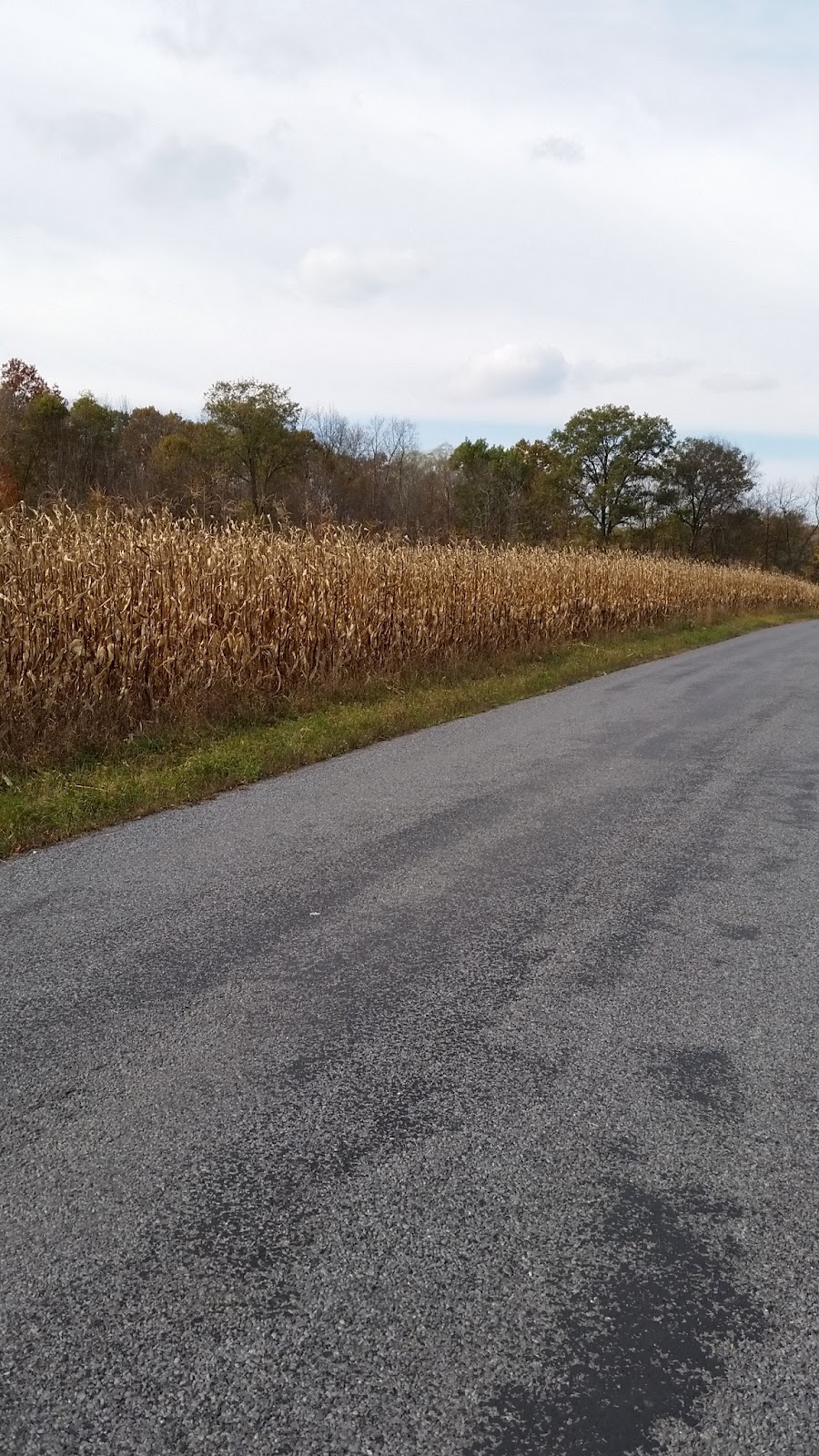
20141025_125029.jpg
IR Photography
America’s countryside is accentuated by
millions of acres of corn, like this field in
Orange County. But much of it has been 
grown from genetically modified seeds. 
Advocates for clarity in labeling demand 
removal of the word “natural” on such
corn products.

The Healthy Shopper


By Bob Gaydos
Nothing says “natural’ more immediately than a well-tended farm nestled into the countryside. Food grows here, it announces proudly.
Food companies like to tap into that food-farm-nature connection in R their marketing, splashing the word “natural” liberally on packages. The problem is that a lot of the ingredients in the packages come from farms that are more like factories -- a far cry from what nature created. Some of the ingredients may be natural, but are not what consumers ordinarily think of as food.
A few years ago, a story about “natural” ingredients made the rounds of food sites on the Internet. The story focused on a substance that is added to such favorite treats as ice cream, candy, yogurt, iced tea and gelatin to enhance their flavor. Mostly vanilla, strawberry and raspberry-flavored treats.
The ingredient is castoreum. Yes, it’s “natural.” No, it has nothing to do with the castor bean, as one might think. Castoreum is a yellowish secretion from the castor sac of adult male and female beavers. The castor sac is located between the anus and genitals in beavers and, along with its urine, is used to scent mark the beaver’s territory. It has also been used for years to enhance perfumes.
The Food and Drug Administration lists castoreum in the “Generally Regarded As Safe” category, which is good to know. But today, more consumers are insisting that it’s also good for them to know what the ingredients listed on food labels really are. In this case, what qualifies as “natural” ingredients.
Unfortunately, the word “natural” being plastered on packaged food labels today may have a variety of meanings. (Do not confuse it with “organic;” it’s not necessarily the same.) An “all natural” food product may sound healthful, but the real benefits may be to the company’s economic health, rather than the consumer’s physical well-being.
The fact is, the FDA has no specific, enforceable standards for what “natural” means when it comes to food. The agency says it accepts the term on processed food labels so long as the product contains no synthetic additives, artificial coloring or artificial flavoring.
Castoreum, as noted, comes from nature and so, is regarded as natural flavoring. (Some companies have stopped using it in response to the story and negative reaction to it.) As for the castor bean (actually a seed), in addition to being a source for the healthful castor oil and the deadly poison ricin, it is also the source of a “natural” food additive identified as PGPR -- polyglycerol polyricinoleate.
PGPR is a yellowish liquid that acts as an emulsifier. Candy companies use it to hold chocolate together because it’s cheaper to produce than cocoa butter and adds to the shelf life of chocolate bars. Less chocolate for you, more profits for the company. The FDA says PGPR is natural and safe for human consumption. Now at least you know what it is.
Unlike PGPR, thousands of other substances that are derived from some plant source are not listed on processed food labels, but still are considered “natural” additives.  Substances derived from animal sources must be listed, according to FDA rules, but as the beaver tale illustrates, that listing may not be especially informative.
Shoppers who want to know what they are eating can pressure food companies to offer more transparent labels. Many vegetarian and vegan-oriented companies are offering clearer labeling today and some larger food companies, responding to growing truth-in-labeling campaigns on social media, are starting to follow suit.

Consumer Reports recently weighed in on “natural” labels on food products. The non-profit, independent, product-testing organization called for a ban on use of the word “natural” on labels, describing it as meaningless. The call came in connection with a the organization’s report which found that genetically modified organisms (GMOs) -- foods altered in laboratories -- are present in many food products. Their presence, however, is not acknowledged on the label, even though many of those products are billed as “natural.” Grist for a future article.

bobgaydos.blogspot.com