Showing posts with label baseball. Show all posts

Tuesday, August 25, 2020

On Unwritten Rules, in Baseball and Life


  Fernando Tatis Jr., rule breaker?


 By Bob Gaydos

Life is full of unwritten rules. Please and thank you. Don’t interrupt. Don’t double dip. Flush the toilet. But is it really a rule if it’s not written down? And is it really a rule if sometimes it’s OK to break it? Is it a rule, say, if your young slugger hits a grand slam on a 3-0 pitch to put the game on ice?
    
 The big controversy of the week, refreshingly, involved baseball. Welcome back, boys of summer.
      The young slugger is Fernando Tatis Jr., who plays for the San Diego Padres. Tatis says he never heard of this rule we’re about to talk about. Sounds like another unwritten rule: When in doubt, plead ignorance.
       Some baseball purists, as well as the pitcher, manager and other players on the opposing team, think that Tatis broke one of the sport’s long-standing unwritten rules. That is, when you’re at bat and the count is three balls and no strikes, you do not swing at the next pitch. It’s thought to be even more of a rule when your team is winning by a significant margin, lest you be accused of rubbing it in. (I am explaining this in a little bit of detail for those readers who may not be baseball fans.)
      The Padres were leading the Texas Rangers by seven runs in the eighth inning when Tatis came to bat with the bases-loaded. He had already hit a homerun in the game. The Texas pitcher, who shall go nameless here to spare him further embarrassment, was shaky and threw three straight balls to Tatis. If Tatis followed the unwritten rule, he would not swing at the next pitch on the odds that it would be ball four, he would walk to first base and the runner from third would score. If it was a strike, he would be free to swing at any succeeding pitches.
      But young Fernando gets paid good money to hit home runs and drive in runs, so he swung. The ball soared out of the park for a grand slam homerun and instead of one man walking in with a run, four Padres crossed the plate. Instantly, San Diego was up by 11 runs instead of seven runs.
      The Texans, who eventually lost 14 to 4, complained more about that swing on the 3-0 pitch the next day than how they were embarrassed by the shellacking they had just taken. But a lot of other major league players and managers who were interviewed, including a number of pitchers, said the responsibility is on the pitcher to make a good pitch in that situation and not look for an easy strike expecting that the batter won’t swing. After all, in baseball, as well as other endeavors in life, the idea is to win the game and the more runs you have the more likely you will win. Also, baseball today is different from baseball a generation or two ago. Teams all have young sluggers and score runs in bunches today and seemingly safe leads are no longer safe.
       So I’m with Tatis on this one. I am not a fan of rubbing it in, but even Little League doesn’t say the game is over until one team is ahead by 10 runs. What’s more, it turns out I’m consistent. My Facebook memories the other day included this serendipitous post: “I called the green light for Astros' Carter on 3-0 pitch. You have to know he's swinging. Boom! 3-run shot and Yankees lose. It's not a complicated game.” Aug. 19, 2014. Another slugger in a situation just crying for him to swing at the three and oh.
      By the way … if you want to use politics as a metaphor for life, the Republican Party seems to have come up with an unwritten rule: Do not ever publicly speak ill of the leader. In nearly four years of the Trump Administration, four years of lying, incompetence, race-baiting, dismantling of government safeguards, disregard of the Constitution and all-around ignorance of presidential duties, I have yet to hear one local elected official publicly say a negative word about the party leader. Never mind Congress members; they fear for their “careers.” I’m talking about locals. Apparently, saying he blew it on Covid would be somehow a bad thing for potential voters to hear, deaths notwithstanding. A sign of independent thought? Forbidden. They are “leaders” without courage. An odd combination. Also by the way … the Democratic Party clearly has no such unwritten rule.
       By the way … when I decided to write about unwritten rules I did what everybody does today – I Googled it. Turns out a lot of people have written about unwritten rules. Or rather, a lot of people appear to have written about unwritten rules. One of the things that is abundantly obvious with just a little research is that what looks to be the best current list of unwritten rules has been repackaged, reheadlined and reimagined dozens of times as someone else’s list of unwritten rules. Reddit appears to be the original source of many lists. It includes such handy advice as:
— Don't ask for something if the person only has one left — gum, cigarette, piece of cake, etc.
— If you use up all of the toilet paper, you refill it.
— Don't mess up an apology with an excuse.
— Buy a plunger before you need a plunger.
— When someone shows you a picture on their phone, don't swipe left or right.
— When the host starts cleaning, the party's over and you need to go home.
— Let people get off a bus, train, or elevator before you get on.
    There are plenty more and you can Google them yourself, but my internet-driven unwritten rule is one that reporters learn the first day on the job — cite your source. Don’t take credit for someone else’s work. A few sites who repackaged the Reddit list did (Buzzfeed for one), but many did not. That’s just not nice.
       By the way … speaking of “not nice,” not long ago I led a column with someone else’s spoken, but unwritten rules for life: 1. If it’s not yours, don’t take it; 2. If it’s not true, don’t say it; 3. If it’s not right, don’t do it. The rule-maker prefers to remain anonymous, but I like to think I’ve given them more legitimacy by, you know, writing them down.
       And finally, back to baseball, Texas pitcher Ian Gibaut, who relieved the pitcher who gave up Tatis’ grand slam, was suspended for three games and fined by baseball officials. Gibaut, a rookie, came in and immediately threw a fastball behind San Diego’s next batter, Manny Machado, apparently as a warning for the Padres daring to smack Texas pitching around the park. It’s supposedly another baseball unwritten rule — if you embarrass us by showing our ineptitude, we will throw pitches at you. That’s not exactly an example of number three above, doing the right thing. More like, see how petty we can be. There’s another sports (and politics) unwritten rule: Don’t be a sore loser.
       PS: According to AP, before the controversial game, the 21-year-old Tatis was leading the majors with 11 home runs and 28 RBIs. And you groove a pitch to him with the bases loaded? More unwritten rules of life: Don't assume anything. Always RSVP. Never give Fernando Tatis anything but curve balls.
rjgaydos@gmail.com
Bob Gaydos is writer-in-residence at zestoforange.com.

Sunday, July 31, 2016

And so it went ... Cleveland and Roger Ailes. Have mercy on us.

By Bob Gaydos
Fear, fear, fear, fear, fear, fear, fear, fear, fear. Hate.
Ridicule, lie, insult, lie, mock, lie, bully, lie. Hate.
Fear, fear, fear, fear, fear, fear, fear, fear, fear. Hate.
White, white, white, white, white, white, white. Hate.
God bless America. God bless Donald Trump.
She said/she said. She said she said/she said.
Ego, ego, ego. Lies, lies, lies. Fear, fear, fear. fear.
Hate.
For those fortunate enough to miss it, the preceding is my synopsis of the Republican National Convention, which dominated the news last week. This is by way of resuming my contribution to the Internet dialogue with a regular Sunday collection of events that piqued my interest, tickled my fancy or struck me as almost too dumb for words (see above).
For this first installment, I’m going back more than a week because the major media apparently had no time to report on anything but the white supremacist rally in Cleveland. So …
  • Mick Jagger is going to be a father,
    Mick Jagger ... proud papa to be, again
    Mick Jagger
                 ... proud papa to be, again
    for the eighth time. Gathering no moss (sorry), Jagger, who is a great-grandfather, will be 73 when the baby is born next year. Mom-to-be is a 29-year-old former ballerina, who is said to be quite content with her relationship with the Rolling Stones frontman, which includes everything but marriage, living together and Mick changing diapers. Mine not to judge. I was 50 when my first son was born, 52 for the second. But I changed a s***load of diapers. Also, vasectomies are safe.         
  • Interesting footnote that occurred to me as I researched Jagger: He has four children, aged 18 to 32, with his former partner, Jerry Hall, 60. She and Jagger split 17 years ago. Earlier this year, Hall, a former model, married media mogul and billionaire Rupert Murdoch, 85. There’s no talk of additions to their extensive families, but Hall chose a favorite site of her old Rolling Stones days for her honeymoon with Murdoch, who just seemed happy to complete the climb to get there. Draw your own conclusions.
  • The Russian track and field team was disqualified from the 2016 Olympics because of what was described as a state-sponsored comprehensive doping program involving the 2012 Olympics and other competition. (The International Olympic Committee, never known for bold action, decided not to ban the entire Russian team, leaving that decision to the ruling federation of each sport.) The sports world was not shocked at the news, but, responding on social media, Russian fans criticized the author of the report that fingered the Russian testing lab and government officials by saying he was a typically biased American. He was, in fact, a typically neutral Canadian academic. Denial knows no nationality.
  • Pokemon Go. Why didn’t I buy Nintendo stock two weeks ago? I have no idea how the virtual reality game works, but these people should be working for the CIA. Maybe they are. (By the way, there’s a Charmander hidden in this copy, which you can find if you buy the app. Only $1.99. See the e-mail below.)
  • The National Basketball Association moved its 2017 All-Star game from Charlotte to New Orleans. The principled move was a response to North Carolina’s transgender bathroom law, which is a classic example of the fear-based legislation proposed in the Republican platform at that hate-fest in Cleveland. Well-played, NBA.
  • Terry Collins, manager of the New York Mets, had the honor of managing the National League team in this year’s baseball All Star Game. He had two Mets on his roster for this exhibition of the sport’s best. Players consider it an honor to be chosen. They consider it even more of an honor to actually play and when your manager is the All-Star manager, you figure on having a good chance of getting in the game. Go figure. Bartolo Colon, at 43, the oldest all-star and a fan favorite, never got to pitch. Neither did Jeurys Familia, the Mets’ star relief pitcher. They were not happy, but politely kept it to themselves. Collins managed to get players from the 14 other teams in his league in the game, but said his guys were only going to be used in “special” situations that didn’t arise. Terry, Terry, Terry, the whole game was “special” and it didn’t mean anything in the standings. These were your guys. Special treatment would have been letting each pitch to a couple of batters.
  • Roger Ailes was fired as the boss of Fox News, by Rupert Murdoch, the owner of Fox News. Ailes was shown the door
    Roger Ailes ... Fox boss no more
    Roger Ailes
                         ... Fox boss no more
    (with a hefty severance check) when Gretchen Carlson, a former Fox anchor, filed a lawsuit  against him claiming sexual harassment. Other females then joined in to say Ailes had behaved the same with them. The move by Murdoch was swift. (It’s good to be the king and a billionaire.*) It was also without much controversy, probably because Ailes is well-known as a thoroughly despicable person. He is, in fact, in large part responsible for creating the orgy of anger and paranoia reported at the top of this   column by molding Fox News into an organ of fear, bigotry, misinformation, disinformation, and hateful, negative, bordering-on-compulsive propaganda directed at Democrats, in particular Barack Obama, the first black American president, and Hillary Clinton, who, if there really is some method to all this madness will soon become the first female American president.
R.I.P. GOP. Lincoln rolled over in his grave last week. So did Eisenhower and Reagan. John Boehner cried. Paul Ryan lied. And so it went.
* With a nod to Mel Brooks.
rjgaydos@gmail.com

Wednesday, July 13, 2016

Dealing with the stigma of alcoholism

Addiction and Recovery


By Bob Gaydos
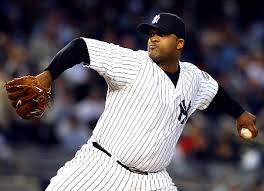
C.C. Sabathia

“Stigma” and “disease”: Two crucial words in any discussion of alcoholism. One defines the alcoholic as a sick person who needs help getting healthy. The other sees him as a weakling whose bad behavior needs fixing.
The irony is that, even today, when the disease is given at least lip-service recognition by society, those who try to get healthy still have to deal with the stigma. He’s in recovery. Shhh, don’t talk about it.
This may not be so obvious when it’s your next-door neighbor. After all, no one’s publicizing his or her recovery from the disease. Plus, it’s nobody else’s business. But when it’s someone in the public eye, it’s amazing how people still avoid saying the obvious.
Last October, C.C. Sabathia walked into the office of New York Yankees manager Joe Girardi and said, “I need help.” The pitcher, a one-time all-star, said he had a drinking problem. He needed to go to rehab.
Sabathia said, “It hurts me deeply to do this now, but I owe it to myself and to my family to get myself right. I want to take control of my disease, and I want to be a better man, father and player.”
Eight months later, on a baseball team that features young pitchers who throw the ball well over 90 miles an hour, Sabathia, 35, is the “surprise” story of the year. Even with a shaky performance in a recent game, he has been one of the team’s most reliable pitchers.
What brought about the return to form? The experts on talk radio had the answers: He’s older and smarter. He learned how to pitch. He finally realized he couldn’t throw the ball by every batter. That knee brace is helping him.
Girardi said C.C. has “inner strength.”
C.C. said, “Health is important.”
No one stated the obvious: C.C. is in recovery from the disease of alcoholism. He is focused on being “a better man, father and player,” not where his next drink is coming from. Those theories about getting “smarter” about pitching may be true, but to an active alcoholic they are irrelevant. That’s the nature of addiction.
Enter Johnny Manziel.
He had everything coming out of Texas A&M in 2014 to be a quarterback in the National Football League -- lots of awards, even the perfect nickname: “Johnny Football.”
Today, Manziel, 23, can’t find a job in the NFL. His life before, during and after college has been a series of drinking and trouble: disorderly conduct charges, college rules violations, confrontations with fans, car wrecks, bar fights, an abuse claim by an ex-girlfriend. His agent dropped him. The team that drafted him, the Cleveland Browns, cut him.
He did have one trip to a rehab. When he came back to Cleveland, one story said, his teammates said he looked and acted healthier, more focused. He paid attention to the playbook. But that story also said his teammates noticed he “didn’t drink as much.”
As much as who? A non-alcoholic? There is no “close enough” for alcoholics. The nature of addiction is that one is too many and ten are never enough. Manziel, was surely told this at the rehab and by friends who also surely pointed out all he had to lose if he did not acknowledge his disease. He had all the information. Still does. Manziel reported his car was involved in a hit-and-run accident a few days ago.
He’s stuck in the stigma. The stigma says you’re weak if you can’t handle your booze.
Sabathia acknowledged his disease last October. Today, he is the feel-good story for the Yankees. His on-field and off-field behavior suggest that he is putting the lie to the stigma. But he lives and works in a world full of alcohol. If he’s as smart as people say -- and honest about his intentions -- he also knows he could be just one drink away from Manziel territory.

Tuesday, October 13, 2015

For alcoholics, no time like the present to get help

Addiction and Recovery


By Bob Gaydos
Yankees pitcher C.C. Sabathia entered
rehab on the eve of the playoffs.
“I need help.”
The ability to utter that simple phrase can sometimes be the difference between life and death. It most certainly is the most important first step on the road to recovery for someone struggling with a problem with alcohol or drugs.
According to New York Yankees manager Joe Girardi, those are the first words Yankee pitcher C.C. Sabathia said when he walked into Girardi’s office on Oct. 6 during the team’s lost weekend in Baltimore.
“I was shocked,” Girardi said.
Maybe he was; maybe he wasn’t. It certainly wasn’t the kind of news Girardi needed to hear after watching his team play listlessly in losing three games to the Baltimore Orioles. The Yankees were supposed to be getting ready for the playoffs, but looked more like they were getting ready to take the rest of the year off. Now, here was one of the pitchers who Girardi was counting on to pitch in the playoffs telling him he was entering an alcohol rehab immediately and would not be available to the team for the rest of the year.
The timing could not have been worse ... for the Yankees. For Sabathia, it was apparently perfect. Indeed, for an alcoholic looking for help, timing is everything.
Girardi’s response -- the entire Yankee organization’s response -- to the news was also, from all appearances, perfect. Do what you have to do, C.C. Take care of yourself. Get help. We’ll soldier on without you and see you next year.
That didn’t stop some fans and commentators on sports radio shows from wondering, even complaining, about the timing of Sabathia’s decision. In essence, the complaints boiled down to: How could he do this on the eve of a playoff game? Doesn’t he have any loyalty to the team? How about that big paycheck he’s getting? If he’s had a drinking problem for a while, why couldn’t he wait a little longer and go to rehab when the Yankees weren’t playing baseball any more?
Except that Sabathia couldn’t wait and the Yankees knew it. With addiction, there is no “if.” There is only “now.”  “If I could just hang on until the playoffs are over and then go to rehab” could easily dissolve into “if only we had insisted he go to rehab when he asked for help.” The nature of the disease is to deny and to rationalize. It’s not so bad. I’ll cut down. No one will notice. The team needs me. I can handle it.
Until he can’t. The hope might be that no serious damage occurs to the alcoholic or anyone else during any period of waiting until it’s “more convenient” to get help. Unfortunately, that’s not always the case. Too often, in fact, that cry for help turns into a sigh of futility. What the heck, the alcoholic says; this is who I am. Why fight it? Who needs rehab? My life’s a mess anyway. I’ll just drink until I die.
That’s why, when that moment of clarity comes, via some painful self-realization of the alcoholic or with the perhaps not-so-gentle prodding of loved ones, the time to act is at hand.    
Brian Cashman, the Yankees general manager who signed Sabathia to a $161 million, seven-year contract in 2009, heard the news in a conference call that included Sabathia, Girardi and, significantly, Sabathia’s wife, Amber. “What CC is dealing with is a life issue,” Cashman said later at a press conference. “It is bigger than the game. … “All that matters now is what’s happening now, which is obviously he’s going to get the help necessary in a structured environment.”
Sabathia, who has had problems this year on and off the playing field, seemed to grasp the significance of his decision. He released a statement saying, “I love baseball and I love my teammates like brothers, and I am also fully aware that I am leaving at a time when we should all be coming together for one last push toward the World Series. It hurts me deeply to do this now, but I owe it to myself and to my family to get myself right. I want to take control of my disease, and I want to be a better man, father and player.”
At 300 pounds, Sabathia has been a bigger-than-life man, a proud man, a team leader, an all-star pitcher and World Series champion. He is also a husband and father. In humbling himself and publicly admitting he needs help to deal with alcoholism, he has at least suggested that he sees life in a different way today, that he has had a moment of clarity. If it is genuine, as his family, friends, fans and teammates hope, he will have taken the first step towards a life of recovery. For an alcoholic, there’s no time like the present for that.

bobgaydos.blogspot.com

Wednesday, April 23, 2014

A husband/father/ballplayer gets it


By Bob Gaydos
Victoria and Daniel Murphy
... proud new parents

        Witnessing the births of my two sons were moving experiences for me. I was a grab bag of emotions, equipped with a camera. Anxiety, impatience, excitement, irritability, awe, relief, exhilaration and happiness played tag at different times in my head. In the end, gratitude won out.
        It still does. I like being a father. I love my two sons and I am proud of them. Witnessing their entrances into the world was, for me, the right way to begin our lifelong relationships. I think being there is  important. Sure, their mother did the hard work, but I never felt my presence at their births was pro forma. You know, show up, look concerned, puff your chest out, then go hand out cigars and leave mother and child alone. Old-school fathering.
        It's not me.
        Daniel Murphy apparently isn't an old-school father either. Murphy plays second base for the New York Mets. He's an average second baseman, but one of the best hitters on the team. Instead of being with the team for Opening Day, Murphy, 29, took three days of paternity leave allowed major league ballplayers to be with his wife, Victoria, when she gave birth to their first child, Noah.
          For this, he was assaulted with a flood of criticism from -- not teammates, not fans, not baseball officials -- but by three egomaniacs on WFAN Radio and one on Fox News. They said Murphy should have checked in to see his first child born, then rushed to be back with his team. One day off tops, they said. None of this three-day paternity leave nonsense.
        Because, of course, missing a couple of games out of 162 is an act of disloyalty or lack of work ethic. Unmanly even. C'mon, Murph, hire a nanny, they said. Where are your priorities? You should be fielding ground balls, never mind being by your wife's side for the first three days of this exciting new chapter of your lives. This  is stupid personified.
       For the record, Murphy appears to be doing just fine in the stereotypical, outdated, macho, male-providing-for-the-family role that seems to underlie much of this criticism. He's getting paid $5.7 million this year by the Mets, which means, as one of his critics suggested, he could hire 20 nannies if he wanted to. The thing is, he apparently doesn't want to. He preferred to be at the hospital when his son woke up crying.
        "We had our first panic session," Murphy recalls. "It was dark. She tried to change a diaper, couldn't do it. I came in. It was just the three of us, 3 o'clock in the morning, all freaking out. He was the only one screaming. I wanted to."
        That's a memory he and his wife will always have and someday share with Noah. Nothing unmanly about it.
        But here's what Mike Francesa, the big name in WFAN Radio's lineup of sports personalities, had to say about Murphy's decision:  "I don't know why you need three days off, I'm going to be honest. You see the birth and you get back. What do you do in the first couple days? Maybe you take care of the other kids. Well, you gotta have someone to do that if you're a Major League Baseball player. I'm sorry, but you do " Your wife doesn't need your help the first couple days, you know that."
         There's more: "One day, I understand. Go see the baby be born and come back. You're a Major League Baseball player, you can hire a nurse to take care of the baby if your wife needs help ... What are you gonna do? Are you gonna sit there and look at your wife in the hospital bed for two days?"
        Well, at least we know what Francesa did when his son was born. Wonder what his wife thought about that.
        Boomer Esiason, who also hosts a show on WFAN, went so far as to suggest that Murphy should have told his wife to have a Caesarean section before the season started so he wouldn't have to miss Opening Day. After all, the former pro football quarterback said, baseball pays Murphy well, so he should make baseball his priority. (Note: Victoria Murphy, in fact, gave birth via Caesarean section and Esiason apologized a day later.)  
        Esiason's partner on the morning radio talk show, Craig Carton, was his usual crass self: "You get your ass back to your team and you play baseball " there's nothing you can do; you're not breastfeeding the kid."
        I stopped listening to WFAN's morning show years ago when Carton was teamed with Esiason because I thought Carton was the most misogynistic, immature excuse for a radio sports host I had ever heard. He was insulting, crude, sexist, arrogant and not especially knowledgeable about sports either. This incident only solidifies my opinion and I think he continues to be an embarrassment for WFAN, but maybe his bosses don't care.
         Let's not let Fox News host Gregg Jarrett of the hook. Here's what he had to say about Murphy's paternity leave. "He's rich. He could have like 20 nannies taking care of his tired wife, and he's got to take off two days? It's absurd. It's preposterous."
          No, Gregg, it's about being a father first, not a baseball player. Talk about priorities. Imagine this scenario: It's Noah's 20th birthday. Mom is recalling that second day in the hospital when, all of a sudden, the infant's temperature started rising. Nurses were rushing around and calling for a doctor. She was trying to stay calm, she says, but was really scared to death. "What about you, Dad?" asks Noah. "I was grounding into a double play in Queens," he replies.
          Fortunately, that didn't happen. Instead, Murphy was there to share the first diaper-changing "emergency" with Victoria.
         Not everyone thought Murphy did the wrong thing. Mets fans, his manager and teammates all supported Murphy's decision to take the full paternity leave. Major League Baseball, in fact, is among the few employers in the United States that allow paid paternity leave -- a situation that begs changing -- and about 100 ballplayers have reportedly taken advantage of it since their union got it written into their contract three years ago.
         It makes sense. Baseball players are undeniably well paid. But they are also away from their families for much of the time for eight months in the year. Half of their games are played away from home. Three days out of a 162-game season is a pittance. And for Murphy to be criticized for missing games is absurd since he played in 161 of the Mets' 162 games last year, often with injuries. He's what they call a "gamer."
         (In my case, paternity leave was not available, but I had an understanding boss who let me spend as much time as needed with my sons and their mother. Besides, my work was a 10-minute drive from home; Murphy's son was born in Florida and the Mets were playing in New York. A tough commute.)
        Taken aback by the harsh criticism, Murphy described his decision simply: "We felt the best thing for our family was for me to stay." That says it all.
         In fact, the Murphys made the best choice possible. When my sons were born, they were handed to me soon after the umbilical cord was cut and tied. In the days that followed, there was a lot of holding, humming and touching. There are scientific studies connecting that early skin-to-skin contact of father and child with the production of oxytocin, a hormone that enhance the bonding process for both.
       Other studies show positive psychological benefits for the mother, knowing she is supported at this critical time and, in turn, for the health of the newborn. Even more studies suggest that having a nurturing father/child relationship from birth has positive results on the child's future emotional development as well as the relationship between father and mother.
       In sum, science and much of society have for some time  abandoned the old-school fathering of Francesa et al in favor of a more involved, more nurturing role for Dad because the whole family benefits from it.
      Meanwhile, while Murphy was being criticized for wanting to be with his wife in the first three days of their son's life, other ballplayers who had taken performance enhancing drugs -- cheated -- were being greeted back from their 50-game suspensions. Pro football and basketball players continue to be arrested for assaulting their wives or girlfriends. The New York Jets recently signed quarterback Michael Vick, who served time in prison for running a dog-fighting enterprise.
          These are the role models professional sports have offered to today's youth for much too long. Rich, macho, spoiled, selfish, arrogant, self-centered, young men.
          Murphy returned to the Mets after three days with his wife and son, was cheered by fans and singled in his first at bat. He'll be able to tell Noah that story some day.
          Way to go, Murph.

bobgaydos.blogspot.com

Thursday, February 23, 2012

Whitney, Josh and their disease


By Bob Gaydos
In a week filled with sometimes lurid, often fawning stories about the death of Whitney Houston (photo), it was once again evident how little most Americans know about addiction or, in fact, how little they seem to care to know.
The pop icon’s longtime battle with drugs was well-known, yet when she died in unusual circumstances, the two most popular theories put forth were that she had suffered from a drug overdose or that her doctors -- the new media favorite suspect since the Michael Jackson case -- had somehow killed her by messing up prescribed medications.
Both are possible, of course. But it is also quite plausible that the years of abusing her body with drugs and alcohol had taken an early toll on her, as they had with an even younger Amy Winehouse. But the only fact of which anyone is certain right now is that no one will know what killed Whitney until an autopsy is completed.
At the same time, there has been a noticeable lack of criticism aimed at Houston for her drug-filled lifestyle while her fans ease their grief by remembering her in better times, on stage, in recordings, in the movies. It’s as if Whitney the superstar, in death, was now finally beyond rebuke and, officially and irrevocably, a victim of addiction.
That’s an awfully steep price to have to pay for society to at last acknowledge your disease. Unfortunately, it’s not at all uncommon. People who struggle with addiction and who relapse -- but do not die -- are more likely to feel the sting of society’s tongue. Indeed, for those not afflicted with alcoholism or drug addiction, probably the least understood aspect of recovery is the relapse, especially when it follows a significant period of sobriety. The same questions inevitably come up. How could he drink when he knows how much he has to lose? How could she use drugs again knowing it would hurt her family?
The questions themselves define the disease of addiction. Quite simply, relapse, while not a requirement of recovery, is nonetheless a part of it for many people. Houston herself was an example. Addicts do things that defy reason and common sense, often to the harm of themselves and those close to them. That’s why recovery programs stress the need for addicts to develop a new way of thinking, a new way of living, a new image of themselves that does not include using alcohol or drugs.
It is not easy to make this change, but with time, the support of loved ones and constant attention to the new behaviors suggested as a way of living a sober life, it gets easier. It becomes the addict’s new normal way of living, in good times or bad.
Recently, another celebrity -- although not in Houston’s orbit -- apparently forgot that basic fact of recovery life. Josh Hamilton (photo), the star outfielder for the Texas Rangers and probably the best-known admitted addict in baseball, acknowledged that he had relapsed. He apparently had several drinks in a bar with “friends,” called a teammate who talked with him and dropped him at home, then went out again and had a few more drinks. Hamilton said at a press conference the next day he had had a ”weak moment” and was drinking over “personal reasons.”
Being a high-profile professional athlete, Hamilton’s history with addiction and recovery has been well chronicled. He has been dealing with it for 10 years, even being suspended from baseball for two years for alcohol and drug abuse. But he had been clean and sober for two years before his “slip” and his public honesty about his disease has been praised. At the same time, Hamilton has received a lot of criticism among sports reporters for his slip, mostly of the “how could he do that?” variety.
But the fact of the matter is that celebrities must deal with the same challenges in recovery as the businessman next door, the veteran teacher, or the local plumber while living in a pressure-packed public bubble. There is no anonymity for Whitney Houston or Charlie Sheen … or Josh Hamilton. There is no way for them to try to justify their risky behavior as acceptable just because nobody saw it. This means Hamilton, and other athletes and celebrities who live with addiction, must be even more diligent in following their sober routine -- in accepting their disease -- if they want to avoid relapse.
One of the striking facts in the stories about Hamilton’s relapse is that he no longer had an “accountability partner” assigned to him by his team. The “partner,” the equivalent of a sponsor in Alcoholics Anonymous, went everywhere with Hamilton when he wasn’t playing ball or at home. But the coach who had the job recently took a job with another team and Hamilton was doing it on his own.
That may be possible for people with several years of solid clean and sober time, but it is not recommended. Besides, Hamilton’s recovery has been a series of relapses, suggesting he still hasn’t fully surrendered to the concept of addiction. That’s not unusual, but many people who have trouble staying sober and who relapse several times do eventually get sober and lead fulfilling, contented lives. For every Whitney Houston and Amy Winehouse there are dozens of sober celebrities who are leading contented lives, not creating headlines..
That’s why it’s important when an addict relapses to resist the easy temptation to question and criticize him because “he has so much to lose” or “he let down so many people who care about him.” Yes, it is about taking responsibility for one’s actions, but recovery is also often about second or third chances. The Texas Rangers, with a manager who is also a recovering drug addict, appear to understand this. They assigned Hamilton a new accountability partner.
Hamilton also apologized to “fans, kids, people who have addiction who look up to me.” That’s all well and good. But he’s been dealing with addiction long enough to know that other recovering addicts aren’t putting him or any other celebrity addict on a pedestal. There are no all stars in the battle and there is no “I” in recovery. But no addict living with what is often a fatal disease should have to die for the rest of the world to finally get it.

Bob Gaydos also writes a regular column on addiction and recovery. bobgaydos.blogspot.com

Thursday, May 19, 2011

Posada didn't play? Didn't notice


By Bob Gaydos
I had the a) privilege; b) opportunity; c) misfortune of attending the Yankees/Red Sox game last Saturday night with my 16-year-old son Zack and his 22-year-old cousin, Andy. It was the Jorge Posada Game. Or rather, the “Where the heck is Jorge Posada?” Game. We sat in the right field seats, near the foul pole. Second deck. Actually, decent seats to watch a wholly indecent game, at least as far as the Yankees are concerned. They could not hit; C.C. could not pitch. It was so boring, all the Red Sox fans in our section didn’t even get excited over winning, 6-0.
In fact, the game was so boring I spent more time observing the “fans” around us and left wondering who the heck these people were because they definitely were not baseball fans.
We were surrounded by what I guess would be considered upwardly mobile young people -- males and females between 25 and 35 years old with an apparently unlimited supply of disposable income. I surmise this because of all the couples surrounding us (and they were all boy/girl couples) not one ever had even a fleeting conversation about the game we were supposedly watching. I know this because, as I said, the game was so boring you could hear everyone’s conversation.
The two couples behind us talked non-stop the entire game. No one ever mentioned a player’s name or a game situation. They did drink a lot of beer and eat and laugh a lot and the guys wore Yankees jerseys, but I had to wonder why they couldn’t find a cheaper place to double date on a Saturday night.
The same went for two couples two rows in front us. The girls spent most of the game going somewhere or other with each other, coming back with a new bottle of beer ($9) each time. The words, “Let’s go, Yankees!” never passed their lips and they didn’t even notice that Jorge wasn’t in the lineup.
They all did, however, enjoy the stadium cuisine, which is priced to make movie theater food seem cheap. (I sent Zack up with $10 for two more hot dogs and he had to kick in a couple bucks of his own.) Another young guy in front of us sat down with a $25 bucket of chicken wings and a couple of beers. There were probably fries involved, too. He and his date disappeared somewhere in the middle of the game. I don’t know which team they were rooting for.
The highlight of the game (I know because Zack posted it on his Facebook page) came when the very quiet young man sitting directly in front of us got hit, first by a hot dog, then by a beer shower, from the third deck directly above us. Since he was wearing a Lester shirt, we assumed he was a Boston fan and so we got some not-so-secret (we smiled at each other) enjoyment out of his misfortune. But he never even got angry. His date did, looking skyward with a “Who are those cretins?” gaze. But “Lester” sat there calmly. He didn’t even cheer when Adrian Gonzalez buried the Yankees with a three-run home run.
Who are these people?
When I was their age (yeah, I know, here goes the old guy talking about the good old days), if you were fool enough to take a non-baseball-savvy date to a baseball game, you planned on explaining some of the nuances of the game. (“He’s bunting to put the runner on second base so he can score on a hit. You can hit foul balls ’til the cows come home.”) You didn’t mind that because she was at least feigning interest in the game and it made you feel competent. Who cared what the hot dogs cost?
I once took a date to a Yankee game and sagely informed her that Yogi Berra (stop adding up the years) was a very good bad-ball hitter. It didn’t matter if it was a strike, Yogi could hit it out. Which, God bless his pinstriped soul, he promptly did. Right down the right field line, near the foul pole in the old Yankee Stadium, where the seats didn’t cost anywhere near as much as the similar ones we had in the new stadium.
Of course, our seats Saturday were wider and definitely more comfortable. They cost a hundred bucks each, which is why I was wondering who these young men were who were taking young women on a date to a baseball game which they clearly didn’t care about and which would cost them close to $500 anyway by time they got through parking, paying tolls, eating and drinking. Even in Manhattan, dinner and a movie is cheaper.
I did notice that there were empty seats Saturday night, which is not something the Yankees saw in the last few years at the old stadium. Ticket prices and the cost of food and drink and souvenirs have risen beyond all reason at the ballpark. I think this has led to a new kind of “fan,” a social fan, if you will. These are young people -- apparently with healthy incomes -- who go to the Yankee game because it’s seen as the place to be. Whatever “cool” is today, this is it. (“Yeah, Cindy and I went to the Yankee game Saturday night with Mitch and Amy. Awesome. Posada what? Didn’t play? Didn’t notice.”)
Because they have not been winning lately, a Mets game does not carry the same cache as a Yankee game, but I am willing to bet there are many more actual conversations about baseball at Citi Field than at the new Yankee Stadium. Not that it’s any cheaper.
It was, in sum, disappointing, insofar as the game went. But Zack, Andy and I enjoyed the day and taking the train to the game made it real easy. We’ll do it again and hope for a better performance by the “Bombers.”
As for the fans, that may be another matter: In the bottom of the ninth inning, the game all but over and half the people gone, the Yankee ball boy along the right field foul line tossed a warmup ball to a young kid standing at the railing. Some 35-ish guy wearing a suit (A suit! At a baseball game!) and a glove reached over the kid’s head and grabbed the ball. He rejoiced in his theft, holding both arms to the sky to a chorus of boos from the remaining fans. He smiled and held the ball aloft as he returned to his seat along the fence (we’re talking four figures here) and adamantly refused to “Give the kid the ball!” as the chants demanded. Security came and talked to him. He clutched the ball more defiantly, perhaps anticipating his Monday morning spotlight. (“Yeah, went to the Yankee game Saturday night. Great seats. Got the ball Swisher was warming up with in right field. … What about Posada?”)
Just as I was saying to myself for the twentieth time, “Who are these people?” a gray-haired gentleman wearing khakis and a green windbreaker, walked slowly from his seat further up the right field line to where the kid and the suit were sitting. The guy in the windbreaker held out his hand and gave the kid a ball he had snared earlier in the game. Then he turned and walked back to his seat to watch the Yankees go down without a threat.
By this time, all those twenty-somethings had long been gone, probably looking for a bar to refresh their game memories. But Zack (an avid, true Yankee fan) saw the whole scene play out. He gave the guy in the windbreaker a nod of approval. Now that’s cool, however they say it today.

bobgaydos.blogspot.com