Showing posts with label addiction. Show all posts

Thursday, June 10, 2021

AA's Big Book has had profound influence

(Addiction and Recovery column from TH-R, Aug. 21, 2012)
By Bob Gaydos
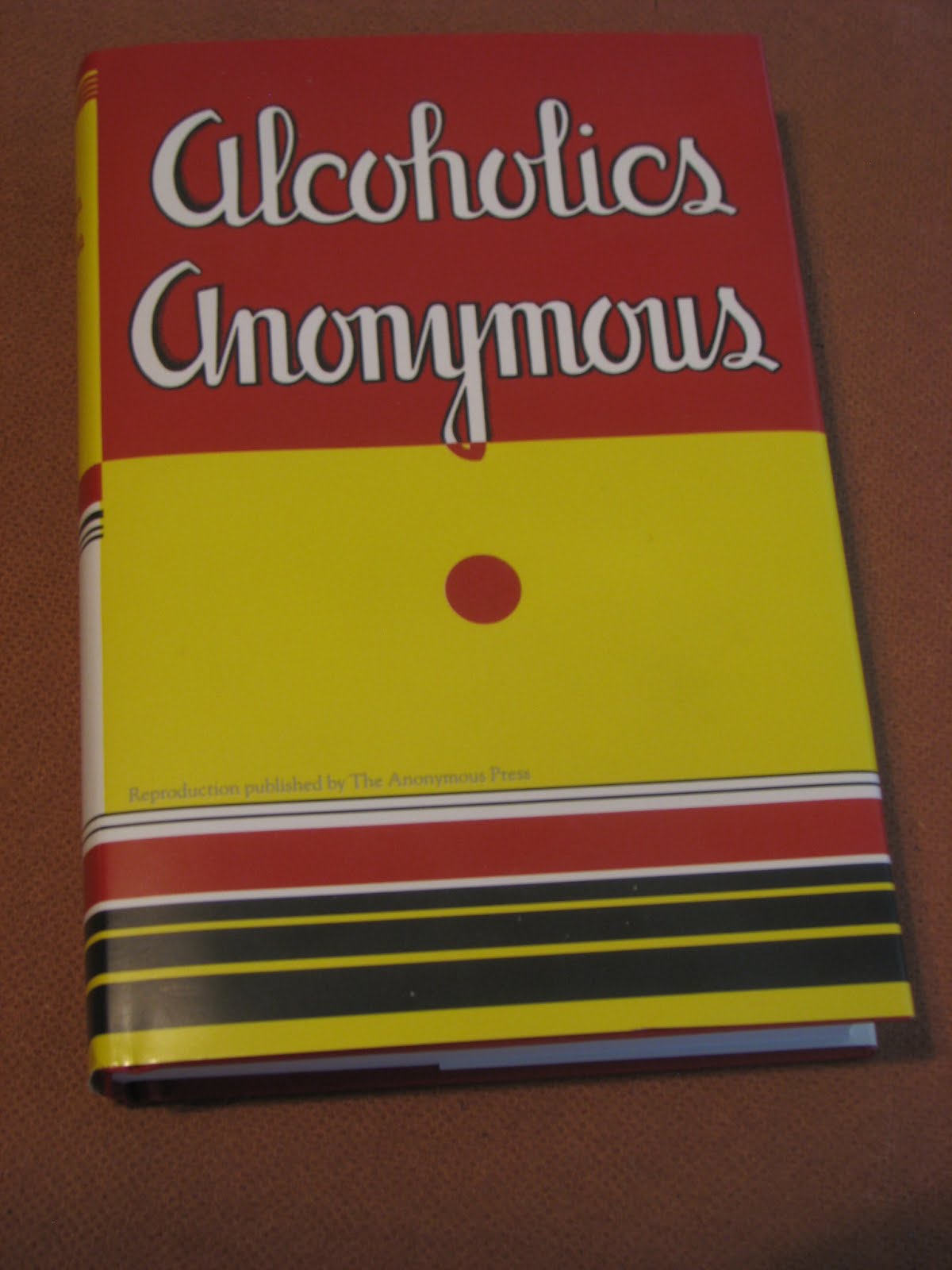
It is one of the best-selling and most influential books of all time, with more than 30 million copies having been sold and millions of lives changed by what is contained on its pages. Yet it is not exaggeration to suggest that a majority of its readers don’t know the actual name of the book.
It is known, proudly and even reverentially, by most who have read it as the Big Book. Officially, the book’s title is “Alcoholics Anonymous,’’ the same as the famous 12-step program for treating alcoholism (and other addictions) described within its covers. The Big Book received more recognition for its influence recently when the Library of Congress included it on a list of “Books That Shaped America.”
There are 88 books on a list that ranges from Thomas Paine’s “Common Sense,” to Edgar Rice Burroughs’ “Tarzan the Ape Man.” The common factor among all 88, according to the Librarian of Congress James H. Billington is that “they shaped Americans’ views of their world and the world’s views of America.”
While it may not be for everyone, the Big Book has certainly shaped people’s views and lives. Since it was first published in 1939, it has been the textbook, if you will, of how to get -- and stay -- sober, for millions around the world. AA, of course, has spawned numerous other 12-step programs to deal with addictive behavior. And, while basing its recovery program on established spiritual, psychological and medical precepts, Alcoholics Anonymous has also widened the dialogue within all three areas and influenced the way practitioners in those fields deal with addiction.
The authors of the Big Book are Bill Wilson and Dr. Bob Smith, the founders of AA. But they had plenty of help from some of the original 100 AA members whose stories were included in the first edition. Many recovering alcoholics today regard it as remarkable that Wilson, the primary author, wrote two of the main sections of the book -- one being his story -- when he had less than four years of sobriety.
One could say the Big Book is a classic example of what it preaches. Much of the recovery program contained is take from the Oxford Group, A Christian fellowship that emphasized self-examination, making amends and working with others. (Wilson and Smith both were members of the Oxford Group for significant periods.) But the Oxford Group’s heavy religious emphasis did not sit well with many of the other drunks who were early member of AA. As a result, most references to “God” were eliminated or changed to a “Higher Power of your understanding.”
Editing also changed the preachy “you” to the inclusive “we” in describing how
alcoholics got sober. Thus, this is what we are and this what we did. If you follow these suggestions, “Rarely have we seen a person fail who has thoroughly followed our path.”
What do current members of AA think about the Big Book? A sampling of recent comments:
  • “When I first read it, I had to say, ‘(Expletive!) I’m an alcoholic. How did they know?’”
  • “I used to walk around with the Big Book (in early sobriety) like a protective shield.”
  • “It helped me understand I have an allergy.”
  • “In many ways it’s like the bible for alcoholics. It provides direction and order.”
  • “Think about the impact. One person reads it and passes it on to others for more than 30 million.”
  • “When they get (the Big Book) people are usually in such pain, they will read it.”
  • “It gave me a guide for living, far beyond just not drinking.”
  • “Simple rules for broken people.”
There’s a significant local angle to this story. When it came time to publish the book, Wilson and the others chose The Cornwall Press, a now-defunct printing operation in Cornwall. Because they were going to charge $3.50 for the relatively short book, they wanted it to look impressive, so they used thick paper and the widest possible margins. Hence, the “Big Book” nickname. Subsequent printings were smaller in size, but the name stuck.
The first press run was for 4,800 copies, with the promise from the printers that more would be printed when the first copies were sold. But even those original copies were in limbo as the printer refused to release any books until they were paid for. Although printed in the winter of 1939, only a few copies were paid for at the time. The significant release came in early 1940. Today, with inflation, “Alcoholics Anonymous” sells for around $8 to $10, but many AA groups simply give copies to new members, continuing to spread its message.
bobgaydos.blogspot.com.

Tuesday, September 24, 2019

Smoking can lead to premature death


Addiction and Recovery


By Bob Gaydos

“The cigarette is a very efficient and highly engineered drug-delivery system.”
      The sentence appears on the web site of the National Institute on Drug Abuse. With its sheer bluntness, it says all you need to know about why more than 50 million Americans smoked a cigarette last month despite massive campaigns detailing the health risks of smoking, despite the fact that many of those risks are printed right on the cigarette pack, despite restrictions on smoking in public areas, and even despite the increasingly high cost of smoking because of taxes placed on tobacco products.
     Nicotine delivers endorphins, euphoria, dopamine to the brain with each puff on the cigarette. A pack a day is about 200 “hits” of good feeling. Stop puffing, it goes away. The brain doesn’t like the change in mood. Withdrawal can be unpleasant.
     “Cigarette smoking harms nearly every organ in the body, and smoking is the leading preventable cause of premature death in the United States.”
    That sentence also appears on the NIDA web site (www.drugabuse.gov) and the two statements taken together are why it’s important not to ignore the addiction health threats staring us in the face — or assaulting the senses of non-smokers — amidst the daily serving of headlines on drunk drivers and drug overdoses. 
    Nearly half a million deaths annually are still attributed to smoking and, despite significant progress in reducing the number of smokers, according to NIDA, “if current smoking rates continue, 5.6 million Americans who are currently younger than 18 will die prematurely from smoking-related disease.”
    Nicotine is addictive. Smoking kills people before their time. 
And yes, a lot of people have gotten the message. Surveys show smoking rates for people 18 and older continue to go down and the rate of smoking among those under 18 is at historically low levels. That latter is key because tobacco is often the first substance adolescents use to emulate adults and often leads to other substance use disorders. Research also suggests that nicotine has a strong impact on still-developing adolescent brains, making it more difficult for those who want to quit when they are older. And nearly everyone who smokes has tried to quit. Some succeed. Some have a hard time.
   The jury is still out on e-cigarettes as a replacement for cigarettes. They remove the chemicals that, when burned, are responsible for the various health risks attribute to cigarettes, leaving vapers to go for the nicotine rush. But some research suggests other possible risks, especially for young users, so it’s buyer beware.
    Significantly, for the focus of this column, research shows a strong connection between smoking and persons with alcohol or other substance dependence and a prevalence of smoking (65 to 85 percent) among persons in treatment for all substance use disorders. Addictions often go together, but quitting one doesn’t always mean quitting others is easier. The next column will report on what some people with alcohol or other substance use disorders have experienced as they tried to quit smoking.

Bob Gaydos is a freelance writer. rjgaydos@gmail.com

Tuesday, June 18, 2019

An addict by any other name, please

Addiction and Recovery

By Bob Gaydos
  What’s in a name? Maybe, recovery.
"New" me, at 73.
Bob Gaydos
Addiction — to opioids, alcohol, heroin, other substances or behavior — is a medically recognized disease, something for which treatment is available and prescribed so that the person who suffers from it can be returned as a contributing member of society. That’s the official, appropriately concerned line put forth by government agencies, the medical community and those who work in the field.
    Unofficially, which is to say, to much of society including members of the aforementioned groups, a person with the disease of addiction is commonly referred to as an addict. A drunk. A junkie. A cokehead or crackhead. An alkie. A pothead. A pill-popper. He or she is often regarded as someone who is weak-willed, immoral, untrustworthy, rather than someone suffering from a disease. A liar. A loser. Someone not worth the time or effort — or money — to associate with, never mind help.
   One of the major obstacles to persons seeking treatment for addiction is the stigma attached to the disease. It has been framed seemingly forever as a moral issue, a crime issue. Rarely — only recently — has it been framed as a health issue. We have waged a war on drugs as we tried to cure cancer or diabetes.
    Words matter.
    Researchers at the University of Pennsylvania lbast year released a study with the key recommendation to stop using the words “addict,” “alcoholic” and “substance abuser.” The study found the words carry a strong negative bias. Basically, the researchers said, they label the person, not the disease. Study participants not only displayed a reluctance to associate with persons described with those words in fictional vignettes, the researchers said participants also displayed “implicit bias” to the terms themselves when given a word-association task. They were subconsciously reacting negatively to the words.bbb
     If just the words can stir negative bias in people, imagine what an actual person carrying the label “addict” can arouse.
     The Penn researchers said their study was consistent with previous research that found some doctors, even mental health professionals, less willing to help patients who were labeled “addicts” or “substance abusers.”
     The researchers did not discount the fact that conscious bias against persons with addiction — for example, how involved one would want to be with the person described — is often based on personal negative experiences with “alcoholics” or “addicts.”  Family members, friends, co-workers have experienced pain and suffering from their connection to persons with alcohol or substance use disorders and a resistance to not just “calling them what they are” may be understandable.
      But, the researchers said, over time, adopting what they call person-first language (referring to a person with a heroin addiction rather than a heroin addict) — especially by public officials and the media — could help reduce the negative bias and stigma that keeps people from seeking and getting help for their disease.
       In 2017, prior to this study, the Associated Press, which publishes a style guide used by most news organizations, adopted a new policy on reporting on addiction. It recommends that news organizations avoid terms such as “addict” and “alcoholic” in favor of person-first language — someone with an alcohol or substance use disorder or someone who was using opioids addictively, rather than a substance abuser or former addict. Someone in recovery, rather than someone who is “clean.” Shift the blame from the person to the disease.
     This doesn’t excuse or absolve the person who is addicted from any damage he or she may have done, and it may be considerable. But it does provide an identity beyond the addiction and makes the road to recovery more navigable. 
     Earlier this year, the Philadelphia Inquirer and Daily News adopted a policy similar to AP’s.
      The concept is simple: A person should not be defined solely by his or her disease. When mental health professionals stopped referring to patients as schizophrenics, society started referring to people with schizophrenia. Similarly, there are people with diabetes today who once were labeled diabetics. It is often argued that alcoholism or addiction are different from other diseases because the person chooses to use the substance. But experience tells us no one chooses to become addicted and the nature of the disease is being unable to stop — or at least feeling that stopping is not possible. Negative labels can’t help.
       Government agencies have begun using the new language, referring to persons with alcohol use or substance use disorders rather then alcoholics or addicts. Some who have managed to face their addiction and overcome it have abandoned the anonymity of 12-step programs and identify themselves publicly as persons in recovery. The opioid crisis has spawned a program called Hope Not Handcuffs, which steers the person who is addicted to treatment rather than incarceration.
       An exception to the change in language is recognized for those who are in 12-Step programs who identify themselves as alcoholics or addicts at their meetings. These are people who don’t see the terms as negatives, but rather as an honest admission of a fact in their lives. Members of Alcoholics Anonymous have been saying, “My name is xxxx, and I’m an alcoholic” at meetings for nearly 84 years. It’s tradition. There’s no stigma attached, but rather a common bond that holds out the hope there is something beyond being labeled a “drunken bum” or “hopeless addict.”
      The groups recommending the language change say this is not merely “political correctness,” as some have said. Lives are obviously still being ravaged by addiction. If something has to change in approaching the disease, there is a growing feeling that how we talk about it might be a good place to start.
Bob Gaydos is a freelance writer. rjgaydos@gmail.com

Wednesday, April 10, 2019

Maybe there‘s a little addiction, disorder in all of us

Addiction and Recovery

By Bob Gaydos
   
Opioids and alcohol get most of the attention, although marijuana, currently undergoing a reputation rehabilitation, has been grabbing plenty of headlines lately. But if you spend any amount of time studying the issue, it doesn’t take long to wonder if there isn’t an addiction, compulsion, behavioral disorder — call it what you will — for every human on the planet.
    Some conditions are more serious than others, but all
either involve the brain’s reward system or relieve anxiety, stimulate compulsive use and bring with them an opportunity for negative consequences. Consider the following an inventory of sorts, a look at some of the substances people use or behaviors they engage in, perhaps to excess. Maybe someone you know shows some of the signs of trouble.

Medically recognized substance use disorders
    Alcohol Use Disorder: Alcohol is a depressant. Alcohol use disorder is more common among adult men than among women, but the gap is narrowing. It typically develops at a young age. Severe use is commonly referred to as alcoholism.
Caffeine Intoxication: Heavy intake of caffeine resulting in symptoms including restlessness, nervousness, insomnia, gastrointestinal disturbance, rambling thoughts and speech, cardiac rhythm disturbances.
Cannabis Use Disorder: Highest among 18- to29-year-olds. Often the first drug used and often used with other drugs. Prevalence decreases with age.
Hallucinogen Use Disorder: These substances alter perception. Phencyclidine — “angel dust” or PCP — produces feelings of separation of mind from body.
Inhalant Use Disorder: Sniffing glue. Inhalant substances are volatile hydrocarbons, toxic gases that are released from glues, fuels and paints, that can have psychoactive effects. Occurs primarily among ages 12 to 17.
Opioid Use Disorder: Opioid drugs include heroin and prescription pain-relievers such as oxycodone, codeine, morphine, and fentanyl. According to the American Society of Addiction Medicine, opioid-related overdoses are now the leading cause of death in Americans under 50 years of age and prescribed opioids are the “overwhelming initial source” of addiction.
    Sedative, Hypnotic, or Anxiolytic Use Disorder: Addiction to sleeping pills and anti-anxiety medications (Valium, Xanax, Librium). These are brain depressants. Rates are highest among 18- to 29-year-olds.
    Stimulant Use Disorder: This group include amphetamines, Ritalin and cocaine. These drugs are commonly prescribed for the treatment of attention-deficit/hyperactivity disorder (ADHD) and narcolepsy. Cocaine use in the U.S. is highest among those aged 18 to 25.
Tobacco Use Disorder: Nicotine in tobacco acts as a stimulant for the central nervous system. Studies show that 68 percent of adult smokers want to quit and 50 percent of smokers have tried.

Behavioral disorders
Binge-eating disorder (overeating disorder): Uncontrolled eating, often accompanied by purging (bulimia).
Gambling disorder: Because of the quick feedback, it can provide reward symptoms to the brain much like alcohol or cocaine.
        Gaming disorder: It has been recognized officially by the World Health Organization, but is still under study in the United States for classification as an addictive behavior. Other behaviors under study include smartphone use, Internet gambling, pornography, eating and shopping.

Compulsive behaviors
        These can include such things as hoarding, shopping, sex, eating, gambling, exercise, even talking compulsively. While the behaviors may not provide the pleasure reward of an addiction, they serve to relieve anxiety and stress and, if unchecked, can have serious negative consequences in a person’s life.

What else to know
        Simply put, an addiction is a repetitive use of a substance or engagement in a behavior because of the rewards message the substance or behavior transmits to the brain, despite numerous negative consequences the activity produces in the person’s life. Tolerance increases with time. The person may not even be aware of the damage being done by the behavior, or may continue in spite of it. At some point, the substance or behavior may dominate the addicted person’s daily life. It is highly likely that these conditions are accompanied by other mental health conditions, such as anxiety or depression.
    Science has been unable to come up with one cause of addiction, nor can it predict who will become addicted. However, there are numerous risk factors that can be recognized, some of which may be avoidable, some not. Genetics/family history play a significant role in determining vulnerability as do environmental factors, including growing up in a dysfunctional family and early exposure to substances or abuse. The presence of other mental health issues can also contribute to susceptibility to addictive behavior. Even physiology may play a role since men seem to be more susceptible to addiction than women.
That said, there are a number of conditions that can predict the presence of an addiction. The following list is adapted from one used by the Mayo Clinic. Substitute the specific substance or behavior for the word “drug.”
    — Feeling that you have to use the drug regularly — daily or even several times a day.
— Having intense urges for the drug that block out any other thoughts.
— Over time, needing more of the drug to get the same effect.
— Taking larger amounts of the drug over a longer period of time than you intended.
— Making certain that you maintain a supply of the drug.
    — Spending money on the drug, even though you can't afford it.
    — Not meeting obligations and school, family or work responsibilities, or cutting back on social or recreational activities because of drug use.
    — Continuing to use the drug, even though you know it's causing problems in your life or causing you physical or psychological harm.
    — Doing things to get the drug that you normally wouldn't do, such as stealing.
    — Driving or engaging in other risky activities when you're under the influence of the drug.
    — Spending a good deal of time getting the drug, using the drug or recovering from the effects of the drug.
    — Failing in your attempts to stop using the drug.
    — Experiencing withdrawal symptoms when you attempt to stop taking the drug.
Generally, two or three symptoms suggest a mild disorder, four or five a moderate one and anything more, a severe disorder.
The good news is that there is a variety of treatment available for all these conditions. If a problem is suspected, don’t try to deal with it alone. Consult with a health professional (doctor, psychologist, social worker, addiction specialist) and begin the road to recovery.

Wednesday, August 1, 2018

Video games are addictive, officially

Addiction and Recovery
By Bob Gaydos
Some young males may be addicted to video games.
What many parents the world over have been proclaiming for quite some time is now official: Some individuals -- mostly young males --- are literally, not just figuratively and annoyingly, addicted to playing video games. That is the determination of the World Health Organization, which after considerable study and debate, recently added gaming disorder to its International Classification of Diseases, a primary source of information for doctors worldwide.
The United Nations agency did not put a time frame (how many hours a day) on what would be considered addictive gaming, but rather, put video gaming in the same category as gambling addiction -- a behavior that becomes “a priority” and which the individual is unable to stop despite numerous negative life consequences. These include loss of a job, loss of friends, broken relationships, poor health, bad grades and other assorted issues that might arise for someone who played, say, Fortnite, the current video game rage, for 14 to 16 hours a day while neglecting work, school, food, sleep, family, friends, showers … real life.  
While this classification might seem overdue to some, it is not without controversy. For one thing, the W.H.O. zeroed in on video gaming, both online and offline, but did not include use of the internet and smartphones, which certainly are vehicles for obsessive behavior. For another, the American Psychiatric Association did not include gaming in the fifth edition of its Diagnostic and Statistical Manual of Mental Disorders, choosing to call it a "condition for further study."
Some critics of the WHO classification suggest that gaming was targeted because of heavy lobbying by some countries, such as China and South Korea, which have large populations of video gamers and are desperately looking for help in treating them. But some mental health professionals say official WHO designation could improve public education, research, insurance coverage and development of treatment programs, which at the moment are scarce and expensive. They say including the gaming industry -- with its legion of experts on creating reward-and-reinforcement scenarios -- in the conversation can only help.
Not surprisingly, most creators of video games (who have an economic motivation to be considered) and their legion of players responded negatively to the classification, arguing with the methodology of some studies and saying the results have been far from conclusive. They also say studies on gaming are relatively new and note that some studies have shown benefits to playing video games, including improved thought processes (lots of strategy to figure out), greater motivation (lots of levels to reach and competition to be won), and improved memory and hand-eye coordination (essential for good gaming). In these regards, they say, gaming is akin to young people playing sports or joining clubs.
Finally, there is also disagreement among mental health professionals about whether the gaming is the cause or the effect of such common co-occurring disorders among obsessive gamers as anxiety and depression.
Still, whether it is an official mental health disorder or one deserving further study, no one argues that playing video games to the point that the player suffers negative consequences in other areas of life is good for one’s health. So, while the APA has not classified gaming as a disorder, it has come up with nine criteria for identifying it, should it make that official decision. They are similar to those used to identify other officially classified addictions:
  1. Pre-occupation. Do you spend a lot of time thinking about games even when you are not playing, or planning when you can play next?
  2. Withdrawal. Do you feel restless, irritable, moody, angry, anxious or sad when attempting to cut down or stop gaming, or when you are unable to play?
  3. Tolerance. Do you feel the need to play for increasing amounts of time, play more exciting games, or use more powerful equipment to get the same amount of excitement you used to get?
  4. Reduce/stop. Do you feel that you should play less, but are unable to cut back on the amount of time you spend playing games?
  5. Give up other activities. Do you lose interest in or reduce participation in other recreational activities due to gaming?
  6. Continue despite problems. Do you continue to play games even though you are aware of negative consequences, such as not getting enough sleep, being late to school/work, spending too much money, having arguments with others, or neglecting important duties?
  7. Deceive/cover up. Do you lie to family, friends or others about how much you game, or try to keep your family or friends from knowing how much you game?
  8. Escape adverse moods. Do you game to escape from or forget about personal problems, or to relieve uncomfortable feelings such as guilt, anxiety, helplessness or depression?
  9. Risk/lose relationships/opportunities. Do you risk or lose significant relationships, or job, educational or career opportunities because of gaming?
Obviously, the more “yes” answers there are, the more likely the individual has a problem with video gaming, whether it’s labeled an official addiction or not. Denying it out of shame or guilt or fear won’t help. In fact, the WHO classification is intended to eliminate those obstacles and provide an avenue to help. If the video gamer has trouble stopping or cutting back, consider consulting a professional addiction counselor.
There is also help available online from those who understand the problem because they’ve been there:
-- On-line Gamers Anonymous, a 12-step, support and recovery organization “for gamers and their loved ones who are suffering from the adverse effects of excessive computer gaming”: olganon.org
-- Computer Gaming Addicts Anonymous (CGAA), “a recovery fellowship, based on the model of Alcoholics Anonymous”: cgaa.info.
Whatever you do, be honest. If you or a loved one are talking about it, if it is a cause for concern, if it has caused problems, then it’s a problem, official addiction or not. Don’t wait for the debate to be resolved.
It’s all in the game
  • About 2.6 billion people play video games worldwide.
  • Two-thirds of American households include video game players.
  • The great majority of those who play video games do not display addictive behavior.
  • Young males log more hours weekly on video games than do young females.
  • The Entertainment Software Association says annual worldwide revenue for the industry should reach $180 billion by 2021.
  • Fortnite: Battle Royale, the current hot video game in which 100 players battle to be the last one standing on the island, recently earned a reported $300 million in one month. It has a reported 40 million-plus players, some of whom are obsessive. The game is free to play, but players can buy add-ons (weapons, tools, resources, etc.) to enhance their chances of victory.
 bobgaydos.blogspot.com

Tuesday, June 5, 2018

How to spot a food-related addiction

Addiction and Recovery


By Bob Gaydos

The list of substances or behaviors to which adolescents can become unhealthily attached, even addicted, can seem endless to a parent inclined to be caring and protective: alcohol, smoking, drugs, gambling, video games, social media, internet, cell phones, sex, shopping, eating …

Wait, eating you say? Yes, eating. Or food. It depends. There’s a debate over whether the problems are the same thing. Some say that someone who craves the same food, say sweets or salty chips, and consumes it in unhealthy amounts might be considered a food addict, a term not universally accepted, but one that is useful in defining a behavior. The food in question reacts on the brain in the same way that alcohol or another drug would. It rewards the person, who feels good.
Some say that someone for whom eating -- anything and plenty of it -- is a fulltime job with significant negative consequences might be considered to have an eating addiction, rather than a food addiction. Eating may provide the same kind of escape and temporary excitement that gambling, for example, would in someone else. An irresistible reward.
And, of course, these harmful behaviors often co-exist. Addictions may have biological, psychological, or social causes, or, likely, a combination of them.The focus here is not on debating the food/eating addiction question, but rather on recognizing that food addictions and eating disorders -- a different category of self-destructive behavior, including anorexia, bulimia and binge eating -- can often be ignored in teens when there is so much talk in media -- social and otherwise -- about drinking and driving, opioid abuse, the pros and cons of marijuana and the rest of that list.
Teens eat, adults say. Sometimes they eat a lot. Maybe a lot of junk food. They’re growing. So what’s the big deal?
Maybe nothing; maybe something. A primary goal of this column is to provide useful information to help readers identify and get help for addictive behavior and some studies say up to 10 percent of Americans may have a food-related addiction or disorder. One in 10 female teens may have an eating disorder. A smaller percentage of teen boys, perhaps athletes such as wrestlers or runners, also have issues that revolve around body weight and image. What follows are some symptoms and questions to help you decide if you or someone you know, perhaps a teenager, has a health issue involving food.
The following are possible symptoms of a food addiction:
  • Gorging
  • Eating to the point of feeling ill
  • Going out of your way to obtain certain foods
  • Continuing to eat certain foods even if no longer hungry
  • Eating in secret
  • Avoiding social interactions, relationships to spend time eating certain foods.
  • Difficulty functioning in a job or school due to decreased efficiency
  • Spending a significant amount of money on buying certain foods to binge
  • Obesity
  • Fatigue
  • Difficulty concentrating
  • Sleep disorders, such as insomnia or oversleeping
  • Headaches
  • Irritability
  • Digestive disorders
  • Thoughts of suicide
Food Addicts in Recovery Anonymous, a 12-step group that seeks to help people with food addictions or disorders, offers its own quiz to help people determine if they have a problem with food. As always, answer as honestly as possible:

  1. Have you ever wanted to stop eating and found you just couldn't?
  2. Do you think about food or your weight constantly?
  3. Do you find yourself attempting one diet or food plan after another, with no lasting success?
  4. Do you binge and then "get rid of the binge" through vomiting, exercise, laxatives, or other forms of purging?
  5. Do you eat differently in private than you do in front of other people?
  6. Has a doctor or family member ever approached you with concern about your eating habits or weight?
  7. Do you eat large quantities of food at one time (binge)?
  8. Is your weight problem due to your "nibbling" all day long?
  9. Do you eat to escape from your feelings?
  10. Do you eat when you're not hungry?
  11. Have you ever discarded food, only to retrieve and eat it later?
  12. Do you eat in secret?
  13. Do you fast or severely restrict your food intake?
  14. Have you ever stolen other people's food?
  15. Have you ever hidden food to make sure you have "enough"?
  16. Do you feel driven to exercise excessively to control your weight?
  17. Do you obsessively calculate the calories you've burned against the calories you've eaten?
  18. Do you frequently feel guilty or ashamed about what you've eaten?
  19. Are you waiting for your life to begin "when you lose the weight"?
  20. Do you feel hopeless about your relationship with food?

A “yes” answer to any question could indicate a problem with food, the group says.

Obviously, these are complex issues with serious -- even life-threatening -- potential consequences that need to be addressed as early as possible by trained professionals. There are a variety of programs and organizations to turn to If you suspect a food-related problem. Consult your doctor to begin with and check any of the accompanying links for more information.

For help
-- www.foodaddictsanonymous.org
-- www.recoveryfromfoodaddiction.org
-- www.foodaddicts.org
-- www.oa.org
-- www.eatingdisordersanonymous.org
-- www.nationaleatingdisorders.org
-- www.nimh.nih.gov
-- www.mentalhealthamerica.net
bobgaydos.blogspot.com