Showing posts with label Bill Wilson. Show all posts

Thursday, June 10, 2021

AA's Big Book has had profound influence

(Addiction and Recovery column from TH-R, Aug. 21, 2012)
By Bob Gaydos
It is one of the best-selling and most influential books of all time, with more than 30 million copies having been sold and millions of lives changed by what is contained on its pages. Yet it is not exaggeration to suggest that a majority of its readers don’t know the actual name of the book.
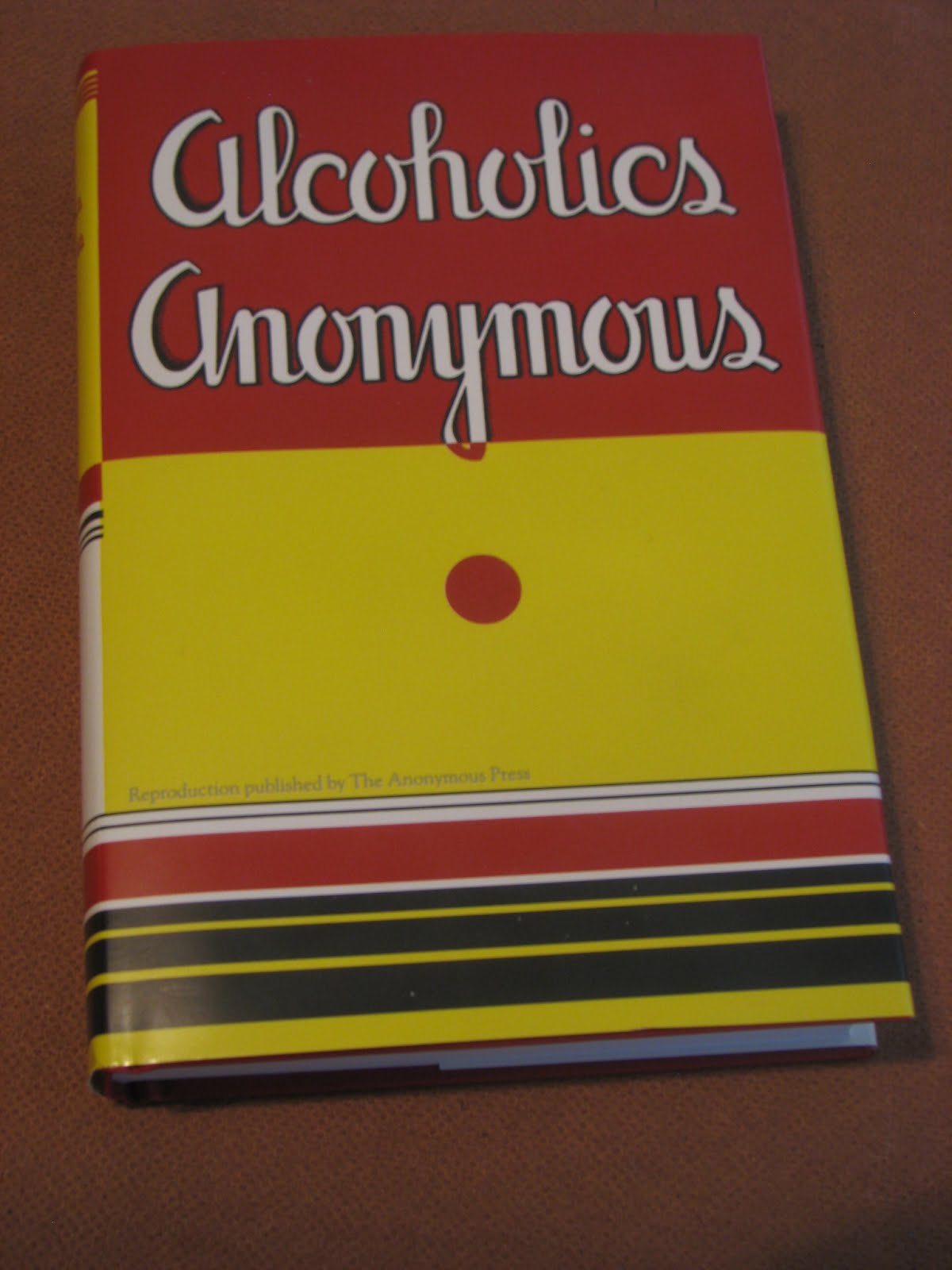
It is known, proudly and even reverentially, by most who have read it as the Big Book. Officially, the book’s title is “Alcoholics Anonymous,’’ the same as the famous 12-step program for treating alcoholism (and other addictions) described within its covers. The Big Book received more recognition for its influence recently when the Library of Congress included it on a list of “Books That Shaped America.”
There are 88 books on a list that ranges from Thomas Paine’s “Common Sense,” to Edgar Rice Burroughs’ “Tarzan the Ape Man.” The common factor among all 88, according to the Librarian of Congress James H. Billington is that “they shaped Americans’ views of their world and the world’s views of America.”
While it may not be for everyone, the Big Book has certainly shaped people’s views and lives. Since it was first published in 1939, it has been the textbook, if you will, of how to get -- and stay -- sober, for millions around the world. AA, of course, has spawned numerous other 12-step programs to deal with addictive behavior. And, while basing its recovery program on established spiritual, psychological and medical precepts, Alcoholics Anonymous has also widened the dialogue within all three areas and influenced the way practitioners in those fields deal with addiction.
The authors of the Big Book are Bill Wilson and Dr. Bob Smith, the founders of AA. But they had plenty of help from some of the original 100 AA members whose stories were included in the first edition. Many recovering alcoholics today regard it as remarkable that Wilson, the primary author, wrote two of the main sections of the book -- one being his story -- when he had less than four years of sobriety.
One could say the Big Book is a classic example of what it preaches. Much of the recovery program contained is take from the Oxford Group, A Christian fellowship that emphasized self-examination, making amends and working with others. (Wilson and Smith both were members of the Oxford Group for significant periods.) But the Oxford Group’s heavy religious emphasis did not sit well with many of the other drunks who were early member of AA. As a result, most references to “God” were eliminated or changed to a “Higher Power of your understanding.”
Editing also changed the preachy “you” to the inclusive “we” in describing how
alcoholics got sober. Thus, this is what we are and this what we did. If you follow these suggestions, “Rarely have we seen a person fail who has thoroughly followed our path.”
What do current members of AA think about the Big Book? A sampling of recent comments:
  • “When I first read it, I had to say, ‘(Expletive!) I’m an alcoholic. How did they know?’”
  • “I used to walk around with the Big Book (in early sobriety) like a protective shield.”
  • “It helped me understand I have an allergy.”
  • “In many ways it’s like the bible for alcoholics. It provides direction and order.”
  • “Think about the impact. One person reads it and passes it on to others for more than 30 million.”
  • “When they get (the Big Book) people are usually in such pain, they will read it.”
  • “It gave me a guide for living, far beyond just not drinking.”
  • “Simple rules for broken people.”
There’s a significant local angle to this story. When it came time to publish the book, Wilson and the others chose The Cornwall Press, a now-defunct printing operation in Cornwall. Because they were going to charge $3.50 for the relatively short book, they wanted it to look impressive, so they used thick paper and the widest possible margins. Hence, the “Big Book” nickname. Subsequent printings were smaller in size, but the name stuck.
The first press run was for 4,800 copies, with the promise from the printers that more would be printed when the first copies were sold. But even those original copies were in limbo as the printer refused to release any books until they were paid for. Although printed in the winter of 1939, only a few copies were paid for at the time. The significant release came in early 1940. Today, with inflation, “Alcoholics Anonymous” sells for around $8 to $10, but many AA groups simply give copies to new members, continuing to spread its message.
bobgaydos.blogspot.com.

Friday, July 19, 2013

Bill and Lois ... nothing more need be said


(My latest Addiction and Recovery column.)

By Bob Gaydos
Stepping Stones, the home of Bill and Lois Wilson,
 in Katonah. IR Photography.

Bill and Lois. Mention those names to members of Alcoholics Anonymous and Al-. Anon and nothing more need be said. They are the founders, the driving forces behind the 12-step programs that have helped so many people to recover from alcoholism.
Wilson is their last name, but he is best known as Bill W. and she as just Lois, perhaps the only woman in the world who could have lived with him during years of alcoholic behavior and stuck with him through the ensuing years of the creation and growth of AA into a worldwide program of recovery. At Bill’s urging, Lois later organized what was a loose collection of groups of people struggling with the effects of  others’ alcoholism into what today is the worldwide Al-Anon Family Groups.
As partnerships go, theirs succeeded beyond what any conventional wisdom might have predicted. And while it’s true that there are no gurus in the AA model of recovery, make no mistake about it, Bill and Lois are special people to those who seek help from the two programs. Together, they lived through the pain of alcoholism and created the mold millions have adopted for escaping its grip.
One of the ways in which that special regard is demonstrated is the thousands of visitors yearly to Stepping Stones, the Wilsons’ home in Katonah, in Westchester County. The large, comfortable home and well-kept gardens that occupy eight acres exude the peace and serenity to which members of AA and Al-Anon aspire.
Not that it was always so. When Bill and Lois first moved to Katonah from 182 Clinton St. in Brooklyn, their new home (they moved 51 times) became the destination of choice for people desperate for an answer to their drinking problem. There was seemingly always someone (or more than one) being 12-stepped by Bill in the living room (Bill kept alcohol on hand for those who needed detoxing), or just having impromptu AA meetings. The coffee pot in the small kitchen was meant for large gatherings. As Joe D., a 29-years-sober guide at Stepping Stones, puts it, “We think of Clinton Street and Stepping Stones as the first rehabs.”
The house also had the feel of a hotel, since AA friends were always on hand, helping to produce literature to spread the word on the recovery program or to sit and listen to Lois play the piano while Bill played the fiddle. On occasion, friends would join them in the “ghost room” where the ouija board was located.
It got so busy in Katonah that Bill eventually had a writing studio built up the hill from the bustling house so he could get some quiet to write “Alcoholics Anonymous,” better known as “the Big Book,” and other books detailing the AA path to sobriety.
The home and studio are part of a 90-minute tour given Monday to Saturday at 1 p.m. The tour is informative, but can’t possibly encompass the magnitude of the writings, photos, letters, books, art work, gifts, newspaper articles and personal mementos that Lois kept and organized. “Lois saved everything but Bill’s clothes,” Joe says. The Stepping Stones Foundation has archived all of this and now presents it at the national historic site as a history of the lives of Bill, Lois, AA and Al-Anon. Visitors are free to peruse the collection as it suits their curiosity. Return visits are not uncommon.
On a recent week day, a couple from Brooklyn took the tour. Kate, three years sober, said, “It’s amazing to be up here,“ She was impressed with how “selfless’’ Bill and Lois were and “how much of their lives they dedicated to helping others get sober.”
Her companion, Tim, 28 months sober, said there were a couple of things they could have done that day, but he was glad they chose to visit Stepping Stones, among other reasons because he learned that “Lois was a major person” in the history of AA as well as Al-Anon.
Another visitor, M., from Sullivan County, with four-plus years in Al-Anon, said, “I came to see Lois’ legacy because she’s basically my hero. Notwithstanding the fullness and complexity of her own life, it was enlightening to discover how much of herself was consumed by standing in the way of Bill and his next drink.” Of  Stepping Stones, M. said, “It’s nothing short of magnificent the way it has been preserved.”
That’s true. And it’s more than just a home that has been preserved. It’s an idea, a legacy, a way of life, a unique pairing that brought hope to millions of people and, indeed, changed history in the process. All of that is what keeps people coming to Stepping Stones.

If you go …
A Bill and Lois commemorative coin, available in the gift shop.
                                                                            IR Photography
Stepping Stones is located at 62 Oak Road, Katonah. It is open Monday through Saturday, from noon to 3 p.m. Tours lasting roughly 90 minutes start shortly after 1 p.m. and it is suggested that you call ahead or e-mail to reserve a spot.
 The buildings are air-conditioned. There is a small gift shop. A donation of at least $10 per person is suggested.
 The phone number is (914) 234-4822; e-mail: info@steppingstones.org. For more information on the site, including directions, the web site is www.steppingstones.org.

Friday, April 26, 2013

Are you an alcoholic? This test will help you decide


(My latest Addiction and Recovery column in the Times-Herald Record.)


By Bob Gaydos

Nearly seven decades ago, Marty Mann, one of the earliest members of Alcoholics Anonymous (her sponsor was AA co-founder Bill Wilson), decided she wanted to spread the message of recovery and educate the public about the disease of alcoholism. That work is still going on via her creation, the National Council on Alcohol and Drug Dependence, a voluntary health organization with a nationwide network that provides information on prevention, awareness and treatment of alcoholism and drug addiction.
Every April for 26 years, NCADD has observed Alcohol Awareness Month, with the goal of removing the stigma attached to alcoholism by educating a public still too unaware of the serious costs to individuals and society of alcoholism, as well as the fact that treatment is available and recovery possible. Of course, the process has to start with acknowledgment that alcoholism may be present.
With that in mind, I occasionally offer a list of questions designed to help individuals decide if they, or someone they know, may be an alcoholic. If that is the case, recognition of the problem may well be the first flicker of hope, rather than the beacon of doom many people consider it to be. Following are questions from the NCADD Self-Test. Be honest.

What are the Signs of Alcoholism?
1.  Do you drink heavily when you are disappointed, under pressure or have had a quarrel with someone? Yes   No
2.  Can you handle more alcohol now than when you first started to drink? Yes   No
3.  Have you ever been unable to remember part of the previous evening, even though your friends say you didn’t pass out? Yes   No
4.  When drinking with other people, do you try to have a few extra drinks when others won’t know about it?  Yes   No
5.  Do you sometimes feel uncomfortable if alcohol is not available? Yes No
6.  Are you more in a hurry to get your first drink of the day than you used to be? Yes  No
7.  Do you sometimes feel a little guilty about your drinking? Yes  No
8.  Has a family member or close friend express concern or complained about your drinking? Yes   No
9.  Have you been having more memory “blackouts” recently? Yes   No
10.  Do you often want to continue drinking after your friends say they’ve had enough?  Yes   No
11.  Do you usually have a reason for the occasions when you drink heavily? Yes   No
12.  When you’re sober, do you sometimes regret things you did or said while drinking? Yes   No
13.  Have you tried switching brands or drinks, or following different plans to control your drinking?  Yes   No
14.  Have you sometimes failed to keep promises you made to yourself about controlling or cutting down on your drinking? Yes   No
15.  Have you ever had a DWI (driving while intoxicated) or DUI (driving under the influence of alcohol) violation, or any other legal problem related to your drinking?   Yes   No
16.  Do you try to avoid family or close friends while you are drinking?      Yes   No
17.  Are you having more financial, work, school, and/or family problems as a result of your drinking?   Yes   No
18.  Has your physician ever advised you to cut down on your drinking?  Yes   No
19.  Do you eat very little or irregularly during the periods when you are drinking? Yes   No
20.  Do you sometimes have the “shakes” in the morning and find that it helps to have a “little” drink, tranquilizer or medication of some kind?     Yes   No
21.  Have you recently noticed that you can’t drink as much as you used to?   Yes   No
22.  Do you sometimes stay drunk for several days at a time? Yes   No
23.  After periods of drinking do you sometimes see or hear things that aren’t there? Yes   No
24.  Have you ever gone to anyone for help about your drinking? Yes  No
25.  Do you ever feel depressed or anxious before, during or after periods of heavy drinking? Yes   No
26.  Have any of your blood relatives ever had a problem with alcohol?    Yes   No

OK, here’s how to score the test. According to the NCADD, if you answered two or more questions with a “yes,” you should consider having your drinking assessed by a professional. If you have five to eight “yes” answers, you could have a serious problem with alcohol. This test does not apply to drug use. The test and others, as well as information on substance abuse can be found on the NCADD web site: ncadd.org.

bobgaydos.blogspot.com