Showing posts with label Alcoholics Anonymous. Show all posts

Thursday, June 10, 2021

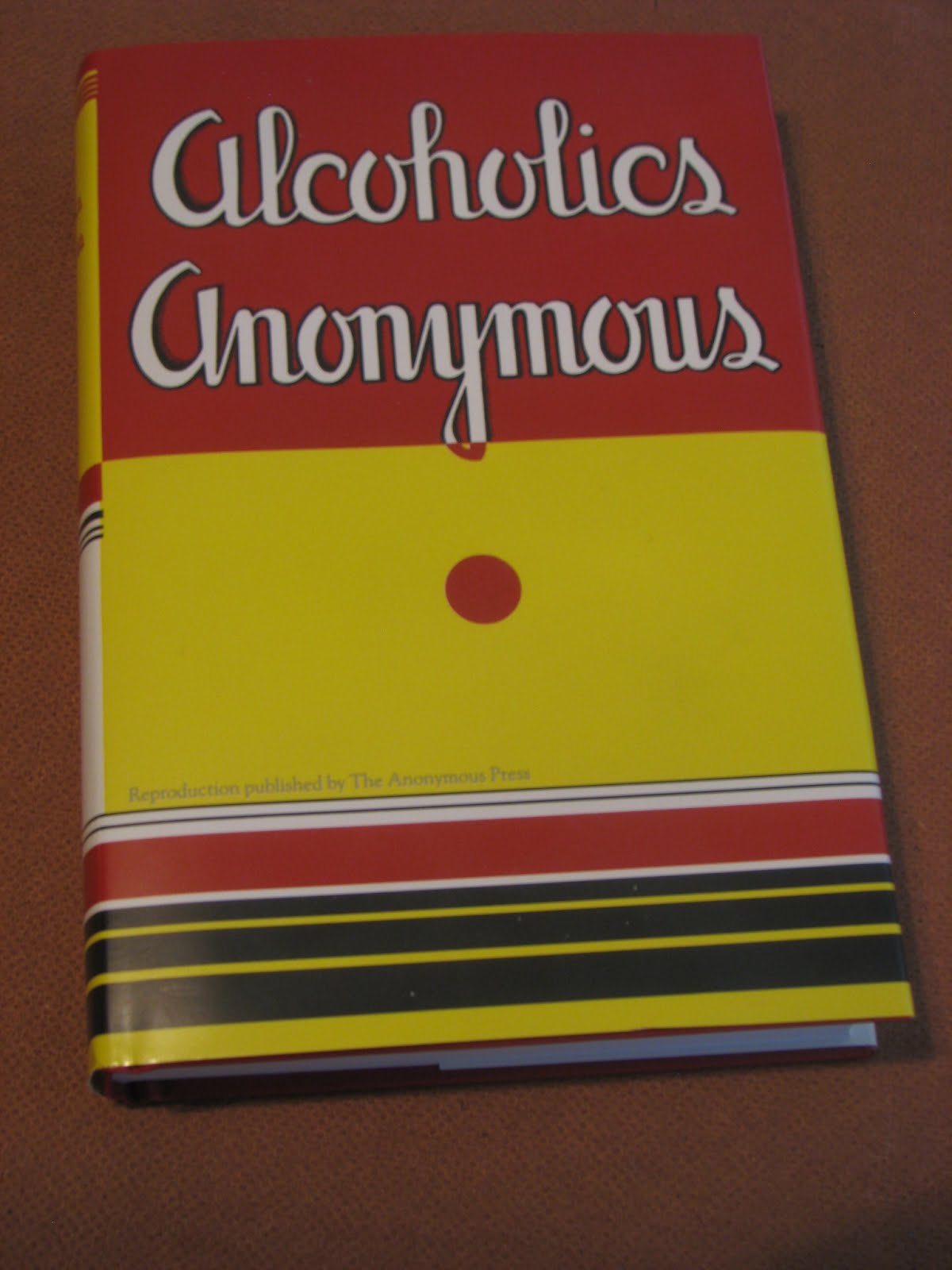
AA's Big Book has had profound influence

(Addiction and Recovery column from TH-R, Aug. 21, 2012)
By Bob Gaydos
It is one of the best-selling and most influential books of all time, with more than 30 million copies having been sold and millions of lives changed by what is contained on its pages. Yet it is not exaggeration to suggest that a majority of its readers don’t know the actual name of the book.
It is known, proudly and even reverentially, by most who have read it as the Big Book. Officially, the book’s title is “Alcoholics Anonymous,’’ the same as the famous 12-step program for treating alcoholism (and other addictions) described within its covers. The Big Book received more recognition for its influence recently when the Library of Congress included it on a list of “Books That Shaped America.”
There are 88 books on a list that ranges from Thomas Paine’s “Common Sense,” to Edgar Rice Burroughs’ “Tarzan the Ape Man.” The common factor among all 88, according to the Librarian of Congress James H. Billington is that “they shaped Americans’ views of their world and the world’s views of America.”
While it may not be for everyone, the Big Book has certainly shaped people’s views and lives. Since it was first published in 1939, it has been the textbook, if you will, of how to get -- and stay -- sober, for millions around the world. AA, of course, has spawned numerous other 12-step programs to deal with addictive behavior. And, while basing its recovery program on established spiritual, psychological and medical precepts, Alcoholics Anonymous has also widened the dialogue within all three areas and influenced the way practitioners in those fields deal with addiction.
The authors of the Big Book are Bill Wilson and Dr. Bob Smith, the founders of AA. But they had plenty of help from some of the original 100 AA members whose stories were included in the first edition. Many recovering alcoholics today regard it as remarkable that Wilson, the primary author, wrote two of the main sections of the book -- one being his story -- when he had less than four years of sobriety.
One could say the Big Book is a classic example of what it preaches. Much of the recovery program contained is take from the Oxford Group, A Christian fellowship that emphasized self-examination, making amends and working with others. (Wilson and Smith both were members of the Oxford Group for significant periods.) But the Oxford Group’s heavy religious emphasis did not sit well with many of the other drunks who were early member of AA. As a result, most references to “God” were eliminated or changed to a “Higher Power of your understanding.”
Editing also changed the preachy “you” to the inclusive “we” in describing how
alcoholics got sober. Thus, this is what we are and this what we did. If you follow these suggestions, “Rarely have we seen a person fail who has thoroughly followed our path.”
What do current members of AA think about the Big Book? A sampling of recent comments:
  • “When I first read it, I had to say, ‘(Expletive!) I’m an alcoholic. How did they know?’”
  • “I used to walk around with the Big Book (in early sobriety) like a protective shield.”
  • “It helped me understand I have an allergy.”
  • “In many ways it’s like the bible for alcoholics. It provides direction and order.”
  • “Think about the impact. One person reads it and passes it on to others for more than 30 million.”
  • “When they get (the Big Book) people are usually in such pain, they will read it.”
  • “It gave me a guide for living, far beyond just not drinking.”
  • “Simple rules for broken people.”
There’s a significant local angle to this story. When it came time to publish the book, Wilson and the others chose The Cornwall Press, a now-defunct printing operation in Cornwall. Because they were going to charge $3.50 for the relatively short book, they wanted it to look impressive, so they used thick paper and the widest possible margins. Hence, the “Big Book” nickname. Subsequent printings were smaller in size, but the name stuck.
The first press run was for 4,800 copies, with the promise from the printers that more would be printed when the first copies were sold. But even those original copies were in limbo as the printer refused to release any books until they were paid for. Although printed in the winter of 1939, only a few copies were paid for at the time. The significant release came in early 1940. Today, with inflation, “Alcoholics Anonymous” sells for around $8 to $10, but many AA groups simply give copies to new members, continuing to spread its message.
bobgaydos.blogspot.com.

Monday, September 25, 2017

Addiction and recovery

30+ years of meetings and sobriety

By Bob Gaydos
Among the things many people don’t understand about alcoholism/addiction is the concept of recovery, starting with the fact that it is possible. The news media, TV, movies -- even local gossip -- are full of stories about people doing foolish, harmful, criminal things while under the influence of alcohol or some other drug. There is not nearly as much time or space devoted to people living in recovery. Maybe it’s because we don’t find those stories as compelling. Or maybe it’s because we don’t know what recovery -- long-term recovery -- looks like.
Yes,”rehab” is now part of our vocabulary. Also, “in-patient,” “out-patient,” “day at a time,” “clean and sober.” But they usually refer to the early -- difficult, often dramatic -- days of recovery. Also today, there is a growing movement within the recovery community for people with long-term sobriety to go public with their stories in an effort to remove the stigma associated with addiction.
Still, there are thousands of other stories walking around mostly untold because that’s the way the people who live them want it. I talked with three members of Alcoholics Anonymous, each of whom respects the organization’s tradition of anonymity, has more than 30 years of recovery (no alcohol or other mood-altering substances) and still attends meetings regularly. Their stories are different, yet remarkably similar. They all live in upstate New York. Their identities are slightly changed.
* * *
“It’s not that you take it for granted (not drinking),” says Joe, a semi-retired septuagenarian from Orange County, who’s been sober 39 years, more than half his life. “You just don’t think about it because you’re living sober.”
“Every once in awhile I might feel like a drink to escape, but I know I can’t. When I feel like it, I talk to another alcoholic. At first, I hated it (AA). I didn’t want to be an alcoholic, I was going to show them.”
Another septuagenarian, Paul, from Sullivan County, has a similar tale. “For six years, I was in and out of AA. I lost hope.” Today, also semi-retired, he has 38 years of sobriety and says, when he has the occasional thought of a drink -- maybe while watching a TV commercial for a new brand of beer -- “I call my sponsor and he laughs.”
“I don’t think there’s anything wrong with it,” he says. “I don’t obsess. After a few years of sobriety, I was so involved in AA I would allow myself to think about it.”
Maryann, 55, from Ulster County, has been sober 34 years. She says she “never” feels like drinking. “I hated it. Every time I drank, I got sick.Yet from the age of 13 to 21 I continued to drink the poison. I may have the occasional thought, ‘Wouldn’t it be good to have a cool glass of wine or one of those new drinks?’ I have had drunk dreams (dreams of drinking).’”
A programmer, Maryann says, “It was important to stay connected in AA” to realize long-term recovery. “My family was in recovery. I had a sober parent and a parent who kept slipping. I decided I wanted to follow the sober parent. He introduced me to sober people. I knew I wasn’t going to do it by myself. How do you do it for 30 years? That’s a book’s worth question.”
She goes to four meetings a week “because I know what will happen if I stop. My attitude will get crappy. I’ll start to get scared or miserable and, I may not pick up a drink, but I won’t be fun to be around. I’ll be alone and miserable. Meetings give me an opportunity to talk to newcomers. It reminds me of what I could be like.”
“That’s why I go to meetings,” says Joe, “to deal with the human condition. It’s not just about not drinking, but living sober. Meetings help keep me balanced. Hearing other alcoholics is a constant reminder of who I am. I live by the the slogan, ‘Progress, not perfection.’ The longer I’m in recovery, the more I realize how selfish I was when I drank.”
Paul, who worked in law enforcement, also attends meetings regularly, yet says, “I don’t believe everybody who comes to AA gets sober. It’s not for everybody.
“You have to enjoy the fellowship you join. There’s a lot of fun to be had. Also, I’m 75. I have a purpose in my life, a responsibility. When you get to my age, a lot of people don’t know what to do with themselves. They’re bored. Going to meetings, I can give back. I’m glad I can do it.
‘I actually enjoy the meetings. I used to go to the bar every night. Read a newspaper, talk to the guys. AA is the same without the newspaper. I go at least once a week, maybe more.’
As for the anonymity, Maryann says, “I agree with the tradition, but I share with people who need to know. Most people don’t need to know. I’ve shared with complete strangers. I don’t need my ego stroked.”
Joe says, “At first, I didn’t want anyone to know. So many  people don’t understand -- if I’m an alcoholic, I’m dirty. I can only say I’m an alcoholic because I’m sober. When I was drinking, I denied it.
“After five or six years, I didn’t care. I wonder if some of us with a lot of years could share it … it would be good. I’m a teacher. I’ve shared it four or five times with a class. But I believe in the wisdom of the founders. I’m happy sober. I also accept my sobriety as a gift from my Higher Power. Today, I handle my problems, some well, some not so well, but I handle them.”
Paul echoes Joe and Maryann: “It’s easy to be prideful and bragging after 38 years, but it’s a gift from my Higher Power.” Also, “If I go out in public, get drunk, do something stupid, kill somebody, all of that reflects on AA.”
And it is the opposite of recovery. As Joe put it, in recovery, “I can be the person I want to be.”


bobgaydos.blogspot.com

Tuesday, December 30, 2014

Are you addicted to debt?

My latest Addiction and Recovery column.

By Bob Gaydos

The holiday season, with its drumbeat of eat, drink and be merry, holds special challenges for people with addictive tendencies. For some, it’s more like overeat, drink ‘til you’re drunk or spend like you really have the money. Recovery from the less-publicized third leg of that addictive triangle -- compulsive debting -- is the purpose of Debtor’s Anonymous, a 12-step program based on the principles of Alcoholics Anonymous.
A society whose economy is dependent on people borrowing money -- to have the perfect house, the right car, a college education, the newest electronic gadget, lots of gifts under the tree -- is rife with opportunities for some people to borrow money even though they have no means to pay it back. According to Debtor’s Anonymous, “Unsecured debt, which is debt not secured by some form of collateral such as a house or car, becomes an addictive and unmanageable part of their lives. Debting is more than just sensationalized shopping. It can cripple and ruin someone’s life. Debt is like alcohol for the alcoholic, food for the compulsive eater, and gambling for the compulsive gambler.”
If you’re wondering whether your debt is something out of the ordinary, DA offers 15 questions to help you decide:
1. Are your debts making your home life unhappy?
2. Does the pressure of your debts distract you from your daily work?
3. Are your debts affecting your reputation?
4. Do your debts cause you to think less of yourself?
5. Have you ever given false information in order to obtain credit?
6. Have you ever made unrealistic promises to your creditors?
7. Does the pressure of your debts make you careless of the welfare of your family?
8. Do you ever fear that your employer, family or friends will learn the extent of your total indebtedness?
9. When faced with a difficult financial situation, does the prospect of borrowing give you an inordinate feeling of relief?
10. Does the pressure of your debts cause you to have difficulty  sleeping?
11. Has the pressure of your debts ever caused you to consider getting drunk?
12. Have you ever borrowed money without giving adequate consideration to the rate of interest you are required to pay?
13. Do you usually expect a negative response when you are subject to a credit investigation?
14. Have you ever developed a strict regimen for paying off your debts, only to break it under pressure?
15. Do you justify your debts by telling yourself that you are superior to the "other" people, and when you get your "break" you'll be out of debt overnight?
If you answered yes to eight or more of these questions, DA says chances are that you have a problem with compulsive debt, or “are well on your way to having one.”
The good news is, Debtors Anonymous offers hope and help from people who have been there and have learned to deal with the addiction. The suggested approach for a beginner is to record your income and expenses for 30 to 45 days, attend at least six meetings, and make a commitment to the D.A. philosophy.
It is then suggested that you meet with two recovering members of D.A. (usually a man and a woman) in what is called a Pressure Relief Meeting. The goal of the meeting is to review your situation and formulate a spending plan and an action plan. And then, one step at a time, to lessen the chaos, drama, compulsive shopping, frequent borrowing, embarrassment, overwork, and deprivation from your life. Contacting DA could be the best gift of all for the holidays.
In the mid-Hudson, the DA website lists meetings in, among other places, Chester, Kingston, Woodstock and Rhinebeck. There are also telephone and online meetings. For more detailed meeting information, go to the website and use the find-a-meeting tool: http://www.debtorsanonymous.org.
* * *
Also:
-- http://www.empirestate.org (serving the Hudson Valley and Catskills region)
-- Debtors Anonymous General Service Office
Toll Free: 800-421-2383
PO Box 920888
Needham, MA 02492-0009
e-mail: office@debtorsanonymous.org